Coaching questions for CEOs and founders
What did the buyer choose instead? Why would a customer stay? Start with the question on your mind. Each one pairs a Platonic essay with a Digest issue.
What do customers know us for?
What is your positioning?
Start with how a customer describes you to someone else. The words on your homepage tell you what you hoped they would remember.

Anthropic: How the Company That Claims Safety Already Owns Trust — and Doesn't Know It Yet
Look at the work people trust Claude to do when a wrong answer would cost them something.
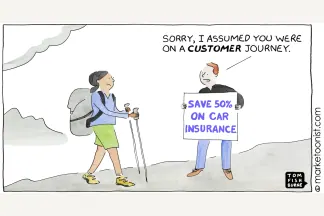
Your Customers Don't Describe You the Way You Think
Read a review the customer wrote on their own. If they say the software got them through quarter close, keep those words for the next time you describe it.
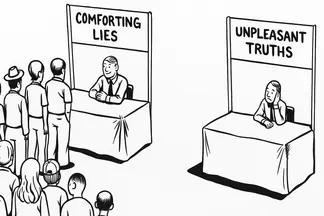
The 72-Point Lie
Compare a bank’s satisfaction award with complaints about failed transfers to see whose experience the survey missed.
Your P&L Is the Only Positioning Statement
Open the budget. Trace one promise to a hire, a product decision or a project you turned down.

Positions are made on the cutting room floor
Steve Jobs asked Apple to concentrate on four products. What work did that let the team stop doing?
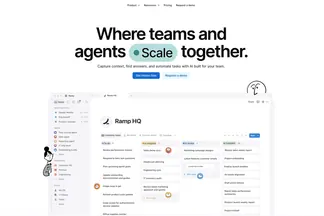
Your Homepage Isn't Your Positioning
Ask what someone can do today that they couldn’t do before the rewrite. If only the words changed, check whether customers already describe you that way.

EQ Bank: How Every Decision Proved Ownership While the Marketing Said Challenger
An EQ Bank customer can check the promise on a monthly statement by looking at the interest earned and fees paid.
Why are deals stalling?

What Else the Buyer Can Do
Walk through the buyer’s next deadline. A spreadsheet, a temporary hire or waiting until after the audit may all get them through it.

Palantir's GTM Playbook
Palantir lets buyers try a job on their own data before asking them to replace the way they work.
Qualifying vs Discovery
Ask the buyer to walk you through the last time the problem came up. What happened, who dealt with it, and what would they want to do differently next time?
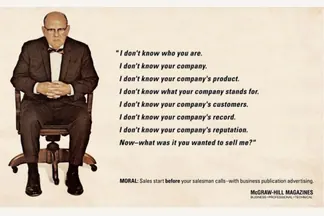
How and why people buy?
Ask why the work matters now and count to ten before offering your own solution.

Easy to Find vs. Worth Choosing
Getting invited tells you buyers remember you. Look at the final comparison to see what, if anything, makes you worth paying more for.

The Bell, Violin and 31 Positioning Reports
People bought tickets to hear Joshua Bell in Boston. In a Washington subway station, he collected $32.17.


Why do customers buy or stay?
Stuck is not loyal
Imagine their payments, account history and direct deposits could move in five minutes. What would they still choose to stay for?
Product shape is not a moat
See which customers renew when a rival copies the product and charges less.
The purchase does not prove you are the “only” option
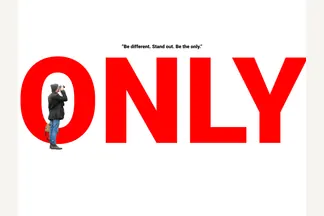
Two people can buy the same Audi for different reasons. Ask what else was available, how long it would take and whom the buyer trusted.
Why Boring Businesses Win Despite Bad Marketing
Grainger can get parts to buyers within a day. That matters when someone needs a replacement tomorrow.

Spotify: The Playlists Nobody Wants to Leave
A playlist can travel. Listen for what else the person would leave behind, from years of recommendations to listening habits they share with friends.

The verb problem
A Shopify merchant remembers their first sale and the day they quit their job, even if their store could run elsewhere.

Before I decide what to build
Ask about the last time someone saw a number in your product and changed a plan. Opening the dashboard again tells you less than that decision does.
Up Didn't Build a Bank. It Built a Generation of Savers
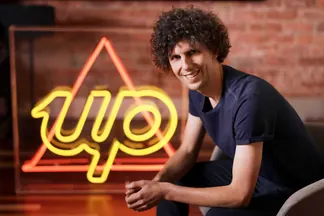
Up judged its Maybuy feature by the impulse purchases people skipped.
How do I get clients to trust my judgment?
From Order-Taker to Trusted Advisor: The Key to Buyer Experience Design
Ask what happened just before the client decided they needed this work. Their answer can change what you quote for.
What is context?
Try spending the first ten minutes asking what happened before the client asked for a quote.

Why Good Studios Get Paid Like Vendors
Ask to join the meeting where the client decides what to spend money on. By the time they ask for a website quote, someone has already decided a website will fix the problem.
The Brief You Already Know Is Wrong
Follow a studio through a pitch to see where it loses the chance to challenge the brief.
The Room Shifts When You Walk In With Proof
Bring something the client can check for themselves. Give them the customer’s review or the line in a public filing that led you to your recommendation.
The 72-Point Lie
Gong calls itself a “Revenue AI Operating System.” Some customers call it a “call recorder.”

The Hairy Arm Technique: For designers and writers
Paul showed clients three designs. One had deliberately bad type or a cluttered layout. Clients usually ruled that one out first.

Chapter 2 — Sell your ideas
Use what you learned about the client’s customers to explain why you chose a design.
What can I learn from these companies?

37signals: The Company That Owns Control (And Doesn't Know It)
Think of a project spread across five tools. When someone asks where the latest decision lives, having one place to look can matter more than another feature.
Positions are made on the cutting room floor
Zoom grew beyond video calls. Can a customer still start a meeting as easily as before?
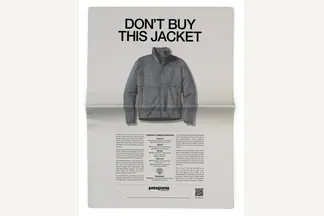
Patagonia's "Don't Buy This Jacket" Campaign
Patagonia used the ad to show what it took to make one jacket. It asked people to think twice before buying another.
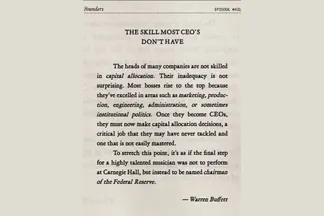
Your budget is your positioning strategy
When Patagonia switched its sportswear to organic cotton, its range fell from 166 styles to fewer than 70.

Lovable: What the Fastest-Growing Software Company Actually Owns
A founder can try an idea herself while it’s still fresh. Follow what changes when she can put a working prototype in front of someone that day.
The verb problem
Listen to Shopify merchants describe what changed when they could finally say “my own store.”

Ramp: The Best Experience Is the One You Don't See
Follow one receipt. Does the employee still have to file a report? Does someone in finance still have to chase them for it?
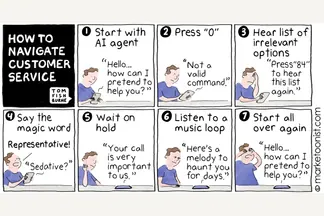
Company > Customer (also PSA for KIT users)
A support team cuts call times and makes customers call back, a useful test of whose time a change saves.
What should leadership look at next?
- Read the original case study on LinkedIn

Context isn't the preface. It's the work.
Ask whether your team picked the number to beat last year’s sales or to lead the market. Which deals would you have to chase to get there?
Your budget is your positioning strategy
Pick the project that got your best people last year. What changed for customers because you funded it?
The Graveyard of Ideas You Killed to Stay Safe
Compare the proposal everyone backed with the next budget. Giving every department last year’s money plus a little more can quietly decide the idea’s fate.

What happens when your marketing budget is precisely zero
See which engineering bets Tesla funded when its marketing budget was zero.
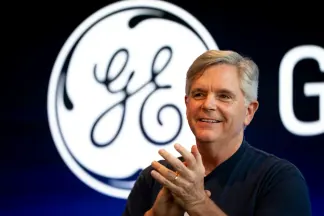
Stuck CEOs Rarely Look Stuck
Look for the same choice returning to the calendar with another report or another committee. What would someone have to decide for the meeting to disappear?

Brand: Where Executives Hide from Hard Decisions
Tribune’s executives changed the company’s name while its newspapers were losing money. Which decision did the new name leave for another day?
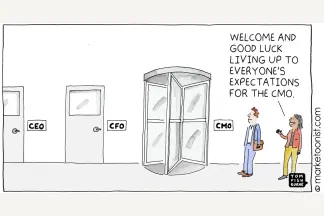
Why the Best CMOs Think Like CFOs
Connect the campaign to the cost of winning a customer, the time it takes to earn that cost back and the revenue that follows.

Your P&L is your brand
Ralph Lauren’s figures show how revenue can fall while margins rise, and why a board needs both numbers.

The Gap You're Signing Into
The data room shows contracts and revenue. Look outside it for what customers believe they bought and what could make them leave.
Product shape is not a moat
Test whether customers would stay if a competitor copied the product and charged less.