Stuck CEOs Rarely Look Stuck
Stuck CEOs rarely look stuck.
They look busy, smart, and in charge. Their calendars are full. Their slide decks are clean. They have big teams, fancy charts, and an answer for every question. From the outside, everything looks calm.

A martial arts teacher named Martin Wheeler calls this "false relaxation". Imagine holding your arm out so your hand looks loose and relaxed, while your shoulder and back are squeezed tight just to keep it up. Anyone watching from across the room thinks you are calm. Anyone who actually touches your arm feels the tension right away.
Wheeler noticed something simple about how most people train to fight. A student walks into the gym afraid of getting hit, losing control, or looking silly. Instead of helping the student face that fear, most coaches help them build a wall of fancy moves in front of it. The student gets more skilled. The wall gets taller. But the fear behind the wall never goes away.
That martial arts story is not medical science—it is just a clear picture. And it turns out to be the exact same picture psychologists and economists have seen inside real companies for fifty years.
When a CEO is stuck, it is almost never because they are lazy or not smart enough. It is because they are using their smarts to build a wall in front of a fear. They add more meetings, more reports, more committees, more products, and nicer slogans so they never have to face one scary choice—like shutting down an old product that still makes money, admitting a mistake, or telling certain customers "no".
A company only has one real job: put money and people behind a bet before you know how it will turn out, watch what customers actually do, and fix your mistakes fast. A CEO's fear only hurts the business when it breaks that loop.
Why Getting More Skilled Doesn't Fix the Fear
You might think that if a CEO gets better at planning and managing, their fear would shrink. Science shows the opposite often happens.
1. Crutches stop you from learning
Psychologist Paul Salkovskis studied what he called "safety habits". Suppose you are scared your team will mess up a big sale, so you insist on checking every email they send. The sale goes well. What does your brain learn? It does not learn, "My team is good." It learns, "We only survived because I checked every email." The crutch blocks you from ever finding out that the disaster wouldn't have happened.
2. Hiding stress makes the whole room stressed
In a lab experiment by Emily Butler and James Gross, researchers paired two people to talk about an upsetting movie. They told one person to keep a totally calm poker face. Not only did the poker-faced person's blood pressure go up—the blood pressure of the other person sitting across from them went up too. They remembered less of the conversation and liked each other less. When a CEO acts like a calm statue while hiding worry, everyone at the table feels it.
3. Losing hurts more than winning feels good
Economists Daniel Kahneman and Amos Tversky showed that losing $100 hurts more than twice as much as winning $100 feels good. That makes leaders act strangely. When a company is doing well, the CEO is terrified to mess with the old product that pays the bills. Then, once the business starts falling apart, that same CEO suddenly makes wild, desperate bets to avoid admitting a loss.
4. Pride makes you double down on bad bets
In a famous study called "Knee-Deep in the Big Muddy," Barry Staw gave people money to invest in a failing project. People who had picked the project themselves poured way more money into the sinking ship than people who inherited it from someone else. Why? Because quitting felt like standing up and saying, "I was wrong".
And sometimes the wall doesn't look shy at all—it looks loud and cocky. Researchers Ulrike Malmendier and Geoffrey Tate found that overconfident CEOs are 65% more likely to buy other companies, and the stock market usually punishes those deals the very day they are announced.
How One Person's Fear Becomes the Company's Rules
If a CEO's worry stayed inside their own head, it wouldn't ruin a whole company. Here is how it spreads.
Management researcher Chris Argyris noticed a funny thing: very smart, successful people are often the worst learners. Because they are used to getting straight A's, looking wrong feels terrible. So they get really good at polite meetings where everyone talks about small fixes, while nobody is allowed to question the big plan.
Two Harvard professors, Robert Kegan and Lisa Lahey, found that stuck leaders usually want two opposite things at once. A CEO might say, "I want my team to make their own choices," while secretly holding onto a bigger rule: "I can never be surprised, or people will think I'm not in control".
Employees catch on fast. They don't have to share the CEO's fear—they just watch what happens when someone brings bad news. If bad news gets you grilled in a meeting, people stop bringing bad news.
Instead, workers start making "cover-your-back" choices. They pick the safe, boring option that won't get them blamed if it fails, instead of the best option for the company. Surveys by Florian Artinger and Gerd Gigerenzer found that 20% to 50% of big business decisions are made this way—and managers themselves estimate those safe, defensive choices cost their companies about 10.8% of their yearly sales.
You can even see this wall on a CEO's calendar. When Michael Porter and Nitin Nohria tracked 27 big-company CEOs around the clock, they found CEOs spent 72% of their workweek in meetings and 36% putting out daily fires—but only 3% of their time actually talking to customers. They spent more time with outside consultants than with the people who buy their products.
How the Wall Freezes Money and Shrinks the Company's Value
Now follow the money.
A CEO's biggest job is deciding where to put the company's cash—which projects get funded, and which ones get shut down. When researchers studied 1,616 U.S. companies, they found that almost every department got the exact same budget this year as it got last year (a 0.92 match, where 1.00 is an identical copy-paste). Another study across 18 years of data found that 98% to 99% of multi-business companies move too little money from old, tired divisions to new, growing ones.
Why? Because taking money away from an old team feels like starting a fight or admitting failure. Companies even buy other companies 34% to 40% more often than they sell off bad divisions, because selling feels like quitting.
Over 20 years, companies that actually moved their money to the best ideas made their owners more than double the wealth (10% a year vs. 6% a year) compared to companies that left their budgets frozen.
Now here is how the stock market prices all of this. Investors cannot read a CEO's mind. They don't say, "That CEO looks scared, take 20% off the stock price." Instead, they look at what the company actually produces.
Imagine two lemonade stands. Both sell $100 of lemonade a year.
- Stand A is focused. It sells one great drink, keeps its costs low, grows fast, and has plenty of cash left over at the end of the day.
- Stand B ("StuckCo") is scared to say no. It sells lemonade, lukewarm coffee, soggy pretzels, and three kinds of tea. It needs extra helpers just to keep track of everything. It grows slowly and barely has any cash left over.
If you were buying one of those stands, you would pay a lot more for Stand A than for Stand B—even though both bring in $100 today.
That is exactly what happens in the 2026 software market. Investors use a simple scorecard called the Rule of 40: add a company's yearly sales growth rate plus the percentage of sales it keeps as real cash. If the total is 40 or higher, the business is healthy.
In 2026, unfocused "StuckCo" software companies that fail that test sell for about 2.7 times their yearly sales. Companies that pass sell for 4.8 times their yearly sales. And the top 10 focused leaders sell for 21.7 times their yearly sales.
Investors also spot financial "false relaxation" right away. If a software company's gross margin (the money left after just delivering the product) drops below 70%, investors know the product isn't really working on its own—the company is hiding an army of human helpers behind the scenes to hold it together.
Real companies show how big the stakes are:
- BlackBerry was so afraid to give up its physical keyboard that its yearly sales dropped almost 90% from their peak.
- Kodak actually invented digital cameras and owned over 1,100 digital patents, but it was too scared to hurt its high-profit film business—and ended up bankrupt.
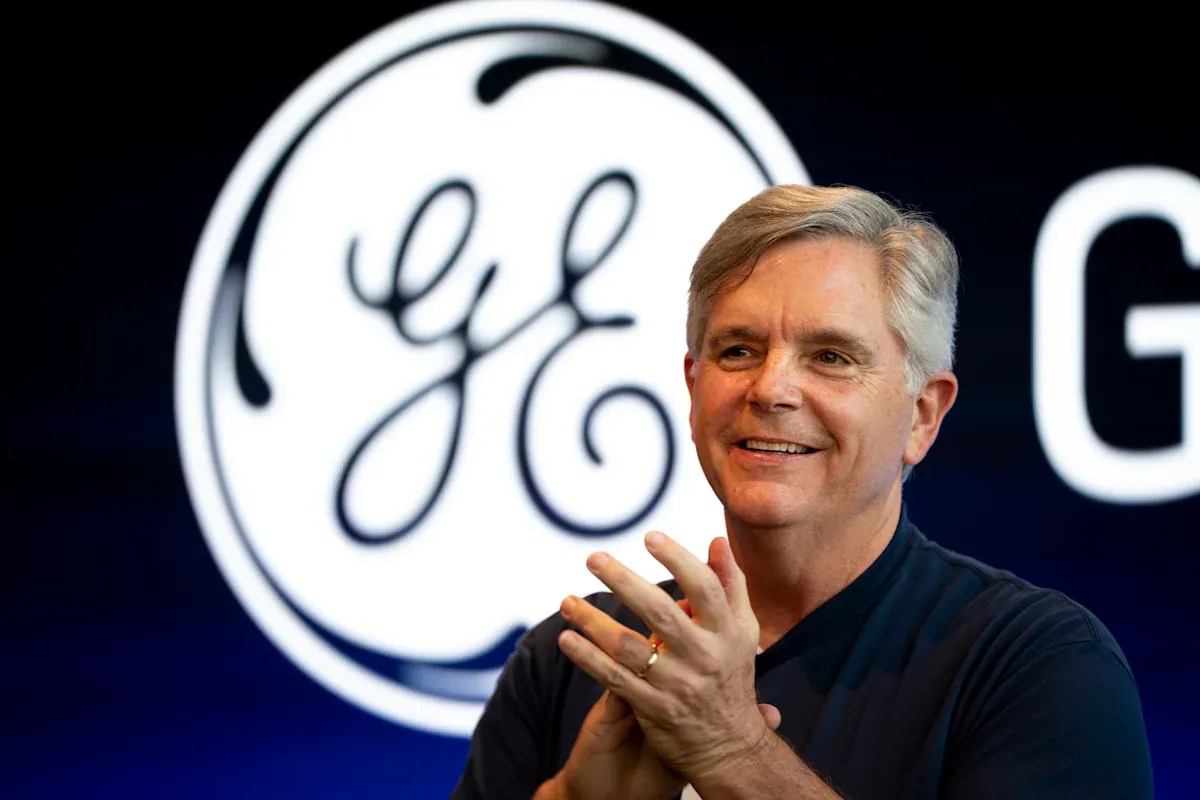
- General Electric hid its problems behind fancy management slogans and bad deals until it lost 87% of its value; then a new CEO, Larry Culp, finally faced the mess, took a $22 billion write-down, paid off over $100 billion in debt, split GE into three focused companies, and grew their combined value more than 8 times over.
- Yahoo bought 53 companies to hide that its main business was shrinking, until investors valued its core business at less than zero.
At the same time, don't fall for the opposite myth that "rules are bad and gut instinct is always right":
- At LEGO, bringing in strict financial rules and an outside CEO actually saved the company. Good systems are not a wall—they are the floor you stand on.
- At Netflix in 2011, CEO Reed Hastings was afraid of missing the shift from DVDs to streaming, so he rushed to split them into two separate websites and two bills (Qwikster). Fear can make you move too fast and break things just as easily as it can freeze you.
How to Take Down the Wall Without Breaking the Company
You don't fix a stuck company by firing everyone or throwing away all your spreadsheets. You fix it by separating helpful rules (which help workers spot and fix problems) from fear rules (which only exist to make the boss feel safe).
Here are five simple steps any CEO can run:
- Audit your calendar: Track your time for four weeks. If more than 70% is in meetings and less than 5% is with customers, cut the status meetings that only exist to keep you from being surprised.
- Name the hidden rule and test it small: Write down the scary belief ("if we stop selling to bad-fit customers, sales will crash") and run one small, safe test to see what actually happens.
- Set "quit rules" before you spend: Before funding any big new project, write down the exact numbers that will tell you to stop—and let someone who didn't pitch the project make the call.
- Unlock the budget: Stop copy-pasting last year's spending. Take 10% of the company's money and engineering time every year and put it back on the table so every team has to earn it fresh.
- Say what you will NOT do: Drop the fancy slogans. Write a two-sentence summary of your biggest problem and a clear list of things your company refuses to do.
Being good at running a machine and being good at fixing the machine are two different skills. A company can get better and better at doing the exact wrong thing.
So the real test for any CEO isn't "How smart are you?" or "How big is your team?"
It is much simpler than that:
Have you built a company that helps you find out when you're wrong, or a company that helps you avoid ever finding out?
Join the conversation
Sign in to comment. We’ll email you a secure sign-in link.