
♛
03.06.2025
Boring website
Read Time: 5 Minutes
Hello
Why Boring Businesses Win Despite Bad Marketing
And What SaaS & AI Startups Can Learn Before Their Burn Rates Burn Them Out
Most companies don’t fail because of bad messaging.
They fail because they confuse messaging with positioning.
There’s a big difference between what your website says and how your business actually works.
That’s the core lesson from the quiet billionaires, the “boring” companies that pull in billions with websites that look like they haven’t been updated since dial-up.
And yet… they win.
Not despite bad marketing.
Because they don’t need it.
1 | The Myth of Marketing-Led Growth
We’ve all seen the playbook:
-
Hire a brand strategist
-
Rewrite the homepage
-
Craft a new “story”
-
Launch a slick product video
-
Watch nothing happen
The SaaS world is flooded with polished companies that burn through $20M in funding only to close shop with an award-winning landing page.
Meanwhile, Berkshire Hathaway (the third-largest company in the U.S.) runs a website that looks like this:
Plain HTML index of blue links. No visuals. No brand. No flair. Just substance.
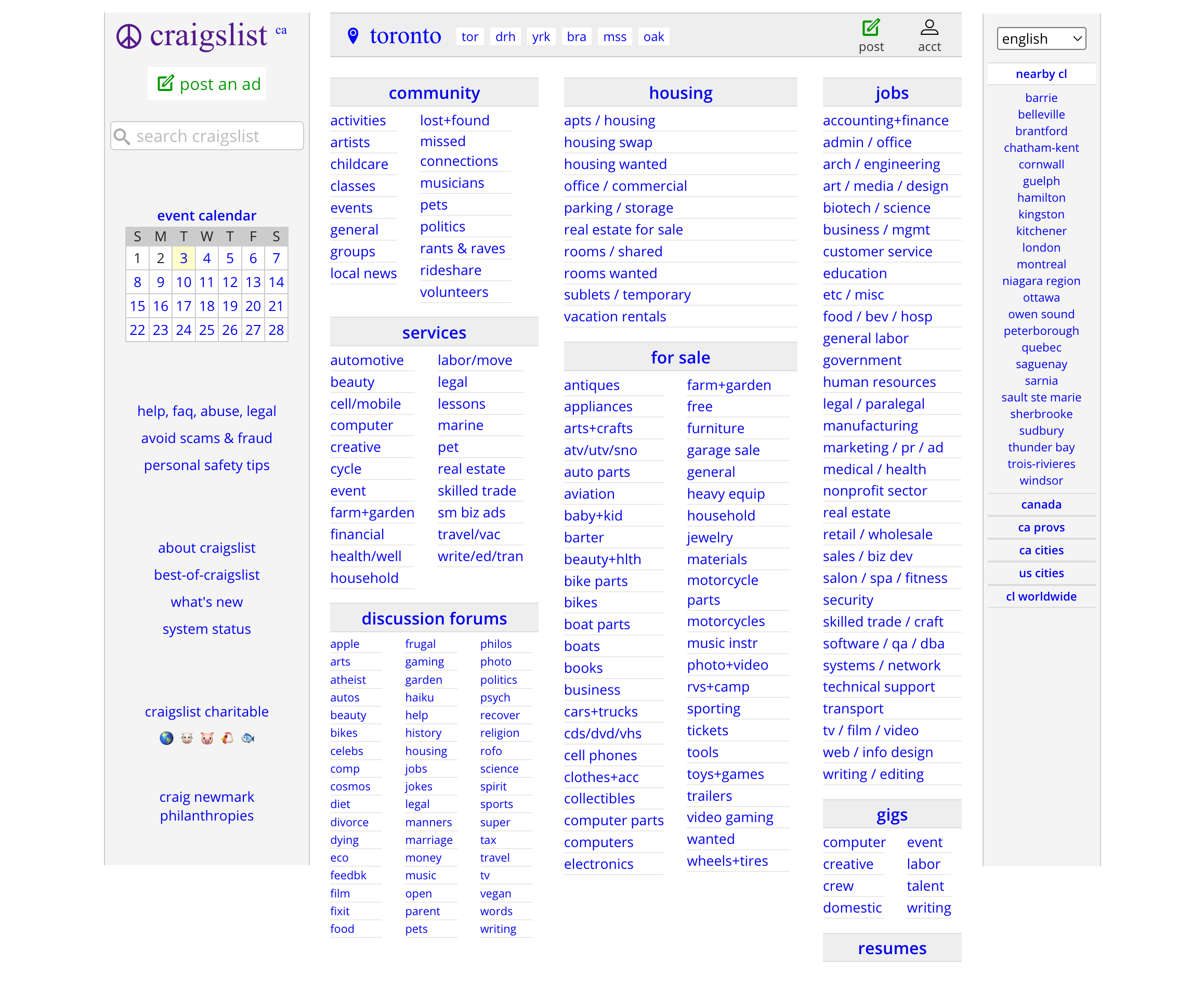
Craigslist still uses a layout from the 1990s.
It gets over 50 billion page views per month.
Grainger, a $17B industrial supplier, has a clunky site.
It doesn’t matter. They own distribution within 24 hours of 90% of U.S. GDP.
The reality:
Most SaaS companies are focused on surface polish.
These companies win at the structure level.
2 | What These Boring Giants Actually Get Right
Structural Advantages > Messaging
Positioning isn’t what you say.
It’s what your business is, how it relates to market forces, customer habits, and switching costs.
Type of Moat: Regulatory capture
How It Works: Government makes you the only option
Example: Utilities, telecom, Waste Management
Type of Moat: Network effects
How It Works: More users = more value = more users
Example: Craigslist, Google Search
Type of Moat: Distribution lock-in
How It Works: You own the “pipes” to the customer
Example: Grainger, UPS, AWS
Type of Moat: Operational discipline
How It Works: Business model enforces margins
Example: ITW’s 80/20 rule, Nucor’s decentralized mini-mills
These companies don’t need marketing theatre because their market has been structurally designed in their favour.
Most SaaS companies today are not in the same position, but many act as if they are.
3 | The SaaS and AI Startup Trap
SaaS and AI founders love the narrative.
Category design, storytelling, and copywriting.
These things can help.
But they cannot save a business that lacks:
-
Distribution leverage
-
A strong switching cost
-
A deep user habit
-
A functional business model
“We help X with Y using Z” only works if the Z isn’t trivial to copy.
Here’s what happens instead:
-
A startup launches a sleek website.
-
The offer isn’t differentiated, but the design wins awards.
-
Growth stalls.
-
The founder blames “messaging” and rebrands.
-
Burn extends another 12 months.
-
Nothing fundamental changes.
Because they solved the homepage, not the business.
4 | What You Can Learn (Even Without a Monopoly)
You don’t need to be Berkshire Hathaway to win.
But you do need to stop thinking your biggest problem is copy and messaging.
Here’s what SaaS and AI companies can do instead:
Key Takeaways for SaaS and AI
1. Anchor yourself in reality, not aspiration.
If you don’t own a structural advantage yet, own a specific use case with a high pain threshold.
Example: “We automate SOC 2 compliance” will land better than “Reimagining trust infrastructure.”
2. Build a friction moat.
Make switching hard.
-
Embed into workflow (APIs, dashboards)
-
Store critical data
-
Tie billing to usage metrics that scale with growth
3. Design for trust, not trend.
Your website isn’t a vibe, it’s a trust accelerator.
Don’t aim for cool. Aim for credibility.
Example: OpenAI’s early site was dead simple. It screamed, “We’re serious, we’re real, and we’re moving fast.”
4. Treat marketing as a mirror, not a mask.
Your marketing should reflect what already works in the product. If it doesn’t, change the product, not the pitch.
5. Study moats, not moods.
Instead of following SaaS brand trends, study:
-
Waste Management’s route density
-
ITW’s 80/20 process
-
Nucor’s decentralization
-
Google’s ruthless product simplicity
Positioning isn’t what you write.
It’s what people can’t unknow about you once they’ve seen the truth of your business.
5 | The Positioning Hierarchy (What Actually Matters)
Here’s the order of operations that “boring” businesses follow, intentionally or not:
-
Market structure (monopoly, network, regulation)
-
Category ownership (default mental shortcut)
-
Distribution control (own the channel)
-
Operational advantage (better unit economics)
-
Marketing execution (what people see)
Most startups start at #5 and stop there.
That’s why they’re raising again 18 months later.
6 | Final Thought
Berkshire Hathaway doesn’t need a slick homepage.
Their positioning is built into how they allocate capital, how they acquire, and how they govern.
Craigslist doesn’t need a brand strategy.
Their positioning is baked into the network effect they already own.
You don’t have to copy their design.
But you should copy their discipline.
Startups should worry less about how their story sounds.
And more about how their business behaves.
If your moat is shallow, your messaging will always leak.
Let your website prove your edge.
But don’t let it pretend there is one.
Want a practical next step?
Audit your company through this lens:
-
Do we solve a deep pain for a specific group?
-
Are we embedded in workflows or easy to leave?
-
Does our growth come from leverage or spend?
-
Does our homepage reflect what we do or what we wish?
If you’re polishing copy before answering these…
You’re not doing positioning.
You’re doing theater.
ANNOUNCEMENT
I’m thrilled to introduce The Clarity Starter Kit for CEOs and founders. It’s a free resource I’ve put together because I’ve seen how misalignment and unclear strategy can stall even the most promising businesses, and I wanted to offer a simple way to overcome those hurdles. It’s packed with a quick Clarity Quiz, a positioning mastery 30-day course, and an AI advisor to help you pinpoint gaps and align your team, product, and business. Check it out! I hope it brings you the focus and momentum you need to thrive!
Get your FREE CEO Clarity Starter Kit
Yours truly
Paul Syng
PAULSYNG.COM