
From Clarity to Gravity: Anthropic
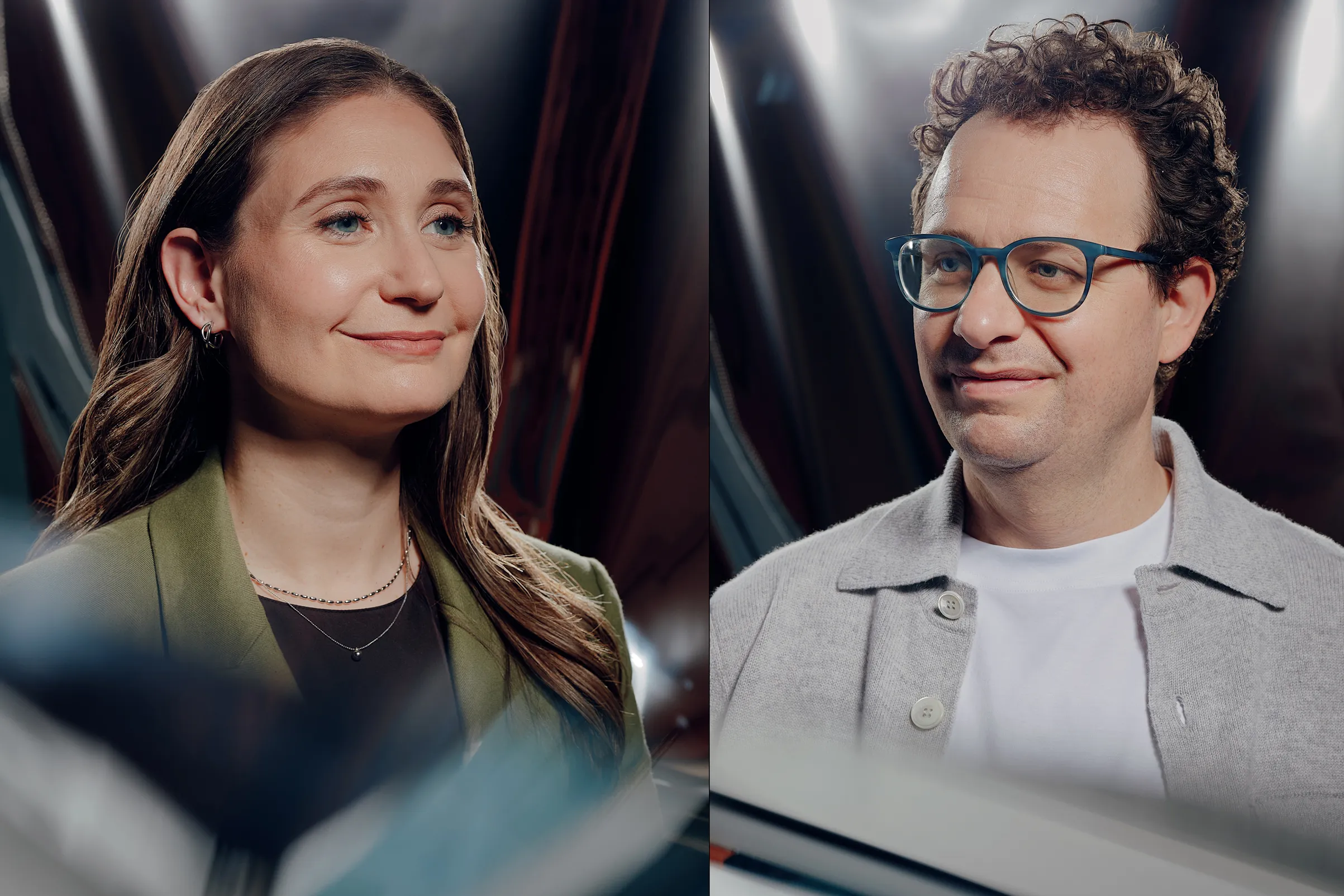
A Note Before We Begin: I wrote this because I’m genuinely fascinated by what Anthropic is building. I’ve been watching the company closely — the decisions, the product, the way Dario and Daniela Amodei show up publicly, the social content, the research papers, the moments where they chose principle over revenue. There is something happening here that most business observers are not looking at carefully enough. I wanted to look deeper.
What draws me to a company like this is a simple question that sits underneath everything I do: What business are you actually in? Not what business you say you’re in. Not what your pitch deck claims. What your decisions prove when nobody’s writing the press release. That question is the entire premise of this article.
I should be transparent about what this is and what it isn’t. This is an outside-in positioning analysis. I don’t work for Anthropic. I have no inside access. I’m reading the label — which is, by definition, something no one can do for themselves. The CEO or founder of any company will always have a different and more data-rich perspective on their own business than any outside observer. I respect that. I expect Dario and his team would push back on parts of this, and they’d probably be right on some of them.
I’ve done my best to get the facts right. I’ve drawn on publicly available financial data, product information, published research, user sentiment across multiple platforms, and competitive analysis. Where I’m interpreting rather than reporting, I’ve tried to make that clear. If I’ve gotten something wrong, the intent is not to misrepresent. It is to be useful.
The reason I believe this kind of analysis matters is that the strongest companies, the ones that endure, often cannot see their own positioning clearly. Not because they lack intelligence or data, but because they are too close to it. The founder who built the thing is the last person who can read the label on the outside of the bottle. That’s not a criticism. It’s the nature of identity.
So this is written with admiration, with curiosity, and with one question in mind:
What business are you actually in?
The answer might surprise even the people building it.
The 4-Level Canvas (A Quick Primer)
Most companies think positioning is what you say. It isn’t. Positioning is what customers retrieve from memory when they need something you sell. The 4-Level Canvas diagnoses where a company actually stands:
Level 1 — Frame. What you say. The nouns you claim, the language architecture, the story you tell the market.
Level 2 — Execute. What you prove. Verbs, not adjectives. Measurable outcomes that verify the claim or contradict it.
Level 3 — Live. What you embed. Structural decisions (governance, resource allocation, org design) that make the position impossible to fake and expensive to copy.
Level 4 — Position. What you own. A singular noun lodged in customer memory so deeply that it becomes automatic. Volvo owns safety. FedEx owns overnight. The test: when customers need what you sell, does your name surface without thinking?
Most companies operate at Level 1. Strong companies reach Level 2. The rare ones embed at Level 3. Almost none achieve Level 4 — owning a noun so completely that competitors cannot discuss the category without referencing you.
Anthropic, as you’re about to see, has done something unusual. They built Levels 3 and 2 first, the hardest levels, and left Level 4 incomplete.

Part 1: The Story They Tell
Anthropic tells a clean story. We are an AI safety and research company. We build reliable, interpretable, and steerable AI systems. We exist because our founders left OpenAI over a conviction that scaling powerful AI without safety infrastructure is reckless. We structured ourselves as a Public Benefit Corporation. We created a Long-Term Benefit Trust to protect the mission from commercial pressure. We published a Responsible Scaling Policy — versioned, updated, publicly auditable. We refused a $200 million Pentagon contract rather than remove guardrails on mass surveillance and autonomous weapons. We keep Claude ad-free.
That is the story. And it is mostly true.
The nouns they claim are unmistakable: safety, reliability, interpretability, steerability, constitution, responsibility, frontier, science, and mission. These are concept-level words. They are not describing features. They are staking territory.
The metrics they obsess over reinforce the story. Revenue run-rate ($14 billion ARR). Enterprise penetration (eight of the Fortune 10). Claude Code’s market share (54% of enterprise coding). SWE-bench scores. These are execution metrics dressed in capability language. But beneath the metrics is a company that spends an unusually high percentage of CEO time, Dario Amodei has publicly stated 10–20%, on governance and policy architecture, not product features.
The Three-Layer Language System
The framing architecture is unusually disciplined. Anthropic runs what amounts to a three-layer language system. The identity layer (company pages, mission statement, values) is safety-dominant. Roughly 70–80% of that content concerns governance, risk, and responsibility. The product layer (Claude’s pages, API documentation, pricing) flips entirely. It is 80–90% capability language: “frontier performance,” “most capable model,” “compress multi-day coding projects into hours.” Then there is a brand layer, visible in the Super Bowl campaign and the “Claude is a space to think” framing, which runs at 100% trust and zero capability claims.
This is not accidental. Anthropic describes systems as “safe” (adjective) in product contexts while claiming “safety” (noun) as institutional identity. They own both the feature and the category. They use “frontier” instead of “best” and “reliable” instead of “revolutionary.” They avoid “disruptive,” “innovative,” and “game-changing,” the standard-issue adjectives that dominate competitor communications.
The Verb Layer
The verb layer is equally deliberate. Publish risk reports. Activate ASL-3 safeguards. Provide enterprise security controls. Detect and disrupt distillation campaigns. These are measurable, verifiable, and formatted as proof mechanisms. They answer the Five Execution Questions — action, baseline, improvement, verification, timeline. Not perfectly. But far more precisely than any competitor.
So the story they tell is coherent. It is noun-led, verb-proven, and almost entirely free of adjective risk. Most companies would kill for this level of linguistic discipline.
What’s Absent
Notice what is absent from their vocabulary: “revolutionary,” “disruptive,” “innovative,” “best.” The standard competitive adjectives are replaced by structural nouns. Where OpenAI says “the future,” Anthropic says “the frontier.” Where Google says “intelligent,” Anthropic says “interpretable.” Where Meta says “open,” Anthropic says “constitutional.” Every linguistic choice is a positioning choice, and Anthropic’s choices consistently point toward a concept rather than a product.
But here is the problem. It is not the story their customers are telling about them.
Part 2: The Hidden Position
Apply the Remove All Words test. Delete every tagline, every Dario Amodei essay, every blog post about Constitutional AI. Strip it all away. What pattern of decisions remains?
The pattern is startling in its coherence.
The Decision Timeline
December 2020. Dario Amodei leaves OpenAI, the company where he personally led the development of GPT-2 and GPT-3, taking 15 colleagues, including his sister, Daniela, co-founder Chris Olah, and several senior safety researchers. The departure is not about opposing commercialization. Amodei directly rejects this reading. It is about believing that scaling works AND that safety must be structural, not decorative. He told Lex Fridman: “It’s more about how do you do it? Civilization is going down this path to a very powerful AI. What’s the way to do it that is cautious, straightforward, honest, that builds trust?”
Summer 2022. Anthropic finishes training Claude 1. The model is ready for release. Amodei makes the call to hold it back. Months later, OpenAI released ChatGPT, capturing the world’s attention. Anthropic absorbs the cost of surrendering first-mover advantage. Amodei told Time: “I suspect it was the right thing to do. But it’s not totally clear-cut.”
2022–2025. Anthropic publishes over sixty safety research papers that directly benefit competitors, giving away intellectual property for ecosystem-level gains. They established four dedicated safety research teams, led by co-founder Chris Olah on interpretability and Jan Leike, recruited from OpenAI’s disbanded superalignment team. Their interpretability research has decomposed more than 15,000 latent directions, with 70% mapping to identifiable concepts.
September 2023. They impose a Responsible Scaling Policy with hard thresholds and specific capability levels that trigger safety requirements. This is not a principal statement. It is an operating system, versioned like software, publicly updated.
2023–2025. They accept $8 billion from Amazon and $3 billion from Google, without granting either investor voting shares or board seats. They rejected the OpenAI merger offer in November 2023, when OpenAI’s board approached Amodei about becoming CEO of the combined entity. They settled the copyright lawsuit for $1.5 billion rather than fight it. They block sales to entities majority-owned by adversarial nations.
February 2026. They refuse to remove all usage restrictions on Claude for military applications, as demanded by Defence Secretary Hegseth. Cost: $200 million in terminated contracts, designation as a “supply chain risk to national security,” a ban on all federal contracts, and an order for military contractors to phase out Claude within six months. The President calls them “left-wing nut jobs.” OpenAI immediately moves in. Claude becomes the number-one app download in the United States within days.
Also, February 2026. They announce the RSP v3.0 rewrite, softening the hard-pause commitment. The revised policy replaces “we will stop if safety can’t keep pace” with “we will be transparent and publish roadmaps and risk reports.” The justification: unilateral restraint in a competitive environment may produce a less safe world, not a safer one. Their head of safeguards research resigns, citing “pressures to set aside what matters most.”
What Survives When All Words Disappear
What concept do these decisions prove without stating it?
Not safety. Safety is what they claim. The decisions prove something more specific and more costly: the willingness to bear costs that competitors will not. Every costly decision in the pattern involves having something valuable (a trained model, a government contract, governance control, revenue from restricted markets, first-mover advantage) and choosing to constrain it.
This is the concept that survives when all words disappear. Not “we are safe.” That is a claim. The concept is closer to disciplined power, frontier capability held within structural constraints. Or to use language customers might actually retrieve: the AI you can trust with your most important work, because the company behind it has repeatedly demonstrated it will sacrifice revenue for principle.
The Three-Noun Gap
Now here is the gap that changes everything.
Anthropic claims safety. Customers experience quality. And the concept the decisions actually prove is discipline.
These are three different nouns.

Subscribe to continue reading
Become a paid subscriber to get access to the rest of this post and other exclusive content.