
I went looking for something small and fell through the floor.
The small thing was a question I couldn’t shake. How did we ever agree on what words mean? Not grammar, not spelling. The deeper thing underneath those. When I say “chair” and you picture a chair, some machinery is running that neither of us built and neither of us can see. Who set it? When? What holds it in place? I assumed there was a tidy answer and I’d read it in an afternoon.
There isn’t, and I didn’t.
What I found instead was five thousand years of people trying to weld a sound to a thing so that a stranger could pull the same thing back out of it later. Most of the time it failed. When it worked, it worked for one reason, and it’s the same reason every single time, and once I saw it I couldn’t stop seeing it. I saw it in a clay ball from Mesopotamia. I saw it in a peacock. And then I saw it in a conference room, in the one word my whole field uses more than any other and agrees on least.
So this is the long way around to a short idea. I’m going to walk you through the parts I found, in the order I found them, because the order is the point. Stay with me.
8,000 BCE
Before there was writing, there was counting, and the counting came in the form of small clay objects.
They turn up all over the ancient Near East, dating to roughly 8,000 years ago. Little shapes. Cones, spheres, discs, cylinders, sometimes scratched with marks. For a long time nobody knew what they were. A researcher named Denise Schmandt-Besserat spent decades handling them and made the argument that they were a counting system, and a shockingly consistent one. A sphere stood for a measure of grain. A cone stood for a smaller measure. A cylinder stood for an animal. You held the tokens, you traded the tokens, and the tokens stood in for the real things moving between real people.
I should say plainly that her reconstruction is the leading one, not the settled one. Some scholars think she pushed it too far, that not every clay lump was an accounting token, that writing probably had more than one root and more than one story. Fine. Hold it loosely. The part that matters survives the argument, and here it is.
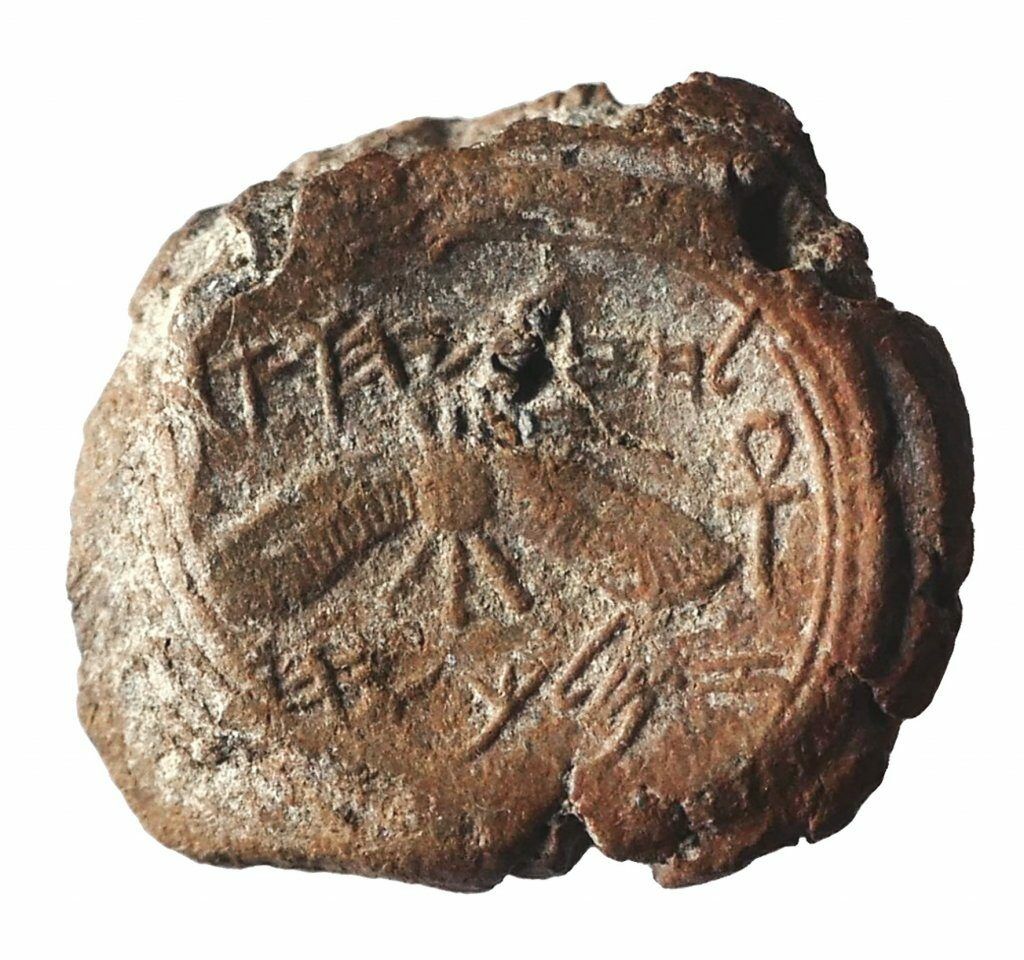
When you owed someone a delivery, you didn’t just shake hands. You sealed the count inside a hollow clay ball. These are called bullae, and they were the receipt. The tokens went inside, the ball was sealed shut, and now the deal was fixed in clay. The problem was obvious the moment they started doing it. Once the ball is sealed, you can’t see what’s inside without breaking it, and breaking it destroys the receipt. So, before sealing, they started pressing each token into the ball’s soft outer surface, leaving an impression. A sphere pressed into the clay left a little round dimple. Now the outside showed what the inside claimed.
And then somebody noticed the thing that changed everything. If the impression on the outside already tells you what’s inside, you don’t need the inside. You don’t need the tokens at all. You just need the marks. Flatten the ball into a tablet, press the shapes into it, and you’ve got the whole receipt with none of the clutter.
That’s writing. That’s the moment. Not a poet reaching for the stars. An accountant who got tired of breaking clay balls.
The first thing human beings ever wrote down was not a story, a prayer, or a name. It was a debt. Writing was born as an audit trail, and it carried something in its bones from that first day that it has never entirely lost.
I find this genuinely moving, and I want to be clear about why. The first thing human beings ever wrote down was not a story, a prayer, or a name. It was a debt. Writing was born as an audit trail, and it carried something in its bones from that first day that it has never entirely lost. The mark meant a real thing that really existed. One sphere-dimple, one measure of grain sitting in a real jar. You could check.
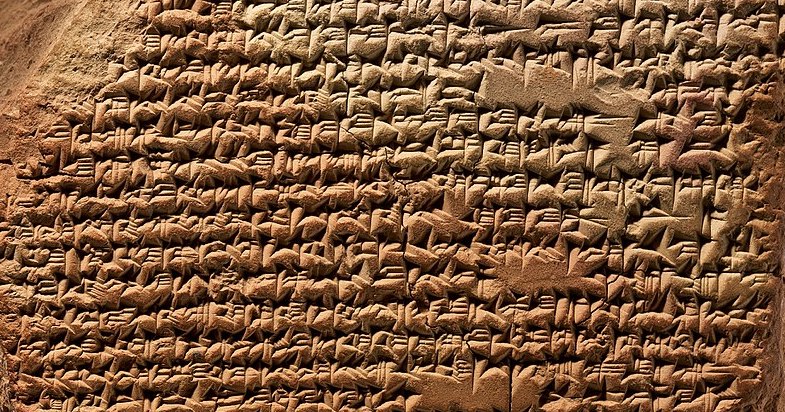
The system grew because the trades grew. By around 3200 BCE, in a city called Uruk in southern Mesopotamia, one of the largest settlements on earth at the time, the clay-ball method drowned in its own success. Too many goods. Too many deals. Too many relationships to hold in dimples. So the marks got sharper and stranger, and over a few centuries something remarkable happened to them.
At first they were pictures. You want to write “ox,” you draw an ox head. You want “grain,” you draw grain. This is easy, and it’s honest, and it hits a wall almost immediately, because you can only draw what you can see. You can draw an ox. You cannot draw yesterday. You cannot draw the debt he still owes me from last season. You cannot draw a god. The picture-writing could handle the barnyard and nothing above it.
They broke the wall in three moves, and each move pulled the mark a little further away from the thing.
First, a picture began to stand for an idea near it rather than the picture itself. A drawing of a foot could mean “to walk” or “to go.” A mouth with water could mean “to drink.” The sign was leaving the object behind and reaching for the concept behind it.
Second, and this is the one that still stuns me, they discovered you could use a sign for its sound and ignore its meaning completely. Sumerian had a lot of short words. The word for “arrow” sounded like the word for “life.” So a scribe who needed to write “life,” which you can’t draw, could just draw an arrow, which you can. The reader hears the sound, not the object. We do the same trick when we draw a picture of a bee next to a leaf to write “belief.” The bee has nothing to do with belief. The sound does. This is called the rebus, and it is the single most important idea in the history of writing, because the day sound came loose from picture is the day you could write anything a human being could say. Not just the things you could see. Everything.
Third, once the marks got that abstract, readers started getting lost, so the scribes added little signs whose only job was to tell you what kind of thing was coming. A certain mark before a word told you “this next one is a god.” Another told you “this next one is made of wood.” These signs weren’t even pronounced. They were instructions to the reader about how to read. The first metadata. Signs about signs.
Add it up, and you can watch a civilization of bookkeepers invent, refine, and abstract the first full writing system on earth, dragging it from roughly a thousand little pictures down to a few hundred wedge-shaped signs pressed with a cut reed, the script we call cuneiform. In a few hundred years, they went from drawing an ox to writing a hymn.
And look at what they wrote first, the moment they could write anything at all. Not stories. Contracts. Law codes. Oaths. Records of who owed what to whom, and what would happen to you if you broke your word. The earliest long texts we have are people binding themselves to each other with promises, with the penalty for lying spelled out right there in the clay. Writing did not run off into art and forget where it came from. It stayed close to the same job the clay ball was doing, which was to make a claim that would cost you if it turned out to be false. The technology got abstract while the reason for it stayed exactly what it had always been.
But go back to the clay ball, because everything I care about is sitting inside it.
You could not press a sphere into that ball unless you had the grain. The mark cost something to make. Not money. Truth. The dimple was welded to the wheat by the plain fact that faking the dimple got you nothing, because the deal was real and the delivery was coming and everyone in that small world would know if the grain never showed. The sign meant what it meant because a lie inside it had nowhere to hide and someone to answer to.
Hold that. I’m going to leave it there and walk to something that looks completely unrelated.
The tail
A peacock is dragging around a piece of evidence that is trying to kill it.
The tail is enormous. It’s heavy, it’s metabolically ruinous to grow, it slows the bird down, and it may as well be a neon sign to every predator in the area reading “here, and slow.” From a survival standpoint, it’s idiotic. For a long time, this was a real problem in biology, because natural selection is supposed to trim exactly this kind of expensive nonsense, yet the tail kept getting bigger.
An Israeli biologist named Amotz Zahavi gave the answer in the 1970s, and it took the field years to accept it because it sounds backward until it clicks. The tail is honest because it’s expensive. A peahen is choosing a mate, and she can’t read his genes. What she can read is whether he’s carrying around an enormous, costly, dangerous ornament and still thriving. A sick or weak bird can’t afford that tail. He’d die under it. So the tail is a claim about his health that a liar physically cannot make. The cost is the point. The cost is what makes the signal trustworthy, because the cost is what a faker can’t pay.
There’s a refinement that came later, and it matters, so I’ll add it. It isn’t just that the tail is expensive in some flat way. It’s that the tail is cheaper to carry if you’re actually healthy. The same ornament that a strong bird sports with ease would ruin a weak one. The cost lands harder on the liar than on the honest signaler. That asymmetry is the whole engine. A signal is believable exactly to the degree that faking it costs more than telling the truth does.
A man named Michael Spence won a Nobel Prize for finding the same machine running inside the human economy in a 1973 paper on the job market. His question was why employers pay more for a degree even in jobs where nothing you learned in the degree gets used. His answer was that the degree isn’t valued for what it taught. It’s valued because getting one is easier for the kind of person an employer wants and harder for the kind they don’t. The diploma is a peacock’s tail. It’s a costly signal, and it’s trusted because the cost screens out those who can’t pay it.
Once you have this in your hand, you start seeing it in places that have nothing to do with birds or diplomas.
In 1959, a Volvo engineer named Nils Bohlin designed the three-point seatbelt, the one crossing your lap and your chest that you clicked shut without thinking this morning. It was Volvo’s invention. They held the patent. And they gave it away. They opened it to every competitor, including the ones trying to eat their lunch, because they decided more people living was worth more than the exclusive right to the belt. Now sit with what that does as a signal. Volvo never had to run an ad saying “we care about safety more than money.” Anyone can run that ad. The words are free, which is exactly why they prove nothing. What Volvo did was hand a rival a gift worth a fortune, and that decision said the thing no sentence could, because a company that didn’t actually mean it would never have paid that bill.
The most trustworthy signals in the world are the ones a liar couldn’t afford. That’s where I’ll leave this one. Now the room.
The word
The word is “positioning,” and I have watched it mean five different things to five people standing in the same meeting, all of them nodding.
It has a real origin. A marketing strategist named Jack Trout introduced it around 1969, and he and Al Ries set it out in a book in 1981 called Positioning: The Battle for Your Mind. Their idea was clean and good. For them, positioning was not something you did to your product. It was something that happened in the customer’s head. It was the slot your name occupied in a crowded mind, the single association a person reached for when your category came up. You didn’t own the slot by talking. You owned it by being the thing that fit it. That’s the original meaning, and it’s a sharp one.
Now walk through five doors.
In the first room, the ad people kept Trout and Ries mostly intact. Positioning is the place you live in the customer’s mind. Good.
In the second room, the product-marketing crowd uses “positioning” to mean the words on the homepage. The headline, the subhead, the way you phrase the value. When they say “we need to fix our positioning,” they mean the copy is off, and someone should rewrite it.
In the third room, the strategy people use “positioning” to mean which slice of the market you chose to serve and which you chose to walk away from. It’s a decision about where you play. When they say “our positioning is enterprise healthcare,” they’re naming a segment, not a sentence.
In the fourth room, the category folks use “positioning” to mean the new box you’ve declared exists, the frame that makes you the only obvious pick because you named the game. Positioning is the shape of the arena.
In the fifth room, a realtor uses “positioning” to mean fresh paint, a staged couch, and cookies in the oven at the open house. You’re positioning the home to move.
Same word. Five referents. And here is the thing I keep circling. Nobody in that building can tell you which one is correct, because there is no one in that building whose job it is to say. There’s no office you can appeal to. There’s no ruling coming down. Four people say “positioning,” mean four incompatible things, discover the mismatch eighteen months into a project that isn’t working, and even then can’t prove the word was the problem.
I used to think this was a discipline problem. Sloppy people, sloppy talk, tighten it up. I don’t think that anymore. These aren’t five lazy approximations of one true meaning that a good editor could clean up. They’re five different words that happen to share a spelling, each one doing honest work inside its own room, each one useless the second it crosses the hall. The confusion isn’t that people are imprecise. It’s that they think they’re speaking the same language when they’re not, and nothing in the room forces the mismatch into the open where someone would have to resolve it.
There’s a philosopher’s version of this that I find clarifying. Ludwig Wittgenstein, late in his life, in the Philosophical Investigations published in 1953, went after the idea that words have fixed essential meanings you could discover if you just analyzed hard enough. Take the word “game,” he said. Try to find the one thing all games share. Chess, tag, solitaire, a war game, a kid spinning in a circle. There’s no single thread running through all of them. There’s a web of overlaps, this one like that one, that one like the next, no core. He called it family resemblance. And his conclusion was that a word doesn’t carry a meaning around like a stone in a pocket. A word means what it does inside a particular practice, a particular way of living and working. Change the practice, and you’ve changed the meaning, even if the spelling holds.
So when the strategist and the product marketer both say “positioning,” they aren’t disagreeing about a fact. They’re playing two different games with one token and mistaking that for a conversation.
And the two games don’t just live in different heads. They spend money in different directions. Tell a product marketer the positioning is broken and they open the website and start rewriting headlines. Tell a strategist the same sentence, and they pull up the segment map and start rethinking which customers to fire. Same words, out of the same mouth, and the budget walks to two unrelated places depending on which room happened to hear it.
Chris Argyris, an organizational theorist, spent his career examining the distance between what people say they’re doing and what they’re actually doing. This is that distance wearing a marketing suit. The word you reach for quietly decides where the money goes, and when the word means five things, the money scatters five ways, and nobody can point back at the word as the culprit, because by the time it matters it’s just a budget that didn’t work.
I’ll stop there. One more room, and it’s a different building entirely.
The professions
A lawyer and a marketer both use words for a living, and only one of them can be sued for using them wrong.
Walk into law and pick up a word. “Consideration.” In ordinary speech it means thoughtfulness. In a contract it means the thing of value each side gives up, and without it there’s no contract at all. That meaning does not drift, and I want to be precise about why it doesn’t. Now, lawyers aren’t more careful people, but when two parties fight over whether consideration existed, a judge rules: money changes hands or doesn’t. Sometimes someone’s freedom is on the line, and the ruling gets written down and binds the next case. The word is pinned by a consequence that lands now, lands hard, and lands on the person who got it wrong. Get “consideration” wrong in front of a judge, and you lose the case today. The cost is immediate, and it has your name on it.
Walk into accounting. “Revenue.” You’d think a word that simple couldn’t wander, but money is exactly the kind of thing people are motivated to describe creatively, so an enormous rulebook exists to nail it down, and an auditor signs their name attesting that you followed it. Signing that name over a lie is a crime for which a person goes to prison. The word “revenue” holds still because there’s a human being who has personally staked their liberty on it meaning one specific thing this quarter.
Walk into medicine. “Major depressive disorder” is not whatever a given doctor feels like it is. There’s a manual that lists the criteria, and the diagnosis is tied to what gets treated and what gets paid. A doctor who calls something by the wrong name creates a problem that surfaces fast and traces straight back to them.
Three fields.
In every one, the key words are welded to their meanings by a force outside the speaker. A judge. An auditor under threat of prison. A code that controls payment. And crucially, in all three, getting the word wrong costs the person who got it wrong, and it costs them soon enough that they can feel the connection.
Now walk into marketing, and look for the judge.
There isn’t one. No court rules on whether you positioned correctly. No auditor signs your brand strategy under criminal liability. There’s no manual that controls what “positioning” means and no payment that hinges on the code. You can call yourself a positioning expert this afternoon, and no board will stop you, because there’s no board. The word is completely unpinned, and it’s unpinned because nothing in the field makes misusing it expensive to the person who misused it, soon enough for anyone to notice.
The bill still comes. It just comes late, and to the wrong address. You misuse “positioning,” you build the wrong thing, and eighteen or twenty-four months later revenue softens, a launch flops, a good deal slips away. By then the trail is cold. You cannot stand in that bad quarter and prove that a fuzzy word two years ago is what did it. The consequence got separated from the cause by so much time and so much noise that no one can pin it back. So the word never gets corrected because correction requires a cost that falls on the culprit while everyone’s still watching, and that cost lands on a stranger later, in the dark.
A field learns the way a person learns. You do a thing, you get bitten, you connect the bite to the thing, you don’t do it again. Law gets bitten in the courtroom the same afternoon. Accounting gets bitten at the audit. Medicine gets bitten when the wrong name leads to the wrong treatment, and someone notices fast. The loop is short enough that the lesson takes. Marketing’s loop runs eighteen months long and passes through a dozen other variables on the way out, so the bite never gets wired back to the loose word that caused it. You cannot learn from a punishment you can’t trace to its cause. So the field doesn’t learn, and the word doesn’t tighten, and next year the same five people walk into the same room with the same five meanings, every one of them sincere.
Most words in your head are propped up by experts you’ll never meet who keep the meanings from collapsing.
There’s a philosopher I keep coming back to here, Hilary Putnam, who wrote an essay in 1975 with the wonderful title “The Meaning of ‘Meaning,’” and put his finger on something that finishes this thought. He pointed out that you and I use the word “gold” perfectly well, yet we can’t tell real gold from a good fake. We’d be fooled by fool’s gold. So how does the word stay reliable in our mouths? Because somewhere there are chemists who can tell, and the rest of us borrow their precision. He gave a smaller, more honest example about himself. He admitted he couldn’t tell an elm from a beech tree. The two words meant different trees; he used both correctly, and he personally had no idea which was which, because botanists kept the difference steady on his behalf. He called it a division of linguistic labour. Most words in your head are propped up by experts you’ll never meet who keep the meanings from collapsing.
And that’s the whole thing, sitting right there. Law has its chemists. Medicine has its chemists. Accounting has its chemists, and they sign under penalty of prison. Marketing has no chemists. There is no class of people with the authority to hold “positioning” still, no exam, no license, no one whose ruling the rest of us borrow. Anyone can hang the shingle, so no one can anchor the word, so the word means five things in one room, and there is no one to call.
I’ve started to think the line between a profession and a field is exactly this, and nothing more. A profession is a body of work where getting the words wrong can cost you your license. A field is a body of work where getting the words wrong costs you nothing you can feel in time to learn from it. None of that is a knock on the people. The plumbing is just built differently, and it’s what decides whether a word can hold.
That’s the floor I fell through. Let me climb back up, because there’s an objection you should be forming by now, and it’s a good one.
The word that should have rotted
You’re probably thinking about “cloud computing,” and you’re right to. Wait, you were not thinking about “cloud computing” just now? Ha!
Because it breaks my story, or it looks like it does. “Cloud computing” is as vague and abstract as anything I’ve complained about. There is no cloud. It’s water vapour standing in for someone else’s computer in a building you’ll never see. It has no concrete referent you can point at. By everything I just said, it should have rotted into five meanings the way “positioning” did. A whole industry should be standing in a room nodding at a word that means nothing.
It didn’t happen. “Cloud computing” coordinated an enormous market, hundreds of billions of dollars, tens of thousands of engineers, buyers and sellers and regulators, and they all mean close enough to the same thing by it that the market works. Something held that word still, and it wasn’t a physical object, and it wasn’t a court, and it wasn’t a licensing board. So what was it?
Two things, and neither one is what I would have guessed.
The first is a document almost nobody has read. In 2011, an American standards body called NIST published a paper a few pages long titled “The NIST Definition of Cloud Computing.” It laid out what the word meant. The essential characteristics. The service models. The deployment models. It was dry and short, and it became the thing everyone quietly pointed to when a definition was needed. Vendors cited it. Contracts leaned on it. Nobody had to read it for it to work, just as nobody reads the standard for the meter, but every ruler in the world obeys it. The word got an anchor. Someone wrote down what it meant, and enough people agreed to defer to that writing that the meaning stopped moving.
The second is that “cloud” had one enormous exemplar everyone could point at. When you were unsure what “the cloud” meant, you could look at what Amazon was actually renting people and go, that. That’s the cloud. There was a real, running, checkable example sitting in the middle of the word, and it did for “cloud” what the jar of grain did for the clay sphere. It gave the abstract word a real thing to be measured against.
So here’s where my story was wrong, and where the correction makes it stronger. I’d been telling myself the rule was “a word needs a concrete thing behind it.” That’s not the rule. “Cloud” has no concrete thing behind it and it’s fine. The real rule is quieter and wider. A word needs something that holds it still. A concrete thing can do that. So can a written standard everyone agrees to obey. So can one dominant example everyone can point to. So can a class of experts with the authority to rule. Any of these will anchor a word. What “positioning” never got was any of them. No standard. No single exemplar the whole field points to. No experts with authority. No court. Nothing to hold it still. So it drifted, and “cloud,” which was every bit as abstract, didn’t, because someone bothered to write down a few pages and one company built an example so big you couldn’t miss it.
The word that should have rotted got saved by a document nobody read and an example nobody could ignore.
Now I can say the thing.
What holds a word still
A word keeps its meaning only as long as getting it wrong costs somebody something.
That’s the whole mechanism. That’s what runs through all of it, the clay sphere and the peacock’s tail and the courtroom and the standards document. In every case where a sign stayed welded to its meaning, there was a cost sitting on top of a lie, and the cost was doing the welding. The dimple couldn’t be faked because the grain was real and the delivery was coming. The tail couldn’t be faked because a weak bird would die under it. “Revenue” can’t wander because an auditor’s freedom is nailed to it. “Cloud” held because a standard pinned it and an example checked it. Meaning is held in place by consequence, and the instant you remove the consequence, the word comes loose and floats, and it will drift as far as the absence of cost allows, which is to say all the way.
If you’ve read anything I’ve written, you already know where this lands, so I’ll say it once and not belabour it. The gap between what you say and what the market actually hears, the thing I keep calling the perception gap, is this same problem measured inside a business instead of inside a language. Your words went out for free. The market discounted them to nothing, correctly, because free words carry no proof of anything. What it priced instead was your behaviour, and the bill it wrote reflects what you did, not what you said.
This is why I keep insisting the position was never in the words. Saying it is free. Anyone can write “we’re the trusted leader in whatever” on a homepage, which is precisely why those words carry no information about whether it’s true. Free signals prove nothing, just as the ad Volvo never had to run would have proven nothing. The position lives one, two, or three floors below the sentence, in the decisions a competitor would actually have to make to counterfeit the claim. Proving it costs something. Being it costs more. Owning it means you’ve built the whole company around the claim so completely that a rival would have to become you to take it. Those are the expensive signals. Those are the ones the market believes, because those are the ones a liar couldn’t afford.
Cost-to-fake was never a clever marketing move I dreamed up. I want to be honest about how old it is. It’s the peacock’s tail. It’s the clay token that couldn’t mean grain unless the grain existed. It’s the oldest device in the entire history of writing, the very first thing writing ever did, five thousand years before anyone said the word “brand.” All I did was notice that a field with no judge, no auditor, and no chemists has exactly one way left to make its claims mean anything, and it’s the same way the Sumerians had. Weld the sign to the thing with a cost a faker can’t pay.
Here’s what I can’t do for you, and won’t pretend to.
I can’t fix what “positioning” means across the industry. Nobody can, yet (*wink). There’s no ruling coming, no standards body assembling, no exam being written, no chemists arriving to hold the word still for everyone. The word is going to keep meaning five things in five rooms for the rest of my career and probably yours, and any afternoon spent arguing over the correct definition is an afternoon spent writing more free words, which is the disease, not the cure.
But you can re-pin your own word. That part is entirely in your hands. Every costly decision you make is a payment on what your name means in the market, a dimple pressed into the clay that a competitor can’t fake without the grain. The homepage isn’t a payment. The deck isn’t a payment. The decision to give away the patent is. The decision to walk away from the revenue that doesn’t fit is. The market is going to read your label from outside the jar no matter what you write on it, and the only sentence it will believe is the one your decisions already wrote.
Leave a Reply
You must be logged in to post a comment.