

On positioning, costly signals, and why the cheapest part of the craft is the part the market believes least.
I keep coming back to the Joshua Bell story, and the longer I sit with it, the more I think it teaches the opposite of what it gets used to teach.
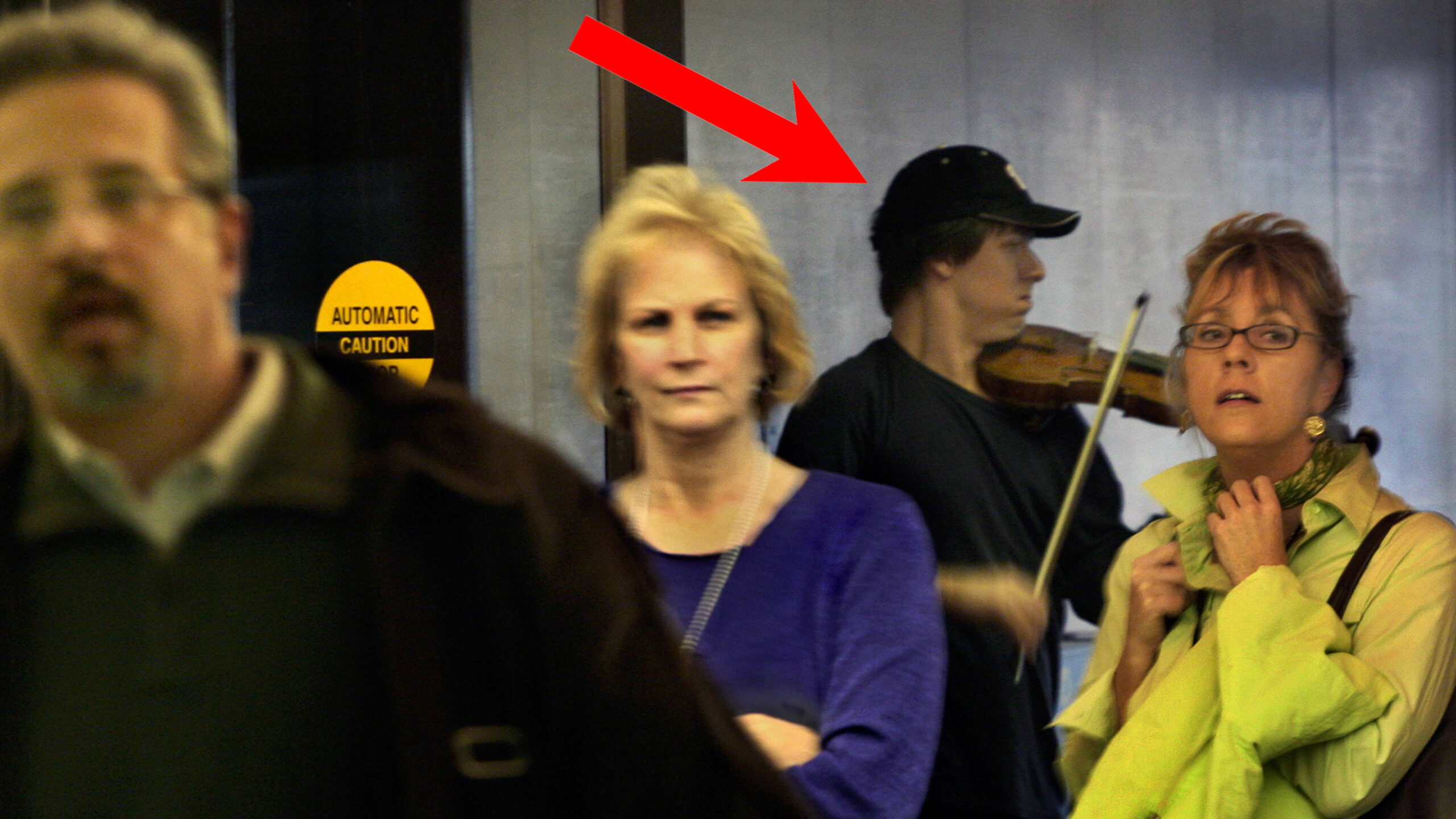
You’ve probably heard it. On a January morning in 2007, one of the finest violinists alive stood in a Washington Metro station during rush hour and played for about forty-five minutes on a three-hundred-year-old violin. Around eleven hundred people walked past. Seven stopped. He collected thirty-two dollars and change. A few nights earlier, the same man, on the same instrument, had filled a concert hall at premium prices.
The Washington Post ran it as an experiment about whether people notice beauty out of place. April Dunford opens Obviously Awesome with it and reads it as a lesson about positioning, about how the right context makes a thing legible and the wrong one buries it.
I want to give that reading its full weight before I push on it, because the part it gets right is the part most people get wrong, and the behavioural science is firmly on its side.
Rory Sutherland has spent a career making this case better than almost anyone. His line, roughly, is that all value is perceived value, and that perception is leaky, open to all kinds of cues that have nothing to do with the thing itself. Read enough of his work, and you stop believing that quality speaks for itself. It doesn’t. The setting speaks, the price speaks, the packaging speaks, and the object is only ever heard through them. So the intuition under the Bell story, that surroundings carry an enormous share of what we think we’re judging, is one of the more reliable findings we have about people. Bell, with every cue removed, is a clean picture of it. I won’t argue with that part.
Here’s where it stops holding up for me, and it took me a while to find the word. The thing the story is used to teach is positioning. And the longer I look at what actually happened in that station, the less the word fits.
Start with the obvious question. Was Bell any less one of the greatest violinists alive while he stood there making thirty-two dollars? He wasn’t. His standing in the world held the whole time. Whatever changed between the hall and the station, it wasn’t his position. So if I’m going to use the word honestly, I have to find what did change, and name that instead.
When I make the list of what the experiment took away, it’s all signals, and they’re all expensive ones. The hall, which you can’t walk onto without being vetted by people whose job is to keep the unvetted off it. The ticket price, which only holds if enough people will pay it. His name on the bill, and the machinery that put it there. Every one of those costs something real to earn, and that’s the whole reason a stranger can lean on them. This is where Sutherland’s lens makes the thing click into place for me.
Signalling theory comes out of biology, from the puzzle of the peacock’s tail. The tail is a handicap. It’s heavy, it’s conspicuous, it makes the bird easier to catch, and that is precisely why it works as a signal. Only a genuinely strong peacock can carry the cost of it and survive, so the tail is a guarantee of fitness that a weaker bird simply can’t fake. The cost is the credibility. Sutherland takes that straight into commerce. He argues that all advertising is costly signalling, that the expense of an ad is itself the message, and that the meaning we attach to something tends to track the expense with which it’s communicated. A company that spends a fortune to put its name in front of you is, in one of his images, like a racehorse owner betting heavily on his own horse. The owner knows things about the horse you don’t, and the size of the bet tells you he likes what he knows. You’d be unwise to ignore information that expensive to send.
That’s what the concert hall and the ticket price and the billing are. They’re Bell’s costly signals. They’re expensive to earn and hard to fake, which is exactly why a stranger trusts them without having to evaluate the playing for himself.
And there’s a reason we lean on signals like this, and it isn’t laziness. Judging the thing itself, on the merits, is expensive. It takes time most of us don’t have, and an ear most of us don’t have either. So we outsource the judgment to whatever we can read quickly, and the cues we trust most are the ones a faker couldn’t afford to send. Think about choosing a bottle of wine you know nothing about. The heavier and more expensive the bottle feels, the better you assume the wine is, and you aren’t being a fool when you do it. You’re reasoning that a producer willing to spend that much on the packaging is probably confident about what’s inside, and that enough people must be buying it to make the spend worth his while. You get to skip the part where you’d have to actually know anything about wine. The commuters in that station had no expensive signal to outsource to. The only one cheap enough to read on the way to a train was the busker frame, so that’s the one they used.
Now the nuance I had to work through, because the easy version is to say the experiment stripped the context and stop there.
The context, the frame, whatever we want to call it, isn’t a separate thing from the signals. The frame is made of signals, and they run along a gradient from cheap to costly. The vetted hall is a costly frame-signal. The price is a costly frame-signal. The words a performer or a company writes about itself are a cheap one. Same frame, very different costs, and by the logic of the theory, very different credibility.
So when I look at what the positioning craft, as it’s usually taught and sold, actually works on, I notice it lives almost entirely in the cheapest sliver of the frame. The category line. The descriptor. The value sentence. The “for this customer, unlike that alternative, we are the thing that does this” template. It’s all words on a page. And words are the one signal that costs nothing to send. By the same logic that makes the peacock’s tail believable, that makes words the least believable signal in the whole stack. Anyone can write them.
Words carry a second weakness on top of being cheap. We recognize them as the seller talking about himself, and we discount self-interested speech almost without noticing. A company calling itself the trusted leader trips the same quiet reflex a stranger does when he tells you, unprompted, how honest he is. The claim argues for itself, so we lean away from it. If you watch me hand real money to someone on the street, you’ll believe I’m generous. If I only tell you I’m generous, you’ll file it and keep walking. That’s the gap between a costly signal and a cheap one, and the words sit on the wrong side of it.
That’s the part that stops me cold. The most teachable, most packageable, most productized corner of positioning is the corner the market discounts the hardest.
It also lets me say something fairer about the Bell story than the version that’s usually told. When I say his position never moved, that’s only half of it, and the missing half is the interesting one. The decades that made him great were still there, untouched by any of it. What the morning had taken was the whole set of signals that normally carry that greatness into a room. Nobody repositioned him. The experiment had simply cut him off from his own costly signals, and a crowd that can’t reach your costly signals will read whatever cheap one is lying nearby.
And a subway isn’t a neutral, empty space. A man with a violin and an open case reads as a busker before he reads as anything else, and the busker frame is itself a cheap signal, one that happens to point the wrong way. So the commuters weren’t standing in front of an absence of information. They were handed a cheap, wrong signal, and they used it, because it was the only one cheap enough to read in the few seconds they had on the way to work. They didn’t file him as a great violinist they failed to recognise. They filed him as a busker, which is a wrong answer, and a wrong answer is more expensive to walk back than an empty one.
If you want to know how little the writing can do in that situation, run the test. Take the field’s whole toolkit and drop it into the station. Put a sign in front of him reading “Joshua Bell, internationally acclaimed violinist, three-hundred-dollar concerts.” Does the crowd stop? Barely. A written claim standing inside a busker frame reads as a man overselling himself, and the cheap signal can’t manufacture the credibility the costly ones used to carry. The one lever the craft is built on is the lever that does almost nothing here. That tells you where it sits in the stack.
There’s a deeper Sutherland idea sitting under all of this. He points out that past a certain point, making the object itself objectively better stops paying off, because value lives in perception rather than in the thing. The Bell experiment is that idea with the volume turned all the way up. The object was about as good as objects get. The perception collapsed anyway, because the costly signals that build perception were gone. You can’t out-quality a missing signal stack. Which, in passing, is the same reason “the best product wins” keeps failing the people who believe it. The product was never the variable it felt like.
When I lay all this against my own way of thinking about positioning, it sorts into a cost gradient. The words sit at the top, cheapest to produce and thinnest in belief. Beneath them sits proof, which costs more to assemble. Beneath that sit the decisions that actually embody the thing, the years in the practice room, the vetting, the price you hold and refuse to discount. And at that layer something happens that I think matters more than anything in the writing. The signal and the substance stop being two things. The decision is the position. A description can only ever point at it from across the room. The craft, as it’s commonly taught, spends nearly all of its time at the very top of that gradient, where the work is cheapest, and the belief is thinnest.
I don’t think Dunford is wrong about context. She’s right that surroundings carry value, and as I said, the science backs her there. What I keep landing on is narrower than a disagreement about context. The craft as taught works the cheapest signal in the stack and calls the whole of it positioning, when the thing actually doing the carrying is the expensive signals underneath, the ones you can’t write your way into.
Which is the part that should worry anyone sitting on something genuinely good that the market is underreading. You don’t get to stand on the work. People read the signals, and they read the cheap ones last. A great product with a busker’s signal stack is Joshua Bell in that station. Right about everything, and worth thirty-two dollars until something expensive enough to be believed tells the room what it’s standing in front of.


Leave a Reply