


Why consumer-loved companies lose their identity on the way to IPO.
The moment a beloved product hires a “B2B CMO,” a clock starts ticking. Not toward growth but fracture. Not visibly or immediately. But the fracture is there, and it widens.
There’s a pattern hiding in plain sight. The products people love most, the ones that grew through word of mouth, that felt like movements, that made users feel like insiders, almost always lose something essential when they “go enterprise.”
It’s not about selling out.
It’s about splitting in two.
Here’s the TL;DR: consumer-loved products face a bifurcation problem. The language that makes the Wall Street model a bigger TAM is rarely the language that makes customers feel something. Most companies try to speak both languages. They end up fluent in neither.
And the S-1 is where this becomes permanent.
Because, whether founders realize it or not, the S-1 isn’t just a regulatory filing. It’s the most widely read positioning document a company will ever publish. It’s where the company declares what it is at the exact moment the world starts pricing that identity.
Why it matters now: a generation of product-led darlings are approaching this moment. They’ve won consumer love. They’ve penetrated the enterprise through the back door. Now they need to formalize the enterprise story — often because an IPO is coming, or because the organization has matured to the point where informal adoption isn’t enough.
The decisions they make in the next 12–24 months will determine whether the company that emerges still resembles the one people fell in love with.
The trajectory every product-led company knows
The early arc is familiar. It almost reads like a genre:
- A product launches, and a small group of people love it.
- Organic growth follows. Word of mouth. “Have you tried this?” spreads.
- Adoption shows up inside big companies, quietly. Someone swipes a personal card. A team starts using it without permission.
- Then the easy growth slows.
- The board asks a reasonable question: When do we monetize the enterprise?
- Enterprise motion begins. A “grown-up” exec is hired.
- Two languages emerge. Two stories. Two brands.
And here’s the bifurcation most teams can feel before they can name it:
On the consumer side, positioning is about who the user becomes. Its identity. It’s a transformation. It’s a feeling. It’s love. It’s the quiet internal sentence: “This is me.”
On the enterprise side, positioning shifts to what the product does. It becomes a capability. Delivery. Function. Approval. It’s the external sentence a buyer needs to say to justify the purchase: “This is safe.”
Same product. Two different psychological jobs. And when those jobs drift too far apart, the company starts sounding like two different companies.
The trap is subtle: companies believe they can maintain both.
“We’ll have consumer marketing AND enterprise marketing.”
“Different teams, different messages, same product.”
But positioning isn’t messaging. Its identity. And identity doesn’t bifurcate cleanly. When it splits, the market doesn’t experience it as “smart segmentation.” The market experiences it as: I’m not sure who you are anymore.
The tell nobody talks about
Watch the org chart. When a company creates a dedicated “B2B CMO” role alongside an existing brand leader, it’s not just a hiring decision. It’s an admission that one story can’t carry both motions anymore.
Canva is a clean example, because it’s explicit: Canva created a B2B CMO role and appointed Meghan Gendelman to lead it as Canva Enterprise scales globally.
That move might be strategically correct. It might be inevitable at a certain scale. But it’s also a signal: the split is now institutional.
Two leaders.
Two strategies.
Two internal definitions of “what matters.”
Two versions of the brand wearing the same logo.
And once it’s institutional, it rarely resolves itself on its own because each side becomes measured by different scorecards.
Consumer side: attention, love, adoption, cultural relevance.
Enterprise side: pipeline, ARR, net retention, security posture, procurement wins.
Both are legitimate.
But the company only gets one identity.
Why this happens (and why it’s predictable)
This isn’t a morality story. It’s economics + psychology + incentives.
1) Enterprise buyers are risk managers, even when they’re fans: Enterprise purchases are not “buying.” They’re “approving.” Approval doesn’t reward delight. Approval rewards safety. So the enterprise story naturally gravitates toward: compliance, governance, SSO, audit logs, admin controls, interoperability.
That’s not evil. That’s procurement doing its job. But notice what happens: the story shifts from aspiration to assurance. And assurance language is almost always colder.
2) The buyer and the user are often the same human: The part companies routinely miss, the CMO who approves the enterprise contract is often the same person who fell in love with the product at 11pm making something on their laptop. The CTO who signs off might be the same person who championed the tool in the first place because it made their team faster.
Enterprise positioning often speaks to the buyer’s role, not their identity. But identity is what created the grassroots adoption in the first place. And identity-based resonance isn’t a soft concept — there’s a deep body of consumer research showing that when brand meaning aligns with a person’s self-concept, preference and behaviour strengthen.
So when the enterprise narrative discards identity and replaces it with capability, the company loses the very psychological engine that got it inside the enterprise to begin with.
3) IPO gravity pulls language upward (and away from humans): As companies approach liquidity events, a second force shows up: valuation logic.
You start hearing a predictable lexicon:
* “platform”
* “infrastructure”
* “operating system”
* “the X cloud”
* “mission-critical”
* “end-to-end”
* “category-defining”
This isn’t random. It’s incentive-aligned. A bigger perceived TAM tends to support bigger valuation narratives. And the S-1 is where that language hardens into a public identity. There’s even research showing that prospectus language characteristics (tone, readability, textual features) relate to IPO outcomes and investor responses — meaning language isn’t decorative. It moves markets.
So the closer you get to IPO, the more your narrative gets optimized for investors who model markets, not for users who feel meaning.
The bifurcation is not a messaging problem
This is the part that makes it hard. Teams try to solve it with copy. With brand systems. With “brand architecture.” With separate websites for separate audiences. But bifurcation rarely starts in marketing. It starts in product and strategy. It starts the moment the company quietly decides that “enterprise” means building a different product — then insists it’s the same product.
That’s the real question most founders avoid: Is the enterprise product the same product at scale? Or a different product wearing the same logo?
If it’s the same product, you can keep one identity and simply add controls. If it’s a different product, you can’t paper over it with words. You’ve created a structural split. The market will feel it.
Four companies living the bifurcation story
None of these examples are villains. They’re case studies in a common gravitational problem.
1) Slack: rebellion translated into compliance
Slack’s consumer story was visceral: work could be better. Lighter. More human. More expressive. Emoji-native. The anti-email rebellion, delivered in software. Then enterprise pressure arrived.
The enterprise story becomes familiar: secure collaboration, compliance, SSO, admin controls.
Now, here’s the brutal dynamic: once Slack starts sounding like every other enterprise tool, differentiation collapses. And then Microsoft shows up with a structural advantage: bundling.
Slack filed an EU competition complaint arguing Microsoft tied Teams to Office and leveraged its dominance. Years later, Microsoft moved to globally unbundle Teams from Office under regulatory pressure.
This is not a “Teams is better” story. It’s a “once your magic becomes a checklist, the cheapest checklist wins” story. When Slack’s identity gets translated into enterprise language, the rebellion becomes “approved collaboration.” And that’s not a rebellion anymore.
2) Notion: self-expression vs governance
Notion’s consumer story wasn’t “documentation.” It was a blank canvas for how you think. It felt like self-expression. Personal systems. Beautiful dashboards. A sense that your workspace could be designed, not imposed.
Then the enterprise asks for governance: permissions, structure, admin controls, and standardization. The contradiction? The enterprise asks for the opposite energy. And the market has already trained itself to see “knowledge management wiki at scale” as a commodity category — one where Confluence is the default mental reference point.
Even Atlassian, in its own comparison, frames Notion as more individual/small-team oriented and notes that it can become disorganized as complexity and scale increase, while Confluence is structured to scale for enterprise teams.
Notion can still win the enterprise. But only if it protects the original identity: the tool that makes thinking visible, not “another wiki with permissions.” Because “wiki with permissions” is a feature set. “The way you think, made buildable” is a position.
3) Figma: the rare case where the consumer position scales
Figma’s consumer story was “design together.” Multiplayer creativity. Real-time collaboration. The tool matched how modern teams actually work. That story scales better than most. Collaboration is not just a consumer joy but an enterprise need.
And Figma’s IPO path shows a different kind of discipline. Figma publicly shared that it confidentially submitted a draft S-1 in April 2025. By July 2025, reporting showed that Figma had filed for a U.S. IPO and disclosed revenue and profit growth.
I’m not using Figma to make a “hero” out of them. I’m using them because the through-line is instructive: When the consumer story is inherently enterprise-relevant, you can broaden the narrative without contradicting yourself.
Most consumer-loved companies do not have that luxury.
4) Canva: the split becoming formal (in real time)
Canva’s consumer story is clear: empower people to design. Not “designers.” People. It’s a permission slip. Its identity transformation: I can make things now. (I have a ‘voice’)
And the consumer story still works when told plainly.
In India, Canva ran a long-form campaign (“Dil Se, Design Tak”) built around emotional connection rather than platform language; reporting noted the video garnered over 10 million YouTube views within a month and highlighted that the ad’s “USP… is not the product itself but the emotional connection.”
Then enterprise gravity shows up.
Canva introduced “Canva Enterprise” as a new subscription offering designed for large organizations and IT admins. Later, Canva announced what it called its “Creative Operating System,” framing it as its biggest product launch, combining a “supercharged Visual Suite” with AI and tools to scale brands. Coverage noted that “Creative Operating System” is not a literal OS, but a framing device signalling an integrated marketing workspace.
Then the organizational tell arrived: Canva created a B2B CMO role and hired Meghan Gendelman to lead it. Again, this might be the right move. It might be necessary. But it’s also the definition of bifurcation pressure: the consumer meaning (identity, expression, empowerment) is being asked to coexist with enterprise meaning (platform, governance, operating system).
Which story becomes the “official story” is what matters. Because the S-1 will force a single public answer.
The accelerant: the CFO playbook
About 12–24 months before an IPO, a familiar pattern shows up. A CFO with public-market experience is hired. The playbook arrives. The narrative starts to change.
Canva provides a clean example again because the biography is visible: Canva hired Kelly Steckelberg as CFO after her tenure as Zoom’s CFO, where she helped steer Zoom through its 2019 IPO.
Zoom’s S-1 language itself shows the shape of that story: it described Zoom as a “video-first communications platform” that “delivers happiness,” connecting people via video, voice, and chat.
That is already doing two things at once:
Investor narrative: platform, communications, big market.
Customer meaning: happiness, frictionless connection.
Zoom could get away with it because the product was undeniable. People didn’t love Zoom because it was a “platform.” People loved it because it worked.
Snowflake is another canonical example of platform framing: Snowflake’s S-1 used “Data Cloud” language, describing “the Data Cloud” as the destination for siloed data.
This is valuation language. Category language. “Infrastructure” language. And it works, especially when execution is exceptional. But here’s the cost. These phrases rarely map to the way customers describe their lived experience.
The CFO playbook optimizes for analysts who model markets, while the consumer story optimizes for humans who feel meaning. A company can sometimes hold both — if it’s disciplined. Most aren’t, because the organization starts treating them as separate jobs.
The moment of truth: the S-1 freezes the story
Most founders think of the S-1 as a financial and legal milestone. But the S-1 is also a narrative milestone. And narrative isn’t a vibe. It’s a public record.
Research on prospectus language exists precisely because words influence investor perception and pricing — tone, readability, and disclosure characteristics can correlate with IPO outcomes and investor response.
So the S-1 doesn’t just reflect identity. It creates identity.
Here’s the two-audience problem:
1. Wall Street reads for TAM, moats, platform potential, and growth curves.
2. Customers and employees read for recognition: Is this still the company I love / joined?
Most S-1s are written almost entirely for audience #1. Which means the first public definition of the company becomes the least human one.
Then something odd happens:
The product hasn’t changed. But the company starts sounding like a different company. And once it’s public, that’s hard to walk back. Not because marketing can’t. But because public companies get trapped in the story they sold.
When it goes wrong: WeWork as the exposed gap
WeWork is the extreme case, but it’s useful because the pattern is visible in high contrast. WeWork’s IPO filing opened with grand language; multiple outlets highlighted the S-1 line: “We are a community company committed to maximum global impact,” and language about elevating the world’s consciousness.
The S-1 also framed WeWork as a global platform and “one-stop shop” for members to work, live, and grow. The gap wasn’t just “storytelling.” It was the mismatch between narrative and economic reality. The S-1 exposed it. The IPO collapsed. Most companies won’t fail like WeWork.
But the mechanism is the same: If your S-1 story requires you to become a different company, the market will eventually notice. Sometimes it notices immediately. Sometimes it takes a few quarters. But it always arrives.
The companies that avoid bifurcation do one thing differently
They don’t try to tell two stories. They find one story that works at every altitude.
user
team
enterprise
investor
One identity. Different proof.
Apple is the simplest illustration: “Think Different” didn’t need a B2B translation. Enterprises didn’t need Apple to become “enterprise-y.” They needed Apple to make the same identity safe to deploy.
Shopify is another: “arming entrepreneurs” scales because one entrepreneur is a rebel; a million entrepreneurs is a movement. The story expands without becoming unrecognizable.
That’s the real move: keep the identity sentence intact, and let the enterprise layer be proof, not replacement.
A practical diagnostic: four tests that predict the fracture
If you’re inside a consumer-loved company heading upmarket, ask these before you hire the second marketing leader, before you rename yourself an “operating system,” before the bankers start drafting your IPO narrative.
1) The customer test
If a customer reads the S-1 “Business” section, will they recognize you? Not the numbers. The story.
2) The employee test
If an employee reads it, will they feel proud, or will they feel like they joined a company that no longer exists?
3) The altitude test
Can your positioning survive an altitude change without contradiction? If your consumer story is “freedom and self-expression,” and your enterprise story is “governance and control,” that’s not an altitude shift. That’s a personality change.
4) The spoken test
Could you say your S-1 narrative out loud to your best customers without embarrassment? If the language only makes sense in a banker’s deck, you’ve already drifted. If the answer to any of these is “no,” the bifurcation has already begun.
The S-1 won’t start it.
The S-1 will make it permanent.
What to do instead (without pretending enterprise doesn’t exist)
Bifurcation isn’t inevitable. But it takes discipline. And it usually takes saying “no” to something attractive.
Here’s the cleanest path I’ve seen across the examples:
1) Protect the noun you own
Not your tagline. The concept.
Slack’s early noun was revolt.
Notion’s noun was buildable thinking.
Figma’s noun is collaboration.
Canva’s noun is voice.
Enterprise language often swaps the noun for a category label: platform, operating system, infrastructure. Those labels may help valuation narratives. But they don’t help human memory. If you let the noun change, your identity changes.
2) Treat enterprise features as proof, not position
Enterprise needs controls. That’s real. But the position should be: the same thing you loved—now safe to scale. Controls are evidence that you can keep your promise at scale, not a new promise.
3) Don’t build a second product and pretend it’s the first
If the enterprise requires a different product, you have two honest options:
build a second product and accept a separate identity (with clear architecture), or redesign so the same product can scale without becoming a different experience.
What doesn’t work is building a different experience and insisting it’s “the same, just enterprise-ready.” Markets feel that lie fast.
4) Write the S-1 narrative like a human document
Not poetic. Not fluffy. Human. The best S-1 narratives don’t avoid business reality. They simply refuse to erase meaning. Because meaning is not a marketing asset. Meaning is your adoption engine. And there’s strong behavioural evidence that identity alignment shapes preference and action; when you remove identity, you remove energy.
Closing
The bifurcation problem isn’t solved by better messaging. It’s solved by making a decision about who you are, and refusing to let incentive gravity rewrite it.
Consumer-loved products have an identity. It’s why people fell in love. It’s why employees joined. It’s why growth happened. Enterprise ‘positioning’ often pressures a different identity — one optimized for procurement and analysts’ TAM modelling.
The companies that thrive don’t pretend these forces don’t exist. They do something harder. They find the one story that’s true at every altitude. Then they prove it with enterprise-grade reality, without replacing it with enterprise-grade language.
Because the S-1 is coming.
And when it arrives, it won’t ask you, “Do you have great marketing?”
It will ask you, in public, in permanent ink:
What are you?
If your answer requires two languages, you don’t have a messaging issue. You have an identity split. And the market will price the split.
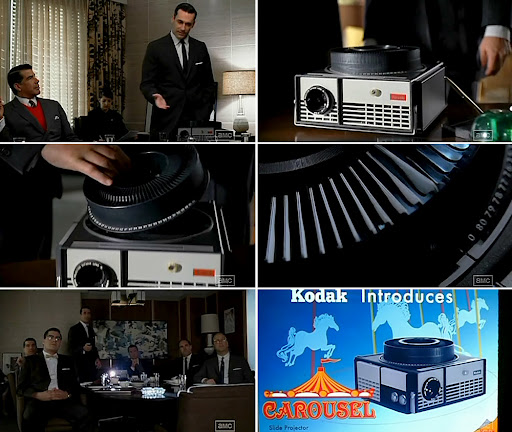
P.S. I keep thinking about the Kodak Carousel scene in Mad Men. Don doesn’t sell a projector. He sells what happens inside someone when the lights go down. He sells the feeling of going back. The proof isn’t a feature list. The proof is a room full of adults, suddenly quiet.
That’s the difference this essay is pointing at.
Most consumer-loved products win because they find their “Carousel” moment. They name a human truth so cleanly that people start repeating it for them. Then enterprise arrives, and the temptation is to replace that truth with something safer: governance, compliance, operating systems, platforms. Useful things. Necessary things. But emotionally mute.
The trap is thinking you can keep the Carousel and just bolt on the checklist. In practice, the checklist becomes the headline. And the headline becomes the identity.
If you’re heading toward enterprise and IPO, maybe the question isn’t “how do we add enterprise language?” Maybe it’s “how do we keep the Carousel at the center, then earn the right to add the controls?” Because when you lose that, you don’t just lose a story.
You lose the reason people cared enough to bring you into the building in the first place.
Leave a Reply
You must be logged in to post a comment.