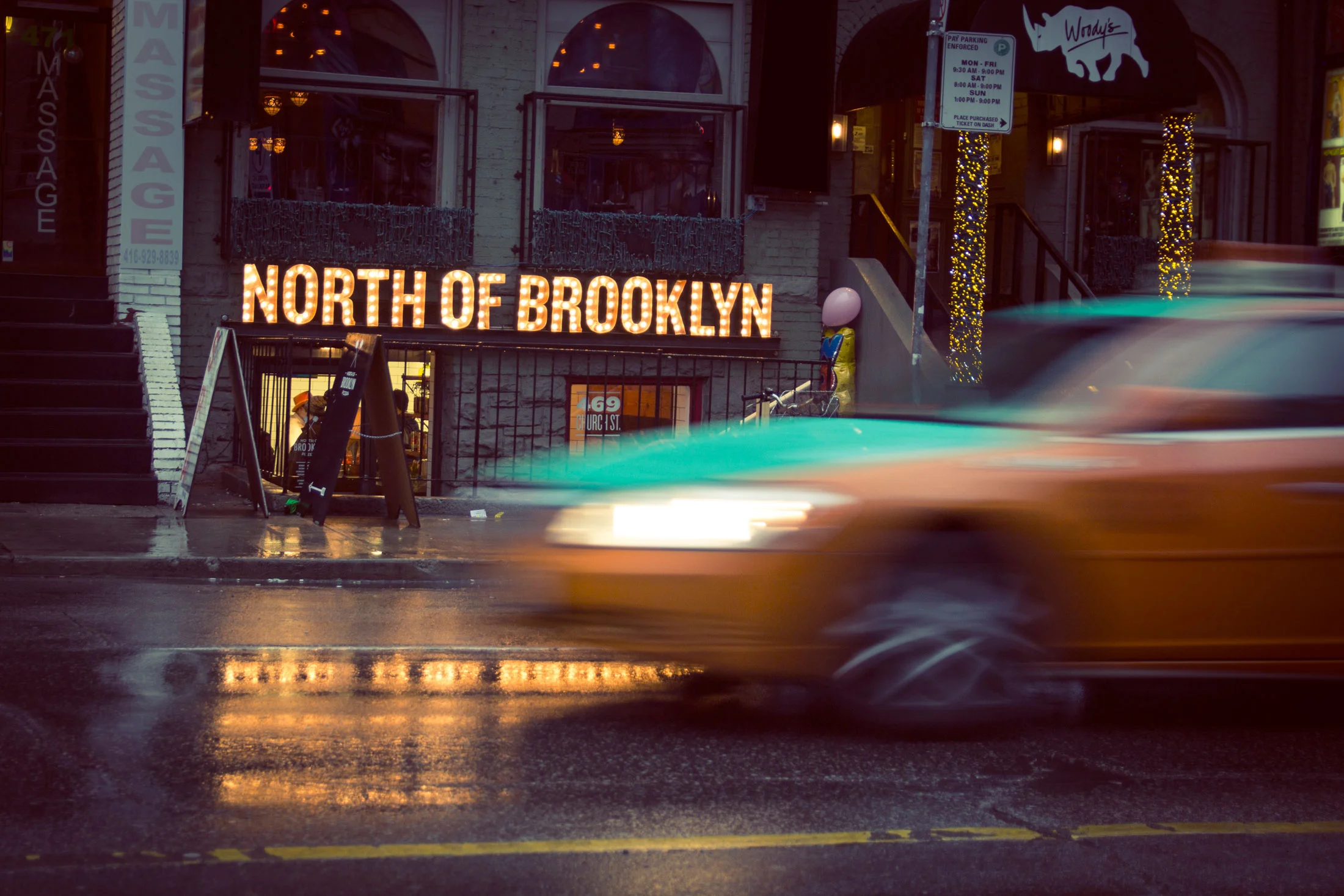

A note before you read: Josh and Alex, I have a lot of respect for what you have built at North of Brooklyn over fourteen years. I have been watching your work for a while, and I keep coming back to the question I study in every business: how a company ends up connected to who its customers are.
I have tried to get every fact right, drawing on public reviews, interviews, and press. You have data I don’t, and you may read some of this differently. If I have something wrong, I don’t intend to misrepresent you, your teams, or your stores.
No one can read their own label. This is my attempt to read yours from the outside. The whole report sets out to answer one question: what business are you in?

How to read this analysis
The analysis uses a tool I call the 4-Level Positioning Canvas.
Level 4, Position (own the noun). The concept that becomes synonymous with you in your customers’ minds. Volvo owns safety. Tesla owns the future. A position takes five to ten years to establish, and you can’t claim it out loud. You have to prove it, decision by decision, until customers say it for you.
Level 1, Frame (articulate). How you put your positioning into words. It is the easiest level to develop and the weakest barrier, because anyone can copy a sentence.
Level 2, Execute (prove with verbs). The measurable outcomes that show the position is real. Nouns establish territory; verbs prove it.
Level 3, Live (structural embedding). The position is built into how you allocate resources, who you hire and who you partner with. At this level, 70% or more of resources go to the capabilities the position depends on.
The sequence runs Level 4, then Level 1, then Level 2, then Level 3. You cannot skip levels. Most companies operate at Level 1 while claiming Level 4, and the real work sits in the gap between the two.
TL;DR — For Josh and Alex
Josh and Alex, you think you built a pizza shop that does simple things really well. You did. Your customers took it one step further.
Your customers write things like this:
- “Best pizza in the city. No contest”
- “Without doubt, THE best pizza in Toronto.”
- “Best pizza I’ve had in Toronto (and I’m from NY)!”
One in eight of your Uber Eats reviews says this. It shows up at six of your seven stores. Maker’s customers say it about Maker half as often. Pizza Pizza’s customers never say it.
A customer’s first pie is great. The second one tastes the same, and so does the tenth. After enough orders, something changes in their head. They stop looking at other apps and trying new places. They decide this is the best pizza in Toronto, and the question is closed.
The word for that feeling is conviction. It means being so sure that you stop looking.
Being reliable is a different thing. Maker’s customers say Maker is the same every time, just as often as yours say it about you. But they don’t call Maker the best in the city.
Your customers got there long before anyone famous agreed. In 2013, they were already writing, “The BEST Pizza I have had in Toronto.” Dave Portnoy only confirmed it in 2022.
Your choices kept that feeling safe. You never paid for ads, so the praise was always your customers’ own. You froze nothing. You worked on one dough for over ten years. So the pie never changed. You dropped slices at six stores, because a reheated slice is your weakest pie. You kept the same nine pies. You put seven Toronto kitchens on the delivery apps. Now the best pizza in the city can come to any door.
That feeling can break. This summer, six delivery customers at three stores wrote that their box arrived open. A customer who gets one bad order starts looking again. Fewer reviews call you the best now than in 2023. You have to earn it again every night.
Keep this idea inside the company. Use it when you hire and when you say no. Never print “best pizza in Toronto” on a box. It works because your customers said it first.
Josh and Alex, you own conviction: customers who are sure they already have the best pizza in Toronto.

Part 1: The Story They Tell
Josh Spatz and Alex Potter opened North of Brooklyn on Queen Street West in August 2012. When blogTO covered the opening, it described the idea as “high-end pizza for takeout and delivery.” At the time, Toronto had fancy sit-down pizza rooms on one side and “chains that pump out cheap cardboard slices” on the other. North of Brooklyn went in between.
The name is a geographic joke. As Post City put it in 2015, the shop is “literally north of Brooklyn”. Spatz was clear it was not a claim about style. “There isn’t really such thing as a Brooklyn-style pizza,” he told blogTO. What he liked about New York was how seriously people there take pizza.
From the start, the founders talked about what goes into the pie. “For us it’s about really nice ingredients,” Spatz said. “We’re not freezing anything, and we’re doing all the prep here.” Potter said it in one line: “We want to do basic things really well.”
They were strict about the dough. In 2015 they told Post City that using a rolling pin in their kitchens “is a big no-no”. A rolling pin pushes the air out of the dough, and the air is what makes their crust light. By the time Better Half opened, Potter said the dough was “a recipe we worked on steadily for over ten years and involves more warm fermentation than normal pizza dough to give it that lightness.” In 2019, Spatz said, “Making pizza can be a lifetime pursuit.”
Then they grew, one Toronto store at a time. Church Street opened in 2014. Geary opened in 2015, inside a beer bar called Greater Good. Rogers Road came next. In March 2020, Spatz bought an old building on Greenwood and turned it into a pizzeria with a bar called Better Half. Avenue Road opened in 2023. The Queensway opened in October 2025, with a bar upstairs called Low Rise. Every store sells the same short menu and the same signature pies.
They grew without ads. In July 2022, with five stores open, Driven.ca reported that the founders “have spent a grand total of zero dollars on advertising.” Spatz explained why. When a small restaurant runs an ad, he said, people may think it is not busy. “It just sends the wrong sort of signal.” He saw the stores themselves as the marketing: “What our physical spaces look like—that’s our marketing.”
The bars came from a worry about delivery. The founders said, “Our pizza was always at its best fresh out of the oven, and we didn’t want our guests eating our food after sitting in a car for half an hour.” Even at the bar, they kept one oven. When they added wings, they did not buy a fryer. “We had to make the wings work in the only heat source we had, which was the pizza oven.”
Avenue Road opened because customers asked for it. “We’ve been hearing, ‘When are you coming North?’ from customers for years now,” Spatz said.
Customers were calling it the best long before anyone famous did. In 2013, a Tripadvisor reviewer at Queen titled a review “The BEST Pizza I have had in Toronto”. Another called it “Best Takeout & Delivery Pizza in Toronto!” By 2017, a Church reviewer wrote, “It consistently makes lists for best pizza in Toronto, and it is evident why.”

Then came Dave Portnoy, the Barstool founder famous for his one-bite pizza reviews. On April 25, 2022, he walked into the Queen Street store on one of his first Toronto stops. He gave it an 8.4 and said: “This can go basically toe to toe with any pizza I’ve ever eaten; it’s that good.” It finished first of all the Toronto pizzerias he tried. Pizzeria Badiali came second, at 8.3. Maker Pizza came last, at 6.1. A neighbour posted on Reddit that “there was a definite bump of bros coming up to try it out.” Another wrote, “They sold out of pizza at like 7pm the next day. Lol”. The company shared the review on Instagram. It never turned it into an ad.
Food writers kept saying good things. Tastet called it “the elder statesman of Toronto’s slice scene”. Chef’s Favourite called it “the reliable hitter”. In October 2026, Streets of Toronto named it the “benchmark for high-end delivery pizza”.
So if you asked Josh and Alex why it worked, they would likely say: good ingredients, nothing frozen, dough they’ve worked on for ten years, simple things done well, rooms people like, and no ads because a busy place doesn’t need them. They would point to seven stores, all in Toronto, with Uber Eats ratings between 4.6 and 4.7 at every one.
All of that is true. It describes what goes into the box and the room around it. It says much less about what happens to the customer after many boxes. This is the story Josh and Alex tell. It’s true. It’s also incomplete.
Part 2: The Hidden Position
North of Brooklyn doesn’t own New York-style pizza, the sesame crust or the dining rooms in the customer’s mind.
They own conviction.
Conviction, in plain words, is the feeling of being sure. A North of Brooklyn customer feels sure they already have the best pizza in Toronto. Because they feel sure, they stop looking. They don’t scroll other apps or try the new place everyone talks about. When they want pizza, the choice is already made.
Customers can’t name this feeling. Nobody writes that they feel conviction. They write what it sounds like:
- “Best pizza in the city. No contest” (Greenwood, Uber Eats)
- “The best pizza in the city. No competition. The vodka sauce is heavenly.” (Queen, Uber Eats)
- “Without doubt, THE best pizza in Toronto.” (Church, Uber Eats)
- “Best pizza I’ve had in Toronto (and I’m from NY)!” (Avenue, Uber Eats)
- “This seriously is top runner for best pizza in Toronto” (Geary, Uber Eats)
- “This is truly the best pizza place in Toronto” (Rogers, Uber Eats)
Each line ends an argument before anyone can start one. The feeling doesn’t come from the first order. The first pie is great. The next one tastes the same, and so does the one after that. After months of pies that match, the customer stops comparing. Where to get the best pizza in Toronto is no longer a question for them.
There are two kinds of sure. One is being sure the pizza will be good. The other is being sure it is the best. The first kind is common. Maker Pizza’s customers say “always” or “every time” in 9% of their Uber Eats reviews, the same as North of Brooklyn’s customers. The second kind is rare. North of Brooklyn’s customers call it the best pizza in Toronto in 57 of 468 reviews. That’s about one in eight, at six of seven stores. Maker’s customers say it half as often. Pizza Pizza’s customers never say it.
The feeling did not come from a celebrity. Customers wrote it in 2013: “The BEST Pizza I have had in Toronto.” In April 2022, Dave Portnoy ranked North of Brooklyn first in the city. He agreed with something Toronto had already decided. What his review added was crowds. On Yelp and Tripadvisor, mentions of Portnoy and “the hype” went from 2% of reviews to 15%.
What customers do shows the feeling even better than what they write. One customer loved the downtown store and wrote, “This is the only pizzeria id frequent to.” When a store opened near their home on Avenue Road, they switched to it without looking anywhere else. Twenty-two reviews, at all seven stores, use words like “only,” “go-to” and “favourite.”
Price tells the same story. A large margherita went from $18 in 2016 to $27 today. Only three of 468 delivery reviews mention price. People who are still shopping talk about price. People who have decided don’t.
Why the founders’ choices fit
Every big choice the founders made protects that feeling, even though they never called it that.
The menu stays the same. In September 2026, Tastet wrote, “The formula has not moved.” Customers tie their verdict to specific pies. “Best pizza in city. Vodka verde a must have” (Greenwood). “Best in Toronto their NY STYLE is my fave va the sesame crust. 10/10” (Rogers). If the pies kept changing, the customer would have to decide all over again.
The dough stays the same. Nothing frozen, all prep in house, no rolling pin, one recipe for over ten years. Each of these rules removes a way for tonight’s pie to come out different from last month’s.
The slices went away. North of Brooklyn opened selling slices. Around 2020, it stopped selling them everywhere except Geary. A slice sits under a lamp and gets reheated. It is the version of the pie most likely to let a customer down. A Reddit user noticed: “Before the pandemic, I really enjoyed grabbing slices at North of Brooklyn, but that’s no longer an option.” The founders gave up the thing they started with to protect the whole pie.
No ads. If North of Brooklyn told people it was the best, people would test the claim. Because the company never said it, only customers say it. That makes it more believable.

Subscribe to continue reading
Subscribe to get access to the rest of this post and other subscriber-only content.