


WHY THIS EXISTS
I built systems.
Monopoly surfaces external reality — what the market actually believes about a company. It can be run on clients, competitors, acquisition targets, or yourself. It shows the gap between what companies claim and what customers perceive.
The Clarity Kit does the inside work — helping CEOs and founders discover what they actually own. It names the position, surfaces the trade-offs, and turns clarity into assets you can ship.
One is perception intelligence. (Outside-in)
One is identity work. (Inside-out)
Both rest on the same premise: you cannot read your own label from inside the jar. But tools without philosophy are just features. And philosophy without tools is just slides.
This manifesto is the thinking underneath. The principles that informed the design. The beliefs that shaped the decisions.
It draws from three sources: Le Corbusier, who gave architecture a syntax clear enough to survive translation from imagination to concrete. Bruce Mau, who gave design a practice that refuses to be complete. Roger Martin, who gave strategy a bullshit detector and demanded choices instead of planning.
It is written for CEOs who sense a gap but cannot name it. For founders who confuse positioning with messaging. For M&A teams who need to see what due diligence misses. For consultants who want to arrive with a diagnosis, not decks. For advisors tired of framework theatre.
It begins with reality, what the industry has become, what actually exists beneath the vocabulary. It ends with action, because seeing is not the same as closing.
Reality. Response.
See. Ship.
That is the structure. That is the work.
What follows is incomplete. It will remain so.
THE $108 BILLION PROBLEM
The brand consulting industry is worth $108 billion. It is built on terminological complexity. Framework proliferation. Vocabulary inflation. Consultancies competing on proprietary methodologies rather than outcomes.
One word — “brand” — got a hundred jobs. Most of them shouldn’t exist.
Brand image. Brand identity. Brand positioning. Brand strategy. Brand equity. Brand architecture. Brand essence. Brand purpose. Brand personality. Brand promise. Brand experience. Brand resonance. Brand salience. Brand communities.
Consulting firms needed differentiation. Academics needed publications. Corporations needed org charts. MBA programs needed career tracks. And “brand” needed to pay for all of it.
A former consultant catalogued the absurdity: “I’ve worked with pyramids, wheels, onions, ladders, bridges, temples, footprints, keys, hourglasses, diamonds, keystones and matrices.”
These models share common underlying characteristics. But each consultancy needs its own version. Its own language. Its own intellectual property. The result is framework proliferation. Terminology inflation. Complexity creation.
This is what the industry sells: complexity disguised as sophistication.
THE CORPORATE THEATRE
Watch what happens in most companies.
A “brand strategy” engagement begins. Consultants arrive. Workshops are scheduled. Executives are interviewed. Research is commissioned. Frameworks are deployed.
Months pass.
Budgets are consumed.
Decks accumulate.
The deliverable arrives: a positioning statement, a brand pyramid, a messaging framework, a tone-of-voice guide. PowerPoint slides with careful typography. Perhaps a video. Definitely a bill.
And then?
The deck sits in a folder. The positioning statement gets quoted in the next campaign. The business continues to make decisions the same way it always has. Capital allocation doesn’t change. Product roadmap doesn’t shift. Organizational structure stays intact.
The strategy was never a strategy. It was documentation.
Roger Martin, former dean of Rotman and advisor to P&G, calls this out directly: most of what companies call “strategy” is actually planning. Budgets. Forecasts. Resource allocation spreadsheets. Comfortable exercises that don’t require hard choices.
Real strategy is choosing what you will and will not do. It shows up in P&L decisions. In what you sacrifice. In what you refuse. In where you hire and fire.
The market reads your P&L, not your brand strategy deck.
Tesla’s financials show billions invested in Gigafactories, AI infrastructure, and vertical integration. That’s why they own “Future” in the market’s mind. If Tesla’s financials showed 0% on AI and 90% on traditional manufacturing, the “Future” position would collapse. Immediately. No amount of slideware could save it.
THE VOCABULARY PROBLEM
Mark Ritson put it bluntly: “When a discipline does not use a unified vocabulary, it makes us look less rigorous and a bit silly. We also confuse the fuck out of new marketers.”
He’s right.
Brand positioning vs. positioning? The same thing. Brand strategy vs. business strategy? Either the same thing, or one is documentation. Brand architecture vs. business architecture? Either the same thing, or one is diagram-making.
The pattern is consistent: attach “brand” to a real concept, and you get either the original concept or you get PowerPoint.
Byron Sharp dismissed much of traditional brand doctrine as “esoteric quackery.” His research found consumers perceive “very weak differentiation between rival brands, and buy more out of habit and availability rather than commitment and loyalty.”
Time spent on brand “personality” frameworks is time wasted.
Roger Martin went further: marketing and strategy “have become the same job.” His recommendation is radical — eliminate the distinction entirely. “The bottom line is that you don’t need both functions in the modern corporation.”
P&G, the company that invented brand management, operates without a separate strategy function. The work that “brand strategists” claim as a distinct discipline is just strategy. Done by people who understand customers.
The fragmentation serves org charts, not outcomes.
WHAT ACTUALLY EXISTS
Let’s cut through the terminology. First principles. What actually exists?
Position exists. It’s the concept you own in someone’s mind — proven through decisions, not claimed through words. Volvo owns safety. Not because they say they’re safe. Because decades of engineering decisions, product choices, and capital allocation prove it.
Business strategy exists. It’s every decision you make about where to invest, what to build, and what to sacrifice. These are P&L decisions with structural consequences.
Brand exists. But not the way most people use the word. Brand is what the market perceives after watching your decisions accumulate over time. It’s an output, not an input. A consequence, not a cause.
That’s it.
Position. Strategy. Brand as output.
Everything else is either a subset of these three or it’s documentation pretending to be strategy.
Collapse the vocabulary. Stop creating noise.
This manifesto is a rejection of the $108 billion machine.
It draws from three sources.
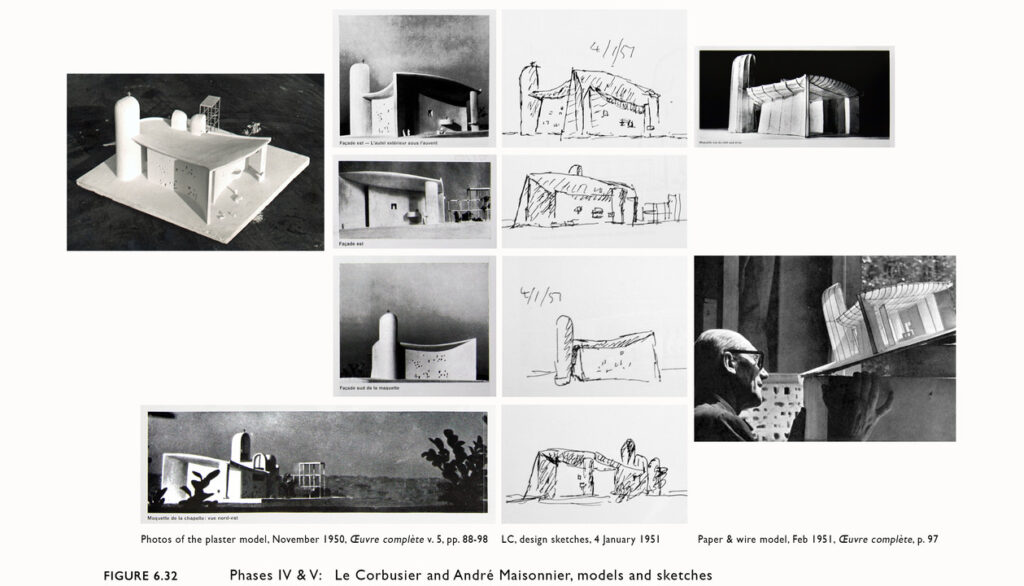
Le Corbusier gave architecture a syntax — five points that closed the distance between imagination and concrete. His buildings stand because the rules were clear enough to survive translation from sketchbook to construction site. He built machines for living. Clear. Functional. Structural.
Bruce Mau gave design a practice — forty-three imperatives that kept creativity alive and deliberately unfinished. His manifesto works because it refuses to be complete. Process over outcome. Growth as something you produce, not something that happens to you.
Roger Martin gave strategy a bullshit detector. He called out planning masquerading as strategy. He challenged the artificial separation of marketing and strategy. He demanded choices, not documentation. The pragmatic slap that boardrooms need.
This manifesto sits at their intersection.
It is for CEOs who sense a gap between what their company sells and what customers actually buy — but cannot name it. For founders who know positioning matters but confuse it with messaging. For M&A teams who need to see what due diligence misses. For consultants who want to show up with a diagnosis, not decks. For advisors tired of framework theatre.
It is the philosophy behind Monopoly, which surfaces reality. And the Clarity Kit, which closes the gap between seeing and owning.
This is not a brand strategy document. It is a way of thinking about what you are — and what you could become.
REALITY
1. You cannot read your own label.
The jar cannot see itself from the outside. This is not a criticism. It is a structural limitation. Nisbett and Wilson proved it in 1977: people cannot accurately report on the causes of their own behaviour. Companies are no different. You need a third party. Not because you’re blind. Because the view from inside is structurally incomplete.
2. Customers deceive themselves.
Only 34% of stated preferences predict actual purchases. Observational methods reach 89% accuracy. What people say they want and what they actually buy are different questions with different answers. Stop asking. Start watching.
3. The gap is where strategy dies.
The space between what you sell and what customers actually buy is unclaimed territory. Most companies don’t know it exists. The ones who see it have an unfair advantage. The ones who ignore it wonder why nothing lands.
4. Reality comes before response.
Before you build, see. Before you claim, know. Before you message, understand. Most positioning fails because it starts with what the company wants to say instead of what the market already believes.
5. Perception is the only reality that matters.
Objective quality exists. But perception shapes how quality is interpreted and valued. What customers believe about you is more important than what is true about you. This is uncomfortable. It is also the game.
IDENTITY
6. Positioning is identity, not messaging.
It is not what you say. It is what you are. The question is not “Do people know what you do?” The question is: What do you own in their minds? Everything else flows from that.
7. Nouns, not adjectives.
Adjectives describe. Nouns own. “Innovative” is a costume anyone can wear. “Safety” is a territory Volvo will defend with its life. “The Future” is what Tesla owns — not because they claim it, but because every decision proves it. Find your noun.
8. One concept. One company.
Mental territory is finite. There are only so many concepts customers can hold. Once someone owns a concept, everyone else fights for scraps. You cannot own “innovative AND affordable AND premium AND fast.” Pick one. Commit. Build everything from that.
9. Position and brand are not the same.
Position is the foundational concept you own. Brand is the accumulated associations that form over time. Position is planted. Brand grows. Confuse them and you’ll polish the surface while the foundation cracks.
10. Inside-out meets outside-in.
What you can authentically be (IQ) must align with what they need to believe (EQ). When these diverge, you have marketing. When they converge, you have positioning. The work is finding the intersection.
GRAVITY
11. Gravity over Glitter.
Glitter is shiny, superficial, and stolen overnight. It lives in decks and taglines. Gravity is dense, deep, and expensive to escape. It lives in decisions and structure. Glitter can be copied by tomorrow. Gravity requires organizational destruction to replicate.
12. The four levels.
Saying it. Proving it. Living it. Being it. Each level increases cost and decreases copyability. Most companies stop at one. The ones that reach four become categories.
13. Saying it is free.
Anyone can claim anything. A tagline costs nothing. That’s why it’s worth nothing. Level 1 is table stakes, not strategy.
14. Proving it costs something.
Testimonials, metrics, case studies. These require effort. They can be copied with moderate investment. Level 2 builds credibility but not moats.
15. Living it costs more.
Costco’s $1.50 hot dog. Patagonia’s “Don’t Buy This Jacket.” In-N-Out’s refusal to franchise. These are expensive commitments that prove positioning through sacrifice. Level 3 is where competitors start to hesitate.
16. Being it costs everything.
When your business model is inseparable from your position, when removing the position would collapse the company, you have reached Level 4. Amazon cannot abandon convenience. Apple cannot abandon integration. Tesla cannot abandon the future. This is architectural inevitability.
17. Decisions are the medium.
What you sacrifice proves what you believe. What you refuse to do proves who you are. The pattern of your choices is your actual positioning. Remove all words. What do your decisions prove?
PROOF
18. Implicit beats explicit.
The moment you claim a position, you weaken it. “We’re innovative” triggers skepticism. Innovation proven through decisions convinces. Explicit claims activate defence mechanisms. Implicit proof bypasses them.
19. The Burj Khalifa does not claim eminence.
It proves it. That is the standard.
20. Verbs prove nouns.
The noun is what you own. The verbs are how you earn it. “Reduces deal cycle by 15 days” proves you own efficiency. “Identifies at-risk deals 48 hours earlier” proves you own foresight. You cannot claim identity level without first proving functional level.
21. Consistency compounds.
Neural pathways form through repetition. Every decision either reinforces or fragments your position. There is no neutral. Inconsistency doesn’t just confuse — it actively destroys what you’ve built.
22. Time is the test.
Level 4 positioning takes years to establish. Decades to defend. Anyone promising an overnight transformation is selling Glitter. Real positioning is patient work.
STRATEGY
23. Planning is not strategy.
Roger Martin’s essential distinction. Planning is comfortable. It’s budgets, forecasts, and resource allocation. It doesn’t require hard choices. Strategy is choosing what you will and will not do. It shows up in what you sacrifice.
24. Strategy shows up in the P&L.
Look at where the money goes. Look at what gets cut. Look at what survives budget pressure. That’s the actual strategy. Everything else is aspiration.
25. Your business is your brand.
Proven through decisions, not claimed through decks. When there’s a gap between what your slides say and what your P&L shows, the market believes the P&L.
26. Integrate rather than specialize.
The most valuable thinking connects positioning to business model to capital allocation to organizational design. Not narrow specialization in one fragment of what should be unified. The separation of marketing and strategy is artificial. Collapse it.
27. Be skeptical of framework proliferation.
When someone presents a proprietary methodology with proprietary vocabulary, ask: What does this tell me that simpler language wouldn’t? If the answer is “nothing,” you’re paying for complexity, not insight.
PROCESS
28. Begin with observation.
Le Corbusier filled sketchbooks for decades before he built. A light well he drew at Hadrian’s Villa in 1910 reappeared at Ronchamp forty years later. The seeing comes first. It always comes first.
29. Search before you create.
Before making new words, search. Someone long before you has already solved that problem in a more elegant way. Al Ries. Jack Trout. Roger Martin. Daniel Kahneman. Rory Sutherland. Stand on their shoulders. Stop creating noise.
30. Process over outcome.
When outcome drives the process, we will only ever go to where we’ve already been. If process drives outcome, we may not know where we’re going, but we will know we want to be there.
31. Drift.
Allow yourself to wander aimlessly. Explore adjacencies. Lack judgment. Postpone criticism. The best positions are often found, not designed.
32. Go deep.
The deeper you go, the more likely you will discover something of value. Surface analysis produces surface positioning (just framing, really). The real territory is underneath.
33. Capture accidents.
The wrong answer is the right answer in search of a different question. Collect wrong answers as part of the process. The gap you discover might not be the one you expected.
LANGUAGE
34. Listen to customer language.
They speak in lived nouns: chaos, relief, control, “finally.” You speak in internal nouns: platform, solution, innovation, experience. The translation gap is where positioning lives or dies. Their words convert. Yours don’t.
35. Transformation language lives in Quadrant 4.
What customers actually buy is not your product. It is who they become after using it. The “after” state. The identity shift. That language only appears when customers are not performing for you.
36. Mine the unfiltered sources.
G2. Reddit. YouTube comments. Forums. Slack channels. The language customers use when the company isn’t in the room. No sanitizing. No paraphrasing. Exact words. Sorry, attribution. Better luck next time.
37. The dominant noun reveals the position.
What single noun do customers associate with you alone — not as a claim you make but as an automatic association? If you don’t know, you don’t have a position yet.
TERRITORY
38. Mental territory is real estate.
Once someone owns a concept, everyone else is stuck with derivative positions. You can’t beat Volvo at safety. You can’t beat Amazon at convenience. Don’t compete for occupied ground. Find vacant territory.
39. Map owned, contested, and vacant.
Owned: Concepts firmly held by competitors. Avoid. Contested: Concepts multiple players are fighting for. Risky. Vacant: Concepts no one has claimed that align with customer needs. Opportunity.
40. Category creation is an option.
When no ownable concept exists, create the category that makes your position meaningful. Don’t call your category by a commodity name. Create a proprietary frame. Salesforce created “Cloud CRM.” Gong created “Conversation Intelligence.” Name the game. Set the rules.
41. Price signals category.
At $29, buyers compare you to tools. At $29,999, they compare you to consultants. At $290,000, they compare you to McKinsey. The price itself determines the competitive frame. Choose deliberately.
ACTION
42. Seeing is not closing.
Surfacing the gap is not the same as closing it. Clarity without action is decoration. The insight is the starting point. The work is what you do next.
43. Ship the proof.
The report means nothing if decisions don’t change. The audit means nothing if the strategy stays the same. Ship something that proves your position. Then ship again.
44. Force the hard choices.
Positioning requires belief and conviction. Don’t let them hedge. “Pick one concept. You can’t own ‘innovative AND fast AND affordable.’” If they won’t choose, they haven’t understood.
45. Work from the foundation up.
You cannot polish framing (Level 1) without positioning (Level 4). You cannot scale execution (Level 2) without living it (Level 3). Build from the bottom. The hierarchy is not optional.
46. Make mistakes faster.
The faster you discover what doesn’t work, the sooner you find what does. Experiments are not failures. They are data.
ORGANIZATION
47. Organization is a form of liberty.
The right structures liberate rather than constrain. When you know what you are, every choice becomes structurally clearer. Constraints create clarity. Clarity creates freedom.
48. Design the machine for deciding.
Le Corbusier built machines for living. This is a machine for deciding. When the position is clear, decisions make themselves. When it’s unclear, every choice requires debate. The position is the operating system.
49. Alignment is not a meeting.
When the position is clear, the whole team works from the same source. No more “he said, she said.” Speed to execution increases because alignment is structural rather than conversational.
50. Collapse the org chart distinctions.
Do you have separate people for brand strategy and business strategy? Separate teams for brand marketing and performance marketing? Ask why. The answer might be “historical accident” rather than “strategic necessity.”
INCOMPLETENESS
51. ___________________.
Intentionally left blank. Some positions haven’t been discovered yet. Some frameworks haven’t been built.
52. Allow events to change you.
Growth is different from something that happens to you. You produce it. You live it. The prerequisites are openness to experience events and the willingness to be changed by them. Your position will shift. Let it.
53. Love your experiments as you would an ugly child.
Joy is the engine of growth. Cast your work as beautiful experiments, iterations, attempts, trials, and errors. Take the long view. Allow yourself the fun of failure every day.
54. The work is incomplete.
This manifesto is incomplete. The tools improve. The understanding deepens. Completion is the enemy of growth. The only finished positioning is a dead one.
CODA
Richard Feynman said, “The first principle is that you must not fool yourself — and you are the easiest person to fool.”
This is the work.
Not the frameworks. Not the vocabulary. Not the decks that make complexity feel like progress. The work is seeing what is actually there. Questioning the assumptions everyone else accepts. Going deeper when the surface answer arrives too quickly.
“The unexamined life is not worth living,” Socrates told us. The unexamined business is not worth scaling. It will grow in directions you didn’t choose, toward a position you didn’t intend, serving a market that doesn’t understand what you actually are.
Le Corbusier spent decades filling sketchbooks before he built. Einstein claimed he would spend fifty-five minutes understanding a problem and five minutes solving it. The ratio matters. Most companies invert it. They rush to solutions for problems they haven’t named. They ship messaging before they understand identity. They optimize what they shouldn’t be doing at all.
Bruce Mau wrote: “The deeper you go, the more likely you will discover something of value.”
Go deeper.
Beneath the tagline is a claim. Beneath the claim is a belief. Beneath the belief is a decision. Beneath the decision is an identity. That is where positioning lives — not at the surface, but at the foundation. The work is excavation, not decoration.
Ask the uncomfortable questions. Why do customers actually buy? What do we actually own? What would we have to sacrifice to prove it? What are we afraid to admit?
“Ask stupid questions,” Mau said. “Growth is fueled by desire and innocence. Assess the answer, not the question.”
Stay curious. The manifesto is incomplete because the inquiry never ends. The market shifts. Customers evolve. Competitors move. What you own today may not be what you own tomorrow. The position is not a destination. It is a discipline.
“I know that I know nothing.”
Start there. The rest follows.
This manifesto will continue to change.
That is the point.
— Paul Syng

Leave a Reply
You must be logged in to post a comment.