

The Compounding Problem
Every existing market research methodology, every brand tracker, every NPS program, every customer satisfaction survey, every consulting engagement, passes through multiple layers of systematic distortion before a single insight reaches a decision-maker. Each layer is independently documented in peer-reviewed literature. But they don’t operate independently. They compound.
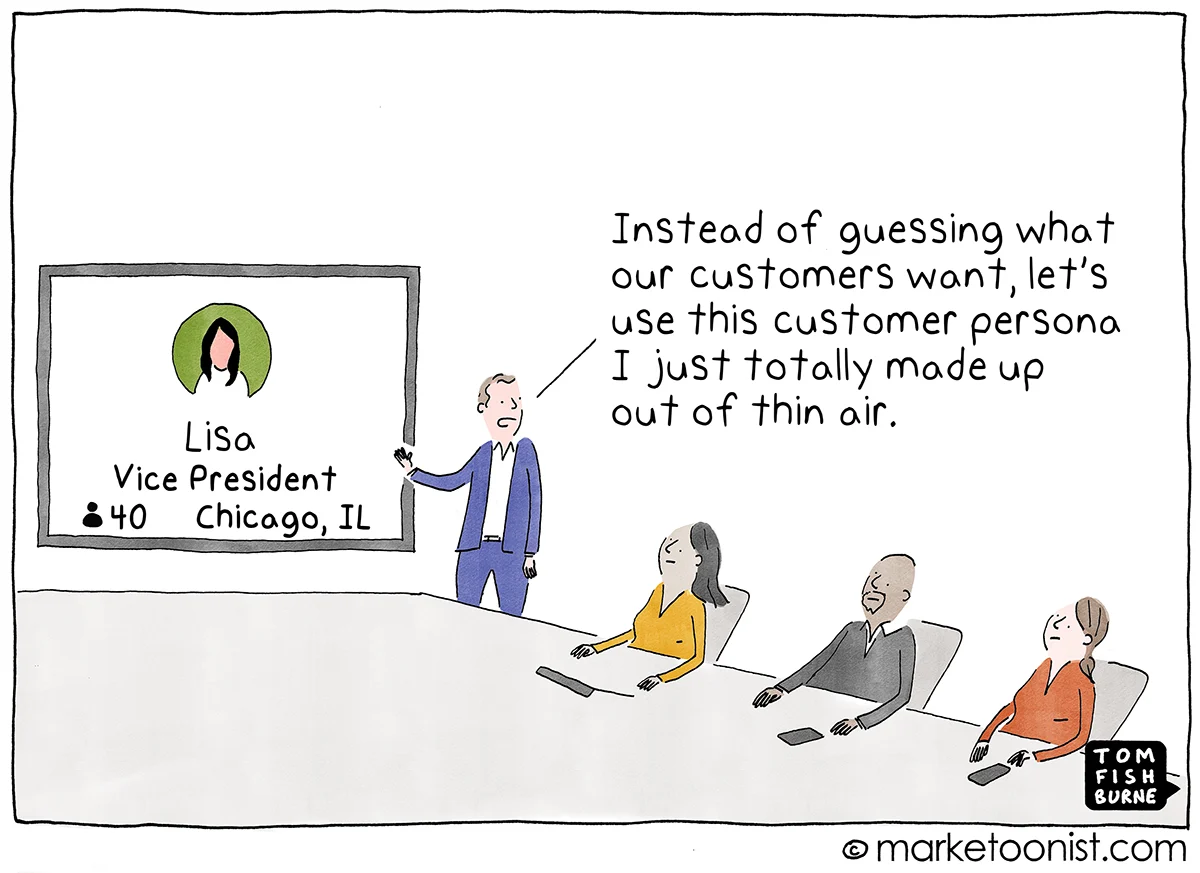
This is the structural reason the 80/8 problem persists. It is not that research teams are incompetent. It is that the methodology itself is contaminated at the source. Starting inside the company’s narrative and asking people what they think produces data that is wrong in a consistent, measurable, and predictable direction — and every additional layer of the research process pushes the data further in that same direction.
Layer 1: Framing Effects
Every research question is a frame. And frames determine what can be discovered.
Tversky and Kahneman (1981, Science, cited over 17,000 times) demonstrated that logically identical problems presented in different frames produce complete preference reversals. Not marginal shifts. Complete reversals. The same outcome described as “a 90% survival rate” versus “a 10% mortality rate” produces fundamentally different decisions.
In market research, every survey question is a frame. Asking “How satisfied are you with X?” versus “What problems have you experienced with X?” produces different data from the same customers about the same product. The framing decision is made before a single respondent is contacted, and it constrains the entire space of possible findings. A company that frames its research around satisfaction will find satisfaction data. A company that frames around problems will find problem data. Neither frame reveals what the customer actually experiences; it reveals what the frame was designed to measure.
The framing isn’t usually deliberate manipulation. It is the inevitable consequence of designing research from inside the company’s existing narrative. The narrative defines the questions. The questions define the frame. The frame defines the answers. The answers confirm the narrative. The loop is closed before it begins.
Layer 2: Hypothesis-Driven Consulting
Major consulting firms universally teach a methodology in which the initial hypothesis is formed jointly with the client within the first one to two weeks, through management team interviews. As McKinsey’s own methodology states: “Since you should form your hypothesis at the start, you have to rely less on facts and more on instinct or intuition.”
Read that again. The consulting industry’s standard methodology explicitly begins with instinct, formed through conversations with the same leadership team whose perceptions are the thing being investigated. The client’s narrative structurally becomes the foundation of all subsequent analysis.
This isn’t a flaw in any individual firm’s approach. It’s a structural feature of the industry’s operations. The client is paying. The client’s team provides access. The hypothesis is formed in collaboration with the client. Every subsequent data point is evaluated against a frame that was co-authored by the subject of the investigation.
The result: consulting engagements are structurally biased toward confirming what the client already believes, refined with better data and presented with more rigour. The gap between “what is true” and “what the client wants to hear” is closed, not by discovering truth, but by starting from the client’s version of it.
Layer 3: Demand Characteristics
Once the research design (Layer 1) and the hypothesis (Layer 2) are set, collecting data introduces its own distortions.
Orne (1962, American Psychologist) defined demand characteristics as the totality of cues that convey the hypothesis to the subject. His conclusion was stark: “It is futile to imagine an experiment that could be created without demand characteristics.” Every research interaction (every survey, every interview, every focus group) signals to the respondent what the “right” answer is.
Corneille and Lush (2023, Personality and Social Psychology Review) took this further. They found that demand characteristics “can give rise to genuine experiences,” not just modified answers, but modified subjective experience. Respondents’ actual perceptions shift in the direction of the demand characteristics. The research doesn’t just collect biased answers. It creates biased experiences.
When a customer receives a survey from a company they use, the demand characteristics are overwhelming. The respondent knows who sent it. They infer what the company wants to hear. They adjust their responses, often unconsciously, and the adjusted response becomes their genuine recollection of the experience. The data isn’t just inaccurate. It’s contaminated at the level of the respondent’s own memory.
Layer 4: Acquiescence and Social Desirability Bias
Even without company-specific demand characteristics, survey respondents exhibit two additional systematic biases.
Acquiescence bias, the tendency to agree with whatever is being asked, is larger than most researchers assume. Hill and Roberts (2023, Political Analysis, Cambridge University Press) found that acquiescence bias can increase the estimated prevalence of beliefs by up to 50% when using the agree/disagree format. Rammstedt et al. (2013, approximately 40,000 respondents across 20 countries) found that 15% of the variance in acquiescence was due to country-level factors alone, meaning the bias varies systematically by geography in ways that most research programs don’t control for.
Social desirability bias operates alongside it. The Marlowe-Crowne Social Desirability Scale (1960, internal consistency .88) established that respondents systematically over-report positive attributes and under-report negative ones.
People tell researchers what makes them look good, not what is true.
The dual distortion identified by the Paulhus Deception Scales (1984/1991/1998, University of British Columbia) makes this even more difficult to correct. Two mechanisms operate simultaneously: Self-Deceptive Enhancement (unconscious grandiosity, a stable trait) and Impression Management (conscious strategic exaggeration, context-dependent). Detection methods achieve 85-93% classification accuracy, but virtually no commercial brand-tracking program uses them.
The result: respondents are simultaneously trying to look good (social desirability), agreeing with whatever is suggested (acquiescence), and unconsciously inflating their own consistency and rationality (self-deception). Every positive data point in a satisfaction survey or brand tracker has been inflated by all three mechanisms before it enters the dataset.
Layer 5: Non-Response Bias in NPS
NPS deserves its own layer because the non-response bias is structurally different from the biases above, and potentially larger.
Rob Markey, co-lead of NPS at Bain & Company, directly confirmed the dynamic: “Experience shows that in any given population of customers, the most likely responders are drawn from the ranks of Promoters. The least likely to respond are the Detractors. We have observed this response bias in almost every study we have done.”
Bain’s own worked example demonstrates the scale: a potential 72-point swing from a reported NPS of +50 to a true NPS of -22 at a 20% response rate. And typical NPS response rates in practice run 4-13%, well below the 40%+ minimum recommended for statistical reliability.
This means the single most widely used perception metric in business, used by two-thirds of the Fortune 1000, supported by an $8 billion Qualtrics acquisition, is structurally biased toward positive results by design. The people most satisfied with the company are most likely to respond. The people with the sharpest perception of the company’s failures are least likely to respond. The resulting score reflects the company’s best customers’ best impression of the company — not the market’s actual perception.
Layer 6: Confirmation Bias in Interpretation
Even if the data were clean (it isn’t, given Layers 1-5), the interpretation stage introduces another distortion.
Nickerson (1998, Review of General Psychology, cited over 10,000 times) established confirmation bias as “perhaps the best known and most widely accepted notion of inferential error,” the seeking and interpreting of evidence partial to existing beliefs. When research results arrive at the leadership table, they are interpreted through the same narrative that was designed for the research in the first place.
Ambiguous findings are read as supportive. Contradictory data points are dismissed as outliers. Positive trends are emphasized. Negative trends are contextualized. The interpretation confirms the hypothesis, which was co-authored with the client and framed by the company’s existing narrative.
This isn’t a conspiracy. It’s cognition. The people interpreting the data have spent years building the company’s positioning. They have emotional, financial, and career investment in the current narrative. Confirmation bias ensures they find evidence for it.
Layer 7: The Espoused-Theory Gap
The deepest layer of contamination is the one that makes all the others invisible.
Chris Argyris and Donald Schon (1974, Theory in Practice, Jossey-Bass) demonstrated that the theory that actually governs a person’s actions — their theory-in-use — systematically differs from the theory they say governs their actions — their espoused theory. The critical insight: “Few people are aware that the maps they use to take action are not the theories they explicitly espouse.”
This applies to both sides of the perception gap. Companies can’t accurately describe their own positioning because they confuse their espoused theory (what they say they do) with their theory-in-use (what they actually do). Customers can’t accurately describe their own purchase motivations because they confuse their espoused theory (what they say they bought) with their theory-in-use (what actually drove the decision).
Argyris and Schon’s framework distinguishes between single-loop learning (improving performance within existing assumptions) and double-loop learning (questioning whether the assumptions themselves are correct). Traditional market research is a single-loop tool. It can measure performance against existing plans. It cannot question whether the plan itself rests on flawed assumptions. It optimizes within the current frame rather than questioning whether the frame is wrong.
Every layer above operates within the single loop. The framing is set by the narrative. The hypothesis confirms the narrative. The data collection reinforces the narrative. The respondents inflate the narrative. The interpretation validates the narrative. And the espoused-theory gap ensures nobody involved (not the researchers, not the executives, not the customers) has conscious access to the actual dynamics at work.
The Compounding Effect
Each layer individually produces a measurable distortion. But the layers don’t operate in isolation. They compound.
Framing effects constrain what can be found. Hypothesis-driven consulting constrains what is looked for within that frame. Demand characteristics shape how respondents answer. Acquiescence and social desirability inflate the positive signal. Non-response bias removes the negative signal. Confirmation bias filters the interpretation. And the espoused-theory gap makes the entire stack invisible to everyone involved.
The data that reaches the CEO’s desk has been through seven layers of systematic distortion, each pushing in the same direction: toward confirming the existing narrative. This is why the 80/8 problem, where 80% of CEOs believe they deliver a superior experience while only 8% of customers agree, hasn’t closed in 21 years. The measurement infrastructure is structurally incapable of revealing the gap because every layer of the methodology was built inside the gap.
What the Alternative Looks Like
Closing the perception gap requires bypassing the seven-layer stack entirely. Not fixing it — bypassing it. The contamination isn’t in any single layer. It’s in the architecture of starting inside the company’s narrative and asking people what they think.
The alternative: triangulate behavioural evidence from sources the company doesn’t control, can’t edit, and didn’t commission. Customer reviews on third-party platforms. Social media commentary the company didn’t prompt. Workforce sentiment from Glassdoor and LinkedIn. Regulatory filings, legal records, SEC data, and financial signals that exist independent of anyone’s narrative.
This is the methodology behind perception gap intelligence — observing what’s already visible in the public record rather than generating new data through contaminated instruments. It’s the same principle used in financial alternative data analysis, forensic accounting, and intelligence work: if you want to know what’s true, don’t ask the subject. Observe the evidence that the subject can’t control.
The Gap Analyzer provides a free first read, comparing public-facing claims against uncontrolled customer signals to show where the disconnect begins. For a full perception audit across 50+ data sources with scored gaps and strategic recommendations, Monopoly delivers results in under 8 minutes.
The question isn’t whether your market research has been through the seven-layer stack. It has. The question is whether you’re willing to look at the picture that emerges when you bypass it entirely.
Related:

Leave a Reply
You must be logged in to post a comment.