

TL;DR: A perception gap is the structural disconnect between what a company believes it delivers and what customers actually experience. Eighty percent of executives believe they deliver a superior customer experience. Eight percent of their customers agree. The gap is invisible from inside the company because every measurement tool the company uses reinforces the internal story. The work is to triangulate behavioural evidence from sources the company cannot control.
I want to put a complete definition of the perception gap on the page because the concept sits underneath almost everything else I write about positioning. The 4-Level Canvas measures the depth of a position. The gravity vs glitter frame separates what is built from what is claimed. The perception gap is the measurable distance between the position a company believes it holds and the position the market actually grants it.
I will define it precisely. I will explain why it forms and why the standard tools companies use to measure perception make the gap worse, not better. I will name what it costs, walk through the four-quadrant diagnostic I use in client work, and show how to close the gap when it is real.
The plain definition
A perception gap is the measurable distance between two stories about a company. The internal story, the one leadership tells itself, lives in strategy documents, pitch decks, homepage copy, and boardroom consensus. The external story lives in customer reviews, sales call transcripts, Glassdoor posts, peer-to-peer Slack DMs, and the way analysts describe the company without the company in the room.
When those two stories match, the company has positioning gravity. When they diverge, the company is operating on assumptions its customers do not share.
I should be careful here. A perception gap is not a messaging problem. You cannot close a structural gap by writing better copy. The gap exists because the company’s internal narrative and its operational behaviour have drifted apart, and customers experience the behaviour, not the narrative.
The 80/8 problem, the baseline study
In 2005, Bain & Company surveyed 362 large companies. Eighty percent of executives said their company delivered a superior customer experience. They then surveyed the customers of those same companies. Eight percent agreed.
That is a 72-point gap. Not between competitors. Not between industries. Inside the same company, looking at the same product, the people running it and the people buying it arrived at fundamentally different answers about what was being delivered.
The pattern is robust. Twenty-one years later, the McKinsey Global Survey of 1,257 executives (February 2026) reported that most executives remain confident they understand what drives customer choice. McKinsey described that confidence as “misplaced as change accelerates.” Despite the confidence, most companies in the survey were not systematically monitoring whether their industry positions or competitive advantages were shifting.
I have a separate piece that walks through the cognitive mechanics underneath this pattern, the Illusion of Explanatory Depth, the IKEA Effect, organizational Dunning-Kruger. The short version is that companies measure what they say rather than what customers experience, and every standard tool for measuring perception reinforces the internal orientation. For the full evidence, see the 80/8 problem.
Why perception gaps form
Gaps form because every organization develops an internal story about what it does, why it matters, and what makes it different. The story hardens over time. It becomes the strategy document. It becomes the deck. It becomes the homepage. The longer it circulates inside the company, the more it feels like the truth.
The market never reads the strategy document. Customers experience the pricing page, the support response time, the onboarding friction, the contract terms, the cancellation policy, the operational decisions that reveal what the company actually prioritizes. The perception gap forms in the space between the internal narrative and the operational reality.
Once a gap forms, cognitive biases lock it in place. Executives overestimate their understanding of systems they deal with every day. Companies that build their own perception frameworks overvalue those frameworks (people value what they build themselves by approximately 63 percent more than identical pre-built versions, the documented IKEA Effect). Organizational Dunning-Kruger ensures leadership teams consistently overestimate their ability to adapt to change. None of these biases are easy to fix from inside the company, because the biases are not visible from inside the company.
The say-do gap that makes the problem worse
The standard tools for measuring perception are themselves a contributor to the gap.
Stated-preference surveys, which are the dominant method for measuring brand perception, systematically overestimate real behaviour. The meta-analytic evidence is consistent across decades of work. List and Gallet (2001), reviewing 29 studies, found that subjects overstate hypothetical preferences by approximately a factor of three relative to actual behaviour. Schmidt and Bijmolt (2020), reviewing 77 studies covering more than 45,000 subjects, found an average hypothetical bias of 21 percent. Murphy and colleagues (2005), reviewing 28 studies, documented a median overstatement ratio of 1.35 with heavy positive skew.
The Dectech/Warwick University study, which compared stated and revealed preferences against 52 weeks of actual supermarket sales data across 600 stores, found that revealed-preference models explained 49 percent of sales variance versus 32 percent for stated preference. That is a 1.5x improvement in predictive accuracy, achieved by ignoring what people said and watching what they did.
The mechanism is straightforward. When you ask people what they think, they tell you what they want to think, or what they want you to think, or what they think someone like them is supposed to think. The gap between what people say and what people do is one of the most robust findings in behavioural science. Companies still build positioning strategies on stated preferences anyway.
The four-quadrant diagnostic
In client work, I run a four-quadrant analysis to make the perception gap visible.
Quadrant 1: what the company thinks it sells. Website claims, taglines, stated positioning, investor narratives, internal strategy documents. This is the polished version. It is almost always the most rehearsed and the least accurate of the four quadrants. It tells you what the leadership team has agreed to say about the company.
Quadrant 2: what the company actually sells. Pricing structure, feature hierarchy, operational decisions, contract terms, support policies, resource allocation, the things the company spends on and the things it refuses to spend on. This is what the company’s behaviour reveals about its real priorities. A company that talks about innovation but invests heavily in reliability is selling reliability. A company that talks about partnership but charges for every support interaction is selling a transactional product. The operational decisions do not lie.
Quadrant 3: what customers say they buy. Unprompted customer language from sources the company does not control. G2 reviews, Reddit threads, LinkedIn posts, Glassdoor reviews, Trustpilot ratings (which now hosts roughly 301 million active reviews), and any place customers describe the product to each other rather than to the company. This is what customers tell each other when no one from the vendor is in the room.
Quadrant 4: what customers actually buy. The transformation. The identity shift. The after-state. Customers rarely buy the product itself; they buy the version of themselves, or their business, that the product makes possible. A CRM company thinks it sells contact management. Its customers buy pipeline confidence. A consulting firm thinks it sells strategy. Its clients buy the ability to walk into a board meeting and say “we had this independently validated.” The distance between the product description and the actual motivation is where the deepest perception gaps live.
When all four quadrants align, a company has positioning gravity. The concept is held the same way in all four mirrors. When they diverge, the company is operating on assumptions its customers do not share, and the divergence usually shows up in the spending long before it shows up in the language.
What a perception gap costs
Perception gaps do not announce themselves. They compound silently and surface eighteen to twenty-four months later as symptoms that are hard to trace back to the root cause.
Lost deals. Sales pitches what the company thinks it sells. Customers evaluate based on what they hear from peers and review sites. When those two stories do not match, the deal stalls. The competitor with the smaller gap wins.
Wasted marketing spend. The Gartner Marketing Analytics Survey (2022), based on 377 respondents, found that marketing analytics influences only 53 percent of marketing decisions. A third of decision-makers cherry-pick data to align with positions they have already taken. Twenty-six percent did not review the analytics data at all. Investment in marketing research intelligence dropped from 6.2 percent of marketing budgets in 2013 to 3.4 percent in 2017. Campaigns built on the company’s internal narrative rather than the customer’s actual language underperform systematically, and the company tends to invest more in the same direction, compounding the gap rather than closing it.
Brand destruction at scale. Tropicana is the canonical case. In 2009, the US juice market leader, with approximately 30 to 35 percent market share, spent $35 million on a packaging redesign. Within two months, sales fell by 20 percent, roughly $30 million in lost revenue. The total estimated cost crossed $50 million. The redesign removed the iconic orange-with-straw image. Visual attention analysis showed that the new design drew only 2.5 percent of attention to the logo, compared with 10.8 percent for the original — a 76 percent decrease in brand identification. PepsiCo reversed the redesign with a full-page ad reading “we hear you.” The research never measured what customers associated with the brand. It measured what internal stakeholders wanted the brand to become.
M&A exposure. Clayton Christensen documented in Harvard Business Review that companies spend more than $2 trillion on acquisitions every year, with failure rates between 70 and 90 percent. One of the cleanest perception-gap M&A failures is the Quaker Oats acquisition of Snapple. Quaker bought Snapple for $1.7 billion in 1994, assumed it would work like Gatorade, applied the same supermarket distribution playbook, and destroyed Snapple’s core value proposition of quirky independence. Quaker sold Snapple three years later for $300 million. Triarc bought it, restored the original approach, and sold it to Cadbury Schweppes for $1.45 billion. The difference between a $1.4 billion loss and a $1.15 billion profit was not execution. It was perception: understanding what the brand actually meant to the people who bought it.
Talent loss. The perception gap applies internally as well. When a company’s employer brand drifts from the employee experience, retention collapses. Glassdoor and LinkedIn made the employer perception gap publicly visible and permanent. The same diagnostic that catches a customer-facing perception gap catches a workforce-facing one.
Why perception is the dominant value driver
The Ocean Tomo Intangible Asset Market Value Study, covering 50 years of S&P 500 data, documents one of the largest shifts in corporate value composition in a century. In 1975, 83 percent of S&P 500 market value was tangible assets and 17 percent was intangible. By 2025, those numbers have inverted: approximately 8 percent tangible and 92 percent intangible.
When 92 percent of corporate value is intangible — brand, reputation, customer relationships, intellectual capital — perception is not a soft metric. It is the dominant value driver. Yet only 12 percent of enterprises have quantified reputational risk (Aon Global Risk Management Survey 2025). Seventy-six percent of investment analysts agree brand has a meaningful impact on valuation, while 80 percent admit they do not have a deep understanding of it.
The gap between the importance of perception and the rigour applied to measuring it is itself a perception gap, one level up. The meta-gap. A market that has restructured around intangibles, served by a measurement infrastructure that was built for tangibles. That mismatch is what makes the perception gap so consequential to track.
How to diagnose a perception gap honestly
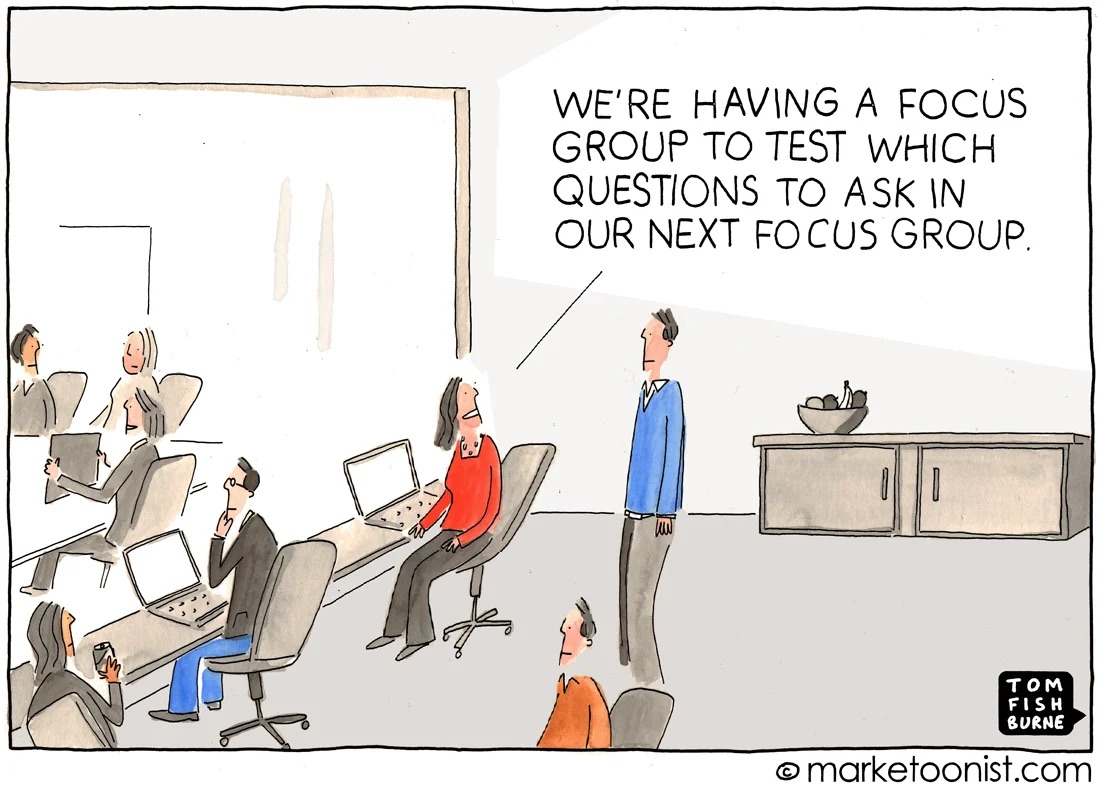
The challenge with diagnosing a perception gap is that the traditional tools are part of the problem. Surveys measure stated preferences. Focus groups measure performed responses. Brand tracking measures lagging indicators with a three-to-six-month delay before insights reach decision-makers. All of these tools access System 2 cognition — explicit, conscious attitudes — while purchase decisions operate on System 1 — implicit, automatic associations.
Gerald Zaltman at Harvard Business School documented that 95 percent of cognition occurs in the subconscious mind. What customers actually believe, measured through unconscious physical reactions, regularly contradicts what they say when asked directly.
The honest diagnostic triangulates behavioural evidence from uncontrolled sources, the same methodology used in financial alternative data analysis, forensic accounting, and intelligence work. The operating principle is simple. If you want to know what is true, do not ask the subject. Observe the evidence the subject cannot control.
In practice, that means reading customer reviews unprompted, parsing employee sentiment without HR mediation, looking at unprompted social media commentary, and triangulating those signals against regulatory filings, workforce data, and competitor mentions. The goal is to assemble a picture of the company that the company itself cannot edit. The picture that emerges is the position the market grants. The position the company claims is a separate document. The distance between the two is the perception gap.
Closing the gap
Closing a perception gap is not a messaging exercise. The reflex move when leadership notices the gap is to commission a new brand exercise. New tagline, new website, new pitch deck. That is a Level 1 response to a structural problem, and it almost always fails.
The work lives at the deeper levels. Move the operational decisions, and the perception follows. Hold the lower levels of the canvas — proving it, living it — and the customer’s automatic association eventually realigns. Skip that work, and the new tagline performs for a quarter before the old gap reasserts itself, often wider than before.
The honest first step is admitting the gap exists. The first instinct from inside the company is usually to argue with the diagnosis — the customer data must be wrong, the reviews are unrepresentative, the analysts do not understand the market. I have sat in those rooms. The arguments do not change the gap. They confirm it. A company arguing with the data is operating from inside the perception they want to hold, not the one they actually hold.
The second step is to identify which level of the canvas needs to move. If the gap is between what the company says and what customers say, Level 1 has drifted from Level 4 — the language is reaching for a position the market has not granted. If the gap is between what the company sells and what customers buy, Level 2 has drifted from Level 4 — the proof points are not landing in the customer’s actual frame of reference. If the gap is between what the company does and what it claims, Level 1 has drifted from Level 3 — the operational shape and the messaging are pointing in different directions.
Each diagnosis suggests a different repair. None of them is a copywriting exercise.
The plain answer
A perception gap is the distance between the position a company believes it holds and the position the market actually grants it. The gap is the default state in companies that measure what they say rather than what customers experience. The 80/8 problem is its baseline reading at scale. The four-quadrant diagnostic is how I make it visible in client work. Closing it requires honest assessment, behavioural evidence, and structural change to whichever level of the canvas has drifted.
Almost every company I work with sits on a perception gap they have not measured. That is not damning by itself. The question is whether the company is willing to look.
Frequently asked questions
What is a perception gap in business?
A perception gap is the measurable disconnect between what a company believes it delivers and what customers actually experience. It shows up as misalignment between the internal narrative (website claims, pitch decks, strategy documents) and the market’s lived reality (customer reviews, purchase behaviour, competitor comparisons). The canonical reading is that 80 percent of executives believe they deliver superior customer experiences, while only 8 percent of their customers agree (Bain & Company, 2005). The McKinsey Global Survey (February 2026) confirms the pattern has not closed.
Why do companies develop perception gaps?
Perception gaps form because companies build strategy from the inside out. Leadership develops a narrative based on what they intend to deliver, and that narrative calcifies over time into assumed truth, reinforced by cognitive biases including the Illusion of Explanatory Depth, the IKEA Effect, and organizational Dunning-Kruger. Customer experience meanwhile is shaped by operational decisions that often contradict the stated narrative. The gap grows silently because standard measurement tools — NPS, brand tracking, satisfaction surveys — rely on self-reported data that systematically overstates real behaviour.
What is the difference between what companies sell and what customers buy?
Companies sell features, solutions, and capabilities. Customers buy transformations — the version of themselves or their business that becomes possible after the purchase. A CRM company thinks it sells contact management. Customers buy pipeline confidence. A consulting firm thinks it sells strategy. Clients buy the ability to walk into a board meeting and say “we had this independently validated.” The distance between the product description and the customer’s actual motivation is where most perception gaps originate.
How do you measure a perception gap?
Traditional methods rely on surveys and focus groups, which overstate real behaviour by 21 percent to a factor of three depending on the study. A more accurate approach triangulates behavioural signals from uncontrolled sources — customer reviews, social media, regulatory filings, workforce sentiment, financial data — and compares them against the company’s stated positioning. The principle is to observe evidence the subject cannot control, not to ask the subject for self-report.
Is a perception gap the same as a messaging problem?
No. A messaging problem is a Level 1 issue solvable by rewriting copy. A perception gap is a structural disconnect between what the company says, what it does, and what the market grants. Treating a perception gap as a messaging problem is the most common and most expensive mistake I see. The new copy performs briefly, then the underlying gap reasserts itself, often wider than before.
What is the 80/8 problem?
The 80/8 problem is the gap documented in a Bain & Company survey of 362 companies: 80 percent of CEOs believe their company delivers a superior customer experience, while only 8 percent of their customers agree. The 72-point gap is one of the largest measured corporate perception disconnects in business research. The McKinsey Global Survey of 2026 (1,257 executives) confirms the pattern persists. See the full treatment in what is the 80/8 problem.
How does a perception gap relate to gravity vs glitter?
A perception gap is often the measurable distance between the glitter a company produces and the gravity the customer actually encounters. Glitter is what the company says. Gravity is what the customer experiences. When the two diverge, the gap shows up in lost deals, wasted marketing spend, and brand decay. See what is gravity vs glitter for the framework.
How does a perception gap relate to the 4-Level Positioning Canvas?
The canvas measures the depth at which a position is held. The perception gap measures the distance between the position the company claims at Level 1 and the position the customer actually grants at Level 4. Diagnosing the gap usually identifies which level of the canvas has drifted. See what is the 4-Level Positioning Canvas for the full diagnostic.
Can a company close a perception gap with better marketing?
No, not durably. Better marketing can paper over a small gap for a quarter. A structural gap closes only when the operational decisions move. The repair lives at Level 2 (proof) or Level 3 (lived commitment), not Level 1 (language). Companies that try to solve the gap with messaging tend to produce a wider gap inside two years.
Where can I read more about closing the gap?
The perception gap framework sits inside the broader what is positioning family of writing. The diagnostic mechanics are detailed in the 80/8 problem. The structural repair work is mapped in the 4-Level Positioning Canvas and gravity vs glitter.
Leave a Reply
You must be logged in to post a comment.