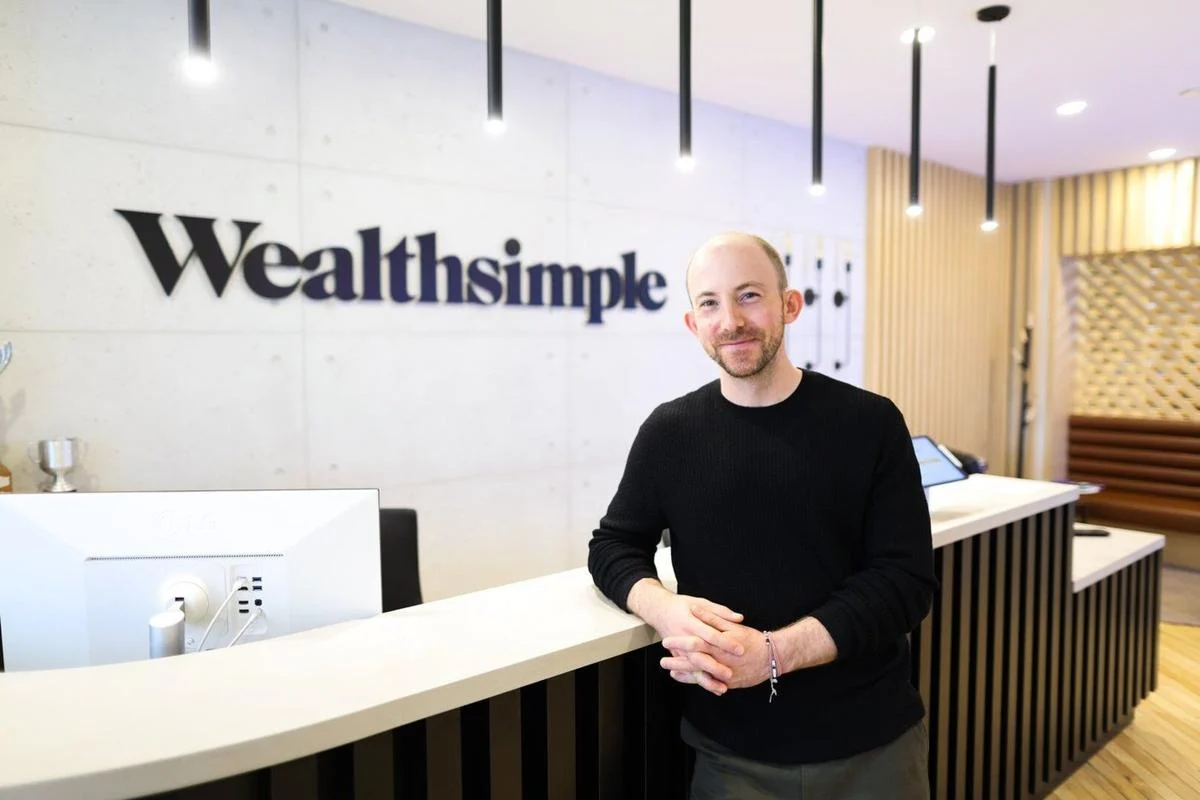

A Note Before We Begin: I need to be clear about something from the start: I’m a huge admirer of what Wealthsimple has built and the work Michael Katchen and his team have been doing. I’ve been following your journey for years, the product evolution, the marketing campaigns, the social content, the way you’ve challenged an entrenched oligopoly. What you’ve accomplished in just over a decade is genuinely remarkable, and the impact you’ve had on democratizing investing in Canada is undeniable.
This analysis comes from a place of genuine curiosity and respect, not criticism. I’ve spent considerable time researching, reading interviews, analyzing customer discussions, examining product decisions, and studying your communication patterns. I’ve tried my level best to get the facts right. But I also know I’m working with incomplete information. You have data, context, and strategic reasoning I’ll never see. If I’ve gotten anything wrong or misrepresented your intentions, that’s entirely on me, and I’d welcome the correction.
So why write this?
Because I’m fascinated by the gap between what businesses think they’re building and what their decisions actually prove they own in customers’ minds. It’s the “reading your label from outside the bottle” problem — no founder, no matter how brilliant, can accurately see their own positioning. You’re too close to it. You experience your business from the inside, where tactics feel like strategy and every decision makes sense in context.
This entire analysis attempts to answer only one question: What business are you actually in?
Not what you’re trying to build. Not what your pitch deck says. Not even what you think you’ve built. But what concept you own in the minds of your customers, proven not by what you say, but by the pattern of costly decisions you’ve made over a decade.
The strongest positions are never the ones we claim. They’re the ones we prove through actions so consistent that customers internalize them automatically, without us ever having to explain.
This is my attempt to show you what I see when I strip away all the words and just look at the structural decisions. You might disagree with my interpretation, and you might be right to. But maybe, just maybe, there’s something here that sparks a useful conversation about where you’ve been and where you’re headed.
With genuine respect and curiosity.
PS: Monopoly uncovered all the insights you’ll read in this perspective.

Part 1: The Story They Tell
Michael Katchen will tell you Wealthsimple is building “the world’s most human financial institution.” In interviews, he frames the company’s mission with remarkable consistency: democratizing finance, earning trust, freeing Canadians from the Big Five banking oligopoly. The explicit framing has evolved in predictable chapters, from “robo-advisor” (2014-2016) to “humanizing money” (2017-2021) to “institution builder” (2022-2025).
The narrative arc is ambitious: We’re not just a fintech app. We’re building infrastructure. We’re earning trust at scale. We want to become the largest financial institution Canada has ever seen.
Katchen channels Jeff Bezos explicitly: “The moment you think you’ve made it is a fast path to irrelevance.” Despite surpassing $100 billion in assets under administration, the company operates with startup velocity, launching gold coins, private credit, mortgages, and options trading in rapid succession. The strategy appears to be comprehensive financial coverage: if it touches money, Wealthsimple wants to own it.
The linguistic architecture of leadership reveals sophisticated framing:
Nouns Katchen uses: “Financial freedom,” “trust,” “institution,” “clients” (never “users”), “partner.”
Verbs that dominate: “Build” (obsessively, “build better products,” “build a giant”), “earn” (trust, understanding it can’t be claimed), “democratize,” “unlock,” “power.”
Enemy nouns established effectively: “Big 5,” “oligopoly,” “industry” (framed as extractive and parasitic).
This antagonist framing taps into existing Canadian resentment about bank fees and service. Using Wealthsimple becomes a moral act, voting with your wallet against an “unfair” system. The “Green Bank” versus “Royal Blue Bank” comparison charts visually reinforce this binary (see here).
The explicit philosophy is equally clear: tune out the noise, don’t time the market, embrace boring passive investing, and get rich slowly. Katchen presents as a prudent steward, emphasizing diversification and low fees to help Canadians build wealth methodically.
Here’s what customers actually say:
“Simple app for stocks.”
“Easy to use.”
“Perfect for beginners.”
“Clean interface.”
“Where you start.”
That gap, between “world’s most human financial institution” and “where beginners start,” tells you everything about Wealthsimple’s positioning reality.
Part 2: The Hidden Position (Remove All Words)
Strip away every tagline, interview quote, marketing campaign, and Super Bowl ad. What pattern of decisions remains?
The “Remove All Words” test reveals a single concept, proven with remarkable consistency: Wealthsimple owns “ENTRY,” the threshold at which Canadians who aren’t investors become investors.
The costly signals that prove this aren’t obvious ones like zero commissions or clean UI. Those are table stakes anyone could copy. The revealing decisions are the ones that made investors wince:
Exiting the US and UK markets in 2021, selling $200M AUM to Betterment and £272M to MoneyFarm, while every other VC-backed fintech fabricated international growth stories for valuation narratives. Most companies would cling to those markets purely for pitch deck optics. Wealthsimple chose depth over breadth without announcing it as a strategy.
$1 minimum investment, not $100, not $50, but literally one dollar. This isn’t a business decision optimized for unit economics. It’s a psychological signal: “You belong here. You have enough.” It removes the shame barrier that keeps people on the sidelines.
Five-minute account opening, not streamlined to save operational costs, but designed to eliminate the intimidation window. Every minute of friction is a moment for doubt to creep in: “Maybe I don’t know enough.” “Maybe I should wait.” Wealthsimple structurally prevents that conversation.
SimpleTax acquisition and free tax filing, 1.7 million tax returns filed annually at zero marginal revenue. That’s 1.7 million opportunities to cross-sell, but the product itself remains free. Most companies would monetize this touchpoint. Wealthsimple uses it purely as an annual engagement with Canadians, meeting them where they already are.
Never implementing payment-for-order-flow, the controversial practice generates significant revenue for Robinhood. This sacrifices tens of millions annually. Competitors don’t match this because they can’t afford to.
Refusing to restrict trading during GameStop frenzy when Robinhood’s restrictions triggered Congressional hearings and permanent brand damage, Wealthsimple absorbed infrastructure strain rather than damage trust. No press release announced this. Users simply experienced it.
Building the Bank of Canada’s direct settlement infrastructure, a multi-year regulatory slog requiring patient capital with no immediate revenue. Achieving direct settlement account status in October 2022 as the first non-bank ever granted this access positions them for Canada’s Real-Time Rail, but required years of investment with uncertain payoff.
Would the position survive if every marketing dollar disappeared tomorrow? Yes. The zero-commission structure, Bank of Canada settlement access, $1 minimum, 5-minute account opening, and SimpleTax integration — these structural commitments would communicate “accessible entry to investing for Canadians” without a single advertisement.
This is implicit proof. Costly signals create Hebbian learning, consistent experiences wire neural pathways connecting “start investing in Canada” with “Wealthsimple” in procedural memory. No claim required.
The Customer Voice Pattern (What They Actually Say)
Examining unprompted customer language from Reddit forums, review sites, and social media reveals what Wealthsimple actually owns in customer minds:
Words customers use:
- “Perfect for beginners“
- “This is where you start“
- “Getting started with investing”
- “First investing account”
- “Easy to open“
- “Finally started investing”
- “While Wealthsimple exists, why should I use other brokers?!?” (revealing default starting point status)
Words conspicuously absent:
- “Human,” literally never appears in organic customer discussion
- “Partner,” corporate language customers don’t use
- “Trust,” they don’t talk about trusting it, they talk about using it
- “Institution,” they call it an “app”
The transformation customers experience:
BEFORE Wealthsimple:
- “I’m not an investor”
- “I don’t have enough money”
- “Investing is for rich/smart people”
- “I’m intimidated by markets”
- Identity: Non-participant
AFTER Wealthsimple:
- “I’m investing now” (even with $1)
- “I’m in the game”
- “I’m participating”
- “I’m no longer locked out”
- Identity: Participant
The evidence validates this: 35% of users aged 18-24, one-third of all FHSA (First Home Savings Account) openings, captured the youth demographic. Notice the word “first” keeps appearing: first investing account, first home savings, first step. They don’t just own “simple,” they own “your first.”

Subscribe to continue reading
Become a paid subscriber to get access to the rest of this post and other exclusive content.