
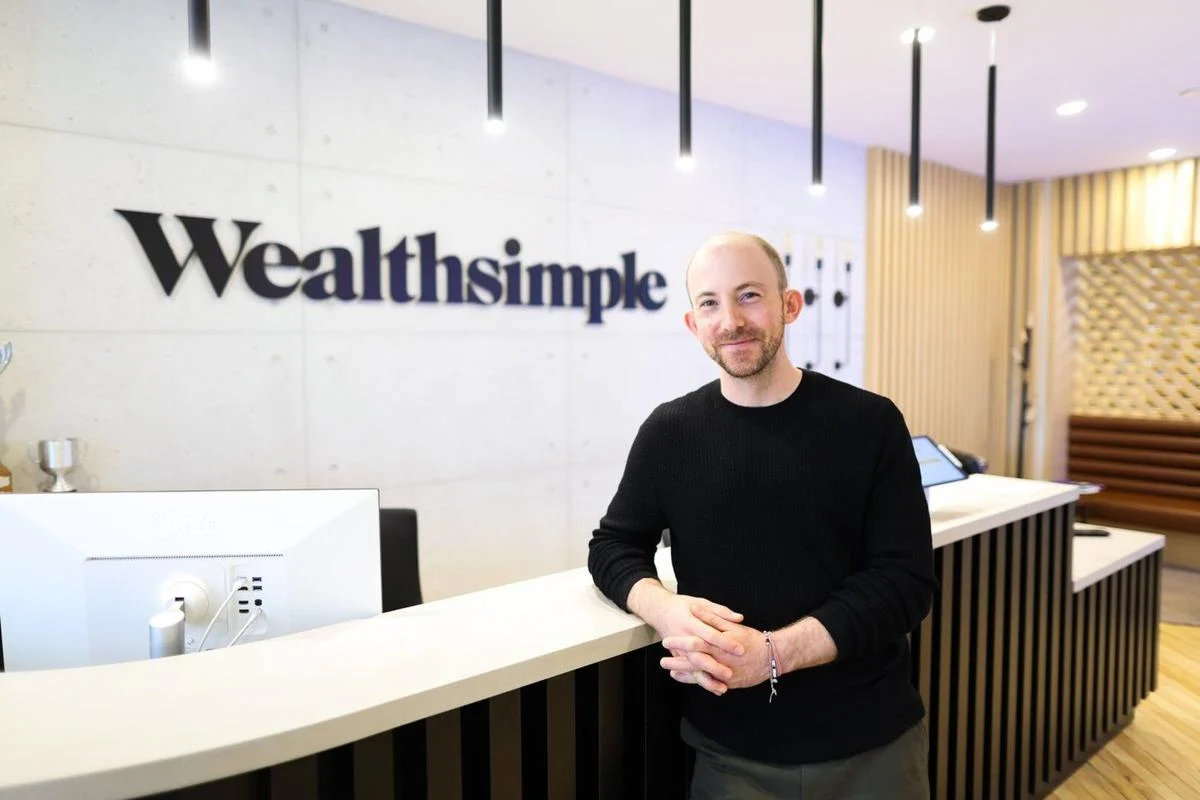

A Note Before We Begin: I need to be clear about something from the start: I’m a huge admirer of what Wealthsimple has built and the work Michael Katchen and his team have been doing. I’ve been following your journey for years, the product evolution, the marketing campaigns, the social content, the way you’ve challenged an entrenched oligopoly. What you’ve accomplished in just over a decade is genuinely remarkable, and the impact you’ve had on democratizing investing in Canada is undeniable.
This analysis comes from a place of genuine curiosity and respect, not criticism. I’ve spent considerable time researching, reading interviews, analyzing customer discussions, examining product decisions, and studying your communication patterns. I’ve tried my level best to get the facts right. But I also know I’m working with incomplete information. You have data, context, and strategic reasoning I’ll never see. If I’ve gotten anything wrong or misrepresented your intentions, that’s entirely on me, and I’d welcome the correction.
So why write this?
Because I’m fascinated by the gap between what businesses think they’re building and what their decisions actually prove they own in customers’ minds. It’s the “reading your label from outside the bottle” problem — no founder, no matter how brilliant, can accurately see their own positioning. You’re too close to it. You experience your business from the inside, where tactics feel like strategy and every decision makes sense in context.
This entire analysis attempts to answer only one question: What business are you actually in?
Not what you’re trying to build. Not what your pitch deck says. Not even what you think you’ve built. But what concept you own in the minds of your customers, proven not by what you say, but by the pattern of costly decisions you’ve made over a decade.
The strongest positions are never the ones we claim. They’re the ones we prove through actions so consistent that customers internalize them automatically, without us ever having to explain.
This is my attempt to show you what I see when I strip away all the words and just look at the structural decisions. You might disagree with my interpretation, and you might be right to. But maybe, just maybe, there’s something here that sparks a useful conversation about where you’ve been and where you’re headed.
With genuine respect and curiosity.
PS: Monopoly uncovered all the insights you’ll read in this perspective.

Part 1: The Story They Tell
Michael Katchen will tell you Wealthsimple is building “the world’s most human financial institution.” In interviews, he frames the company’s mission with remarkable consistency: democratizing finance, earning trust, freeing Canadians from the Big Five banking oligopoly. The explicit framing has evolved in predictable chapters, from “robo-advisor” (2014-2016) to “humanizing money” (2017-2021) to “institution builder” (2022-2025).
The narrative arc is ambitious: We’re not just a fintech app. We’re building infrastructure. We’re earning trust at scale. We want to become the largest financial institution Canada has ever seen.
Katchen channels Jeff Bezos explicitly: “The moment you think you’ve made it is a fast path to irrelevance.” Despite surpassing $100 billion in assets under administration, the company operates with startup velocity, launching gold coins, private credit, mortgages, and options trading in rapid succession. The strategy appears to be comprehensive financial coverage: if it touches money, Wealthsimple wants to own it.
The linguistic architecture of leadership reveals sophisticated framing:
Nouns Katchen uses: “Financial freedom,” “trust,” “institution,” “clients” (never “users”), “partner.”
Verbs that dominate: “Build” (obsessively, “build better products,” “build a giant”), “earn” (trust, understanding it can’t be claimed), “democratize,” “unlock,” “power.”
Enemy nouns established effectively: “Big 5,” “oligopoly,” “industry” (framed as extractive and parasitic).
This antagonist framing taps into existing Canadian resentment about bank fees and service. Using Wealthsimple becomes a moral act, voting with your wallet against an “unfair” system. The “Green Bank” versus “Royal Blue Bank” comparison charts visually reinforce this binary (see here).
The explicit philosophy is equally clear: tune out the noise, don’t time the market, embrace boring passive investing, and get rich slowly. Katchen presents as a prudent steward, emphasizing diversification and low fees to help Canadians build wealth methodically.
Here’s what customers actually say:
“Simple app for stocks.”
“Easy to use.”
“Perfect for beginners.”
“Clean interface.”
“Where you start.”
That gap, between “world’s most human financial institution” and “where beginners start,” tells you everything about Wealthsimple’s positioning reality.
Part 2: The Hidden Position (Remove All Words)
Strip away every tagline, interview quote, marketing campaign, and Super Bowl ad. What pattern of decisions remains?
The “Remove All Words” test reveals a single concept, proven with remarkable consistency: Wealthsimple owns “ENTRY,” the threshold at which Canadians who aren’t investors become investors.
The costly signals that prove this aren’t obvious ones like zero commissions or clean UI. Those are table stakes anyone could copy. The revealing decisions are the ones that made investors wince:
Exiting the US and UK markets in 2021, selling $200M AUM to Betterment and £272M to MoneyFarm, while every other VC-backed fintech fabricated international growth stories for valuation narratives. Most companies would cling to those markets purely for pitch deck optics. Wealthsimple chose depth over breadth without announcing it as a strategy.
$1 minimum investment, not $100, not $50, but literally one dollar. This isn’t a business decision optimized for unit economics. It’s a psychological signal: “You belong here. You have enough.” It removes the shame barrier that keeps people on the sidelines.
Five-minute account opening, not streamlined to save operational costs, but designed to eliminate the intimidation window. Every minute of friction is a moment for doubt to creep in: “Maybe I don’t know enough.” “Maybe I should wait.” Wealthsimple structurally prevents that conversation.
SimpleTax acquisition and free tax filing, 1.7 million tax returns filed annually at zero marginal revenue. That’s 1.7 million opportunities to cross-sell, but the product itself remains free. Most companies would monetize this touchpoint. Wealthsimple uses it purely as an annual engagement with Canadians, meeting them where they already are.
Never implementing payment-for-order-flow, the controversial practice generates significant revenue for Robinhood. This sacrifices tens of millions annually. Competitors don’t match this because they can’t afford to.
Refusing to restrict trading during GameStop frenzy when Robinhood’s restrictions triggered Congressional hearings and permanent brand damage, Wealthsimple absorbed infrastructure strain rather than damage trust. No press release announced this. Users simply experienced it.
Building the Bank of Canada’s direct settlement infrastructure, a multi-year regulatory slog requiring patient capital with no immediate revenue. Achieving direct settlement account status in October 2022 as the first non-bank ever granted this access positions them for Canada’s Real-Time Rail, but required years of investment with uncertain payoff.
Would the position survive if every marketing dollar disappeared tomorrow? Yes. The zero-commission structure, Bank of Canada settlement access, $1 minimum, 5-minute account opening, and SimpleTax integration — these structural commitments would communicate “accessible entry to investing for Canadians” without a single advertisement.
This is implicit proof. Costly signals create Hebbian learning, consistent experiences wire neural pathways connecting “start investing in Canada” with “Wealthsimple” in procedural memory. No claim required.
The Customer Voice Pattern (What They Actually Say)
Examining unprompted customer language from Reddit forums, review sites, and social media reveals what Wealthsimple actually owns in customer minds:
Words customers use:
- “Perfect for beginners“
- “This is where you start“
- “Getting started with investing”
- “First investing account”
- “Easy to open“
- “Finally started investing”
- “While Wealthsimple exists, why should I use other brokers?!?” (revealing default starting point status)
Words conspicuously absent:
- “Human,” literally never appears in organic customer discussion
- “Partner,” corporate language customers don’t use
- “Trust,” they don’t talk about trusting it, they talk about using it
- “Institution,” they call it an “app”
The transformation customers experience:
BEFORE Wealthsimple:
- “I’m not an investor”
- “I don’t have enough money”
- “Investing is for rich/smart people”
- “I’m intimidated by markets”
- Identity: Non-participant
AFTER Wealthsimple:
- “I’m investing now” (even with $1)
- “I’m in the game”
- “I’m participating”
- “I’m no longer locked out”
- Identity: Participant
The evidence validates this: 35% of users aged 18-24, one-third of all FHSA (First Home Savings Account) openings, captured the youth demographic. Notice the word “first” keeps appearing: first investing account, first home savings, first step. They don’t just own “simple,” they own “your first.”
The Mental Territory Map
| Competitor | Noun Owned | Strength | Contested? |
|---|---|---|---|
| Wealthsimple | “Entry/First” | Strong | Yes, with product expansion |
| Questrade | “Low-cost brokerage” | Moderate | Yes, on fees |
| RBC/TD | “Full-service stability” | Strong (eroding) | Yes, losing youth |
| Interactive Brokers | “Professional trading” | Strong | No, different need |
| Moomoo | “Active trading tools” | Moderate | Yes, on features |
Vacant territory: “Simple + sophisticated” (accessible UX with institutional-grade performance) remains under-owned. This is the strategic opportunity, but it requires closing performance gaps that currently exist.
The perceptual monopoly test: Can competitors discuss “starting to invest in Canada” without mentally referencing Wealthsimple? Evidence suggests not. In virtually every Canadian brokerage comparison, the framing follows: “Questrade is for experienced traders, Wealthsimple is for beginners.” Competitors define themselves relative to Wealthsimple’s position, the clearest sign of concept ownership.
This is procedural knowledge, the strongest form of positioning. “I need to start investing” fires neural pathways that automatically activate “Wealthsimple” without conscious evaluation. It’s unconscious, automatic, and extremely difficult to disrupt.
Part 3: The Level Diagnostic (Where They Actually Operate)
Level 4 — Position (Own the Noun)
The noun Wealthsimple owns: “Entry,” “First,” or “Start,” the threshold where non-investors become investors.
Position strength: Strong, but constrained by ceiling effects.
The tension emerges immediately: Wealthsimple explicitly claims ownership of “the world’s most human financial institution,” but customers don’t use “human,” they use “start,” “easy,” and “beginner-friendly.” There’s a significant gap between the noun claimed (human/institution) and the noun owned (entry/first).
Worse, “entry” has a ceiling problem. You can own “entry” while offering robo-advisory and commission-free trading. But can you own “entry” while offering crypto, mortgages, credit cards, options trading, margin accounts, private credit, and gold coins? Each product addition makes it harder to prove “entry-level simplicity” structurally.
The “graduation problem”: Users start at Wealthsimple, learn investing fundamentals, realize the platform’s limitations (spreads, data quality, tool sophistication), and migrate to Interactive Brokers or Questrade for “real” execution. Reddit discussions confirm this pattern repeatedly. Wealthsimple serves as the nursery (teaching people to invest), but loses them to competitors once they mature.
This isn’t a bug in their positioning; it’s a feature of owning “entry.” Entry is definitionally a one-time event. After someone enters, they either graduate (move elsewhere), stagnate (stay but don’t grow), or churn (come for promotions, leave after lock-up). Revenue dies in all three scenarios.
Position assessment: They’ve achieved a rare perceptual monopoly on beginner investing in Canada through costly signals accumulated over a decade. But “entry” is a constrained noun; you’re the on-ramp, not the highway.
Level 1 — Frame (Articulate)
Katchen’s linguistic patterns reveal sophisticated framing that has evolved over time:
2014-2016: Product-focused (“robo-advisor,” “low-fee investing”)
2017-2021: Mission language (“humanizing money,” “democratize”)
2022-2025: Institution language (“oligopoly challenger,” “largest financial institution”)
This evolution from product → mission → institution signals a maturing of positioning. But notice the framing is running ahead of the position. They’re articulating “institution” while customers think “app.”
The antagonist framing works effectively because it taps into existing sentiment. Canadians already resent bank fees. Wealthsimple simply provides the alternative and frames switching as a moral rebellion against extractive oligopolies.
Katchen proves through specifics rather than abstract claims: “We just had our best month ever, writing over a billion dollars of net deposits.” He rarely says “we are the best,” he says “we added $7.7B in a single quarter.” Numbers are verifiable, building credibility.
Frame clarity: Strong and disciplined.
Frame problem: It’s framing a position they don’t yet own. They’re claiming “human” when they own “entry.” That gap creates cognitive dissonance visible in customer feedback, particularly the 1.3 Trustpilot rating driven by customer service complaints, directly contradicting “most human financial institution” framing.
Level 2 — Execute (Prove with Verbs)
Applying the Five Execution Questions to Wealthsimple’s core positioning:
1. What specific action does this enable? Open an investing account in 5 minutes, start with $1, file taxes in one session, trade without commissions
2. What baseline are we comparing against? Traditional bank onboarding (days/weeks, $5,000+ minimums, extensive paperwork, $9.95 commissions)
3. What’s the measured improvement? 5 minutes vs. multi-day opening; $0 minimums vs. $5,000+; zero commissions vs. $9.95 per trade; instant deposits vs. waiting periods
4. How can customers verify this? Try the app: immediate, testable experience. Download, open an account, fund it, execute a trade, all verifiable same day.
5. What’s the timeline to value? Same-day account opening, instant deposits, and immediate trading capability
The verbs are concrete and measurable. “Zero commissions” is verifiable by checking trade confirmations. The “$1 minimum” is testable by opening an account with $1. “5-minute signup” is experienced in real-time. This represents strong Level 2 execution with measurable outcomes.
However, contradictions are emerging:
“Low-fee investing” vs. 2% crypto fees: Core tier users pay 2% on crypto trades, which is higher than Coinbase. Multiple sources note the company “shifts customers toward its much more profitable cryptocurrency trading arm.” The verb “profit from crypto spreads” contradicts the verb “save money.”
“Simple” vs. complexity creep: The product portfolio now includes managed portfolios, self-directed trading, fractional shares, crypto, options, margin, mortgages, high-interest savings, chequing, credit cards, tax filing, FHSA, and RESP. Can you answer “What does Wealthsimple do?” in one sentence anymore?
“Get rich slow” vs. engagement mechanics: Confetti animations on trades, gamified UI, 24/5 US trading hours, AI news summaries, real-time crypto trading; the system monetizes System 1 behaviours (trading, crypto, currency spreads) while preaching System 2 virtues (patience, passive investing).
Level 2 assessment: Strong fundamentals with emerging contradictions threatening positioning coherence.
Level 3 — Live (Structural Embedding)
Does 70%+ of resources flow toward positioning-critical capabilities?
Evidence suggests yes, but with growing complexity risk:
Resource allocation signals:
- 100+ microservices in cloud infrastructure (no branches, no legacy systems to maintain)
- Engineering-heavy hiring: Ruby on Rails, TypeScript, React Native roles dominate job postings
- SimpleTax as a permanent customer acquisition engine ($0-$20 revenue but 1.7M annual touchpoints)
- 1,000+ employees, 86% in Canada (concentrated focus, not scattered globally)
- Zero-commission structure permanently sacrificing ~$40M+ annual revenue
Costly signals proving long-term commitment:
- Bank of Canada settlement account (multi-year regulatory investment, no immediate return)
- First Payments Canada member among fintechs
- First direct Interac e-Transfer access for non-banks (September 2024)
- Sold US and UK operations despite growth metrics (chose depth over breadth)
- Structural simplification incentives (PMs reportedly rewarded for removing UI elements, not adding them)
The “If competitors had your P&L, what would shock them?” test reveals positioning strength. The regulatory infrastructure investment would shock most fintechs that chase features over foundation. The zero-commission structure and absence of payment-for-order-flow revenue would shock Robinhood. Traditional banks would be confused by the business model, sacrificing short-term revenue for market share.
But there’s a structural service deficit creating tension:
Support and risk operations haven’t scaled with asset growth and product complexity. High-value clients ($500K+ accounts) experience the same app interface and limited escalation paths as small accounts ($1), fueling perceptions of a “toy brokerage” among sophisticated investors.
The Trustpilot rating (1.3-1.4 stars, driven by customer service complaints featuring 90+ minute wait times) directly contradicts the “world’s most human financial institution” framing. Security friction is minimal compared to competitors such as Qtrade and Interactive Brokers. Sophisticated users interpret this as “incompetent” or “casual about risk,” not “simple and accessible.”
Level 3 assessment: Strong on infrastructure and product integration. Weak on human support and crisis management structures.
This creates a paradox: They’re structurally embedding “simple” while claiming “human,” but structural gaps in customer service contradict both positions.
The Gap Analysis
| Level | Where they claim to be | Where they actually are |
|---|---|---|
| Level 4 | “World’s most human financial institution” | Own “entry/first” for beginners in Canada |
| Level 3 | Full-stack financial platform | Growing complexity threatens core simplicity |
| Level 2 | Low-fee leader across all products | Crypto fees (2%), FX fees (1.5%) create contradictions |
| Level 1 | Clear articulation of “human” | Strong framing but misaligned with owned position |
The blocking level: Level 4 transition.
Wealthsimple owns “entry” strongly through implicit proof, but is explicitly claiming “human,” a noun not yet earned structurally. This gap between the claimed and owned positions creates cognitive dissonance, weakening both.
Part 4: The Identity & Cognitive Layer
What Identity Does Choosing Wealthsimple Enable?
Traditional identity analysis focuses on aspirational positioning, who customers want to become. But Wealthsimple’s identity transformation is more fundamental: from non-participant to participant.
The threshold identity shift:
- Outsider → Insider
- “Not me” → “I’m in”
- Intimidated → Validated
- Locked out → Participating
Choosing Wealthsimple signals: “I’m modern and self-directed. I distrust big banks. I prefer technology-driven solutions. I’m taking control.” It’s identity-as-tribe for younger, digital-native Canadians. Environics research confirms 2025 Wealthsimple users embody “ambition, agency, personal confidence,” running toward something aligned with identity, not just away from banks.
This represents evolution from early adopters’ anti-bank skepticism to mainstream aspiration.
Procedural vs. Declarative Knowledge
Wealthsimple has achieved procedural knowledge (automatic choice) for the beginner investing segment. When a young Canadian asks, “How do I start investing?”, “Wealthsimple” surfaces automatically (System 1 activation without conscious deliberation).
The Hebbian learning pattern is clear: Consistent experiences (zero fees, instant deposits, clean UI, seamless onboarding) repeated over 10+ years have created neural wiring. “When I need to start investing” fires neural pathways that automatically activate “Wealthsimple” without requiring conscious evaluation or comparison shopping.
However, for higher-value products (mortgages, options trading, wealth management above $500K), the choice remains declarative (conscious evaluation), System 2 territory. Customers must deliberately compare Wealthsimple’s mortgage rates with those of competitors. They’re thinking: “Is this actually competitive?” This requires rational evaluation, not automatic association.
System 1 vs. System 2 Operation
Wealthsimple leverages Daniel Kahneman’s dual-system framework masterfully but creates internal contradictions:
System 1 (Fast, Intuitive) – The App Design:
- Whitespace, large fonts, and simplified charts reduce cognitive load
- “Buy” button prominent; “Risk Disclosure” secondary
- “Instant Deposits” removes the cooling-off period that allows System 2 intervention
- Confetti animations on trades trigger a dopamine response
- Default bias: “Managed Portfolios” leverage tendency toward the path of least resistance
- Friction removal encourages impulse behaviour
System 2 (Slow, Deliberative) – The Content:
- “Finance for Humans” blog provides a rational justification
- Articles like “Panic Selling to Avoid Drawdowns” appeal to the analytical brain
- Investment philosophy pages explain the passive approach
- “Risky trading quiz” required for options/crypto provides legal shield
The dissonance: The platform monetizes System 1 behaviours (trading frequency, crypto spreads, currency conversion) while preaching System 2 virtues (patience, long-term thinking, passive investing).
This creates a fragile position. If users become aware of this contradiction, trust erodes. The system operates on procedural knowledge (doing without thinking) for revenue generation while relying on declarative knowledge (facts and concepts) for brand building.
Defence Mechanisms (Are Explicit Claims Triggering Them?)
Wealthsimple’s implicit proof (zero commissions, Bank of Canada settlement, no payment-for-order-flow, GameStop trading stability) generally doesn’t trigger defence mechanisms because it’s a verifiable structure, not marketing claims. Customers can test these assertions immediately.
But “world’s most human financial institution” triggers:
Persuasion knowledge: “That’s marketing language trying to manipulate me.” Psychological reactance: “Don’t tell me you’re human, show me.”
Manipulative intent inference: “If you were actually human, you wouldn’t need to say it.”
The 1.3 Trustpilot rating (driven by customer service complaints: 90-minute wait times, canned email responses, lack of phone support escalation) creates cognitive dissonance. Customers’ declarative experience directly contradicts the explicit claim, activating System 2 skepticism and defensive processing.
The moment you claim, you weaken. Wealthsimple’s strength lies in implicit proof. Every explicit claim risks undermining that foundation.
Is Hebbian Learning Occurring?
Yes, strongly for the “entry” position. Repeated low-friction experiences over a decade have wired “start investing in Canada” → “Wealthsimple” in procedural memory for younger demographics. The 35% market share of 18-24 year olds demonstrates this automatic association.
But Hebbian learning isn’t occurring for “human” positioning. Inconsistent experiences (seamless onboarding followed by poor crisis support) prevent the formation of neural pathways. The claimed position (“human”) isn’t being reinforced through consistent structural decisions; it’s being contradicted.
Part 5: Success Mechanics (What’s Working & What’s Missing)
What They’re Doing Right (Even Accidentally)
1. Canada-only focus is an underappreciated structural moat
Exiting the US/UK was counterintuitive but strategically brilliant. While competitors fragment resources across geographies, Wealthsimple maintains undivided attention on one market. This enables optimization for Canadian tax accounts (TFSA, RRSP, FHSA), regulatory relationships, and cultural positioning impossible for multi-market players.
The decision would make most VC-backed fintechs wince (international expansion inflates valuations), but it’s proven correct. They can build deeper rather than wider.
2. Bank of Canada settlement is the sleeper structural moat
Years of regulatory work for direct settlement access aren’t sexy and don’t generate immediate revenue, but they position Wealthsimple uniquely for Canada’s Real-Time Rail infrastructure. Competitors can’t replicate years of regulatory patience and capital investment. This infrastructure spend is the “core concept” without marketing: a high-speed financial logistics network moving money faster than the banking oligopoly can process wire transfers.
3. SimpleTax is a hidden customer acquisition engine
1.7 million tax returns filed = 1.7 million annual touchpoints with Canadians. Tax data reveals RRSP contribution room, TFSA limits, income levels — cross-sell intelligence gold. The “pay what you want” model preserves goodwill and maintains trust. This is a brilliant distribution disguised as a free service.
4. They’re building procedural knowledge, not just awareness
The consistent experience (zero fees, instant deposits, clean UI, five-minute onboarding) repeated over a decade creates automatic choice behaviour for beginners. This is far more valuable than brand awareness measured through surveys. Procedural knowledge is difficult to disrupt because it operates unconsciously.
5. Fastest-growing segment is $1M+ clients
Average client age rising to mid-30s; high-net-worth Canadians consolidating with Wealthsimple. This validates the Generation tier strategy and proves they’re not permanently trapped in “beginner-only” positioning. Users are maturing with the platform.
6. They’re accidentally building “control” positioning
The full-stack approach (invest + trade + crypto + tax + bank + mortgage + credit card) creates ecosystem lock-in. Katchen’s articulation, “If you do all your investing with Wealthsimple and all your banking with Wealthsimple, shouldn’t we be able to automate tax filing for you?” reveals “control” positioning emerging organically without being explicitly claimed.
What’s Creating Tension
1. The “entry” noun is owned but ceiling-constrained
Wealthsimple achieved a rare perceptual monopoly on beginner investing in Canada. But “entry” has architectural limits; you can’t be the “entry” option while offering crypto, mortgages, options trading, margin, private credit, and credit cards. Product expansion threatens core position coherence.
Entry is definitionally temporary. After someone enters, they either graduate elsewhere, stagnate without growth, or churn after promotions expire. None generates sustainable lifetime value.
2. The “human” claim hasn’t landed structurally
Customers say “easy,” not “human.” Katchen’s aspiration (“world’s most human financial institution”) isn’t reflected in customer vocabulary. The Trustpilot rating directly contradicts “human” framing, creating cognitive dissonance that weakens the explicit claim.
Support infrastructure hasn’t scaled with asset growth. High-value clients experiencing 90-minute wait times for customer service and canned emails perceive “automation,” not “humanity.”
3. Crypto positioning creates a philosophical contradiction
2% fees for Core users contradict “low-fee” claims. The company has been criticized for “shifting customers toward its much more profitable cryptocurrency trading arm.” High-margin crypto revenue (while preaching “get rich slow” passive philosophy) creates cognitive dissonance.
Offering 140+ coins, including speculative assets like Shiba Inu, while claiming to help Canadians “tune out the noise,” is internally contradictory. The presence of pure speculation vehicles signals: “We want your volume more than your safety.”
4. Managed portfolio performance gaps undermine credibility
Analysis reveals underperformance versus index benchmarks and competitors over 3- and 5-year windows. Portfolio adjustments are inconsistent with strict passive claims. Removal of 5-year performance data from public materials suggests defensiveness about gaps.
If core robo-advisory underperforms as the company expands into crypto and options, it signals product expansion driven by margin rather than customer outcomes.
5. Support doesn’t scale with stated ambition
“World’s most human financial institution” requires human-scale support infrastructure. 90+ minute customer service wait times, inability to reach humans during crises, identical treatment of $1 and $500K accounts; these structural deficits fuel “toy brokerage” perception among sophisticated investors.
Security friction is minimal compared to professional platforms (no trade PIN, limited device binding, weak step-up authentication). Novices interpret this as “convenient.” High-net-worth users interpret it as “incompetent.” The implicit signal: security was sacrificed for speed.
IQ/EQ Alignment Assessment
Inside-Out (IQ – Capability Reality): Wealthsimple possesses strong technological capability:
- Engineering velocity shipping complex products rapidly
- Proprietary infrastructure enabling instant deposits and real-time settlement
- Full-stack ecosystem integration competitors can’t match
- Regulatory moats (Bank of Canada settlement, Payments Canada membership)
Outside-In (EQ – Market Need): Market emotional needs bifurcate by segment:
Accumulators (Gen Z/Millennials): Crave validation, speed, low friction, anti-bank identity, permission to start small. Wealthsimple’s IQ aligns perfectly; the confetti and instant deposits satisfy the emotional need for action and participation.
Preservers (HNWI/Boomers): Crave safety, reassurance, accountability, seriousness. Here, Wealthsimple’s IQ (automation) actively damages EQ. When high-net-worth users experience security scares, their emotional need is reassurance via a human voice. Wealthsimple’s response is an automated email or a chatbot. The engineering efficiency that delights Gen Z users terrifies Boomer users.
The “toy” feeling among sophisticated investors is essentially an EQ complaint: the platform doesn’t “respect” the gravity of managing wealth. By refusing to add friction (trade PINs, step-up authentication), Wealthsimple signals a lack of emotional intelligence regarding how people feel about life savings.
Wealthsimple has high IQ, low EQ for high-net-worth clients. They’re trying to solve “trust” (an emotional problem) with “code” (a logical solution).
The intersection: Where unique capability meets unmet need is “control without complexity for accumulators,” the master dashboard giving agency over the entire financial life without requiring financial expertise. This works for younger segments looking to build wealth. It fails for older segments, preserving wealth.
Part 6: The Coaching Moment
Where They Actually Are vs. Where They Think They Are
Current state:
- Operating at: Level 3 (LIVE) with strong structural embedding in infrastructure
- Claiming: Level 4 (POSITION) ownership of “human/institution”
- Actually owns: Level 4 “entry/first” for the beginner segment in Canada
- Blocking level: Level 4 transition; gap between “entry” (owned) and “human” (claimed)
The Three-Way Tension
Wealthsimple faces a positioning fracture across three directions:
- What they own: “Entry” (proven through a decade of costly signals)
- What they claim: “Human” (aspirational, contradicted by customer service reality)
- What they’re building: “Control” (emerging through product expansion, not yet coherent)
This three-way split creates cognitive dissonance, weakening all three positions. They need singular focus.
The “For Nerds Only” Strategy Decoded
The product expansion (crypto, options, margin, mortgages, private credit) + “For Nerds Only” campaign are two sides of one strategy: escape the “entry” ceiling.
The “entry” problem: Entry is a one-time event. After someone enters, they graduate elsewhere, stagnate, or churn. Revenue dies in all scenarios.
Product expansion solution (tactical): Add sophisticated products to prevent graduation. If users can trade options at Wealthsimple, they won’t move to Interactive Brokers.
“For Nerds Only” solution (strategic): Reframe “entry” identity. Transform “beginner” (temporary, inferior) into “nerd” (permanent, intellectually superior).
What “nerd” does linguistically:
- Legitimizes using simple tools for sophisticated purposes
- Questions industry conventions (complexity as intimidation tactic)
- Embraces self-directed learning (don’t need advisors)
- Creates anti-establishment identity (nerds vs. jocks = Wealthsimple vs. banks)
Why it could work: “Nerd” makes staying with Wealthsimple as you grow wealthy feel like intellectual honesty rather than arrested development.
Why it’s failing: “Nerd” identity works for $1K-$100K investors (curious accumulators) but fails for $500K+ investors (they need institutions, not rebellions). When someone with $2M experiences a 90-minute customer service wait during a crisis, “For Nerds Only” feels like “For Amateurs Only.”
The Strategic Paths Forward
Option 1: Own “Entry” Explicitly (Constrained but Defensible)
Accept being the on-ramp. Become the undisputed, inevitable first step for every Canadian starting to invest. Stop trying to serve sophisticated investors. Focus 100% on nailing the 0-to-1 transformation.
This means:
- Stop adding complex products (options, margin, private credit)
- Focus resources on making core products (robo-advisory, basic trading, savings) world-class
- Accept sophisticated investors will graduate to Questrade or Interactive Brokers
- Own “first” so completely it becomes defensible brand equity
- Measure success by “percentage of Canadians who start investing” captured, not AUA
Risk: TAM ceiling. Revenue pressure from investors wanting growth. “Graduation factory” perception.
Opportunity: Unassailable position in the largest addressable segment (non-investors becoming investors). If 70% of Canadians don’t invest, the TAM for “entry” is enormous.
Option 2: Earn “Human” Structurally (Expensive but Expansive)
Make “human” structurally true by solving customer service contradictions.
This means:
- Rebuild support infrastructure to scale with complexity
- Add human escalation paths for high-value/high-stakes situations
- Invest in relationship management for the Generation tier ($500K+)
- Create security features signalling “we take your wealth seriously”
- Build trust through response quality during crises, not just product features
- Measure success by customer service NPS, crisis response time, and problem resolution rate
Risk: Expensive. Requires structural transformation and margin compression. “Human” at scale is difficult; most automation exists because human support doesn’t scale economically.
Opportunity: If successful, “human” is far more defensible and expansive than “entry.” It enables serving all wealth levels and life stages.
Option 3: Pivot to “Control” (Recommended)
Claim the emerging full-stack position matching structural reality. Position as a master dashboard providing control over the entire financial life without complexity.
This means:
- Explicitly position around “control without complexity”
- Frame product additions as creating comprehensive control, not violating simplicity
- Lean into financial OS/money platform framing, Katchen already articulates
- Make integration and automation the core value proposition
- Accept that “control” requires some complexity, but Wealthsimple handles it for users
- Measure success by “percentage of financial life consolidated” and platform stickiness
Why this works:
- Matches structural reality: They’re already building a full-stack ecosystem
- Resolves entry/sophistication tension: Complexity becomes a feature, not a bug
- Expands addressable market: Not just beginners, but anyone wanting comprehensive financial management
- Leverages existing advantages: Canadian focus, regulatory moat, full-stack architecture, SimpleTax integration
- Is defensible: Requires years of integration that competitors can’t quickly replicate
- The Plenty acquisition (family wealth features, May 2025) signals movement in this direction
The transformation becomes:
- From “I’m not investing” → “I’m in control of my finances”
- From participant → master
- From beginner → sophisticated but choosing simplicity
- From app user → platform dependent
Level-Specific Recommendations
Level 4 (Position):
- Stop explicitly claiming “world’s most human financial institution”
- Start implicitly proving “control” through continued product integration and automation
- Make “control” procedural by creating experiences where the system handles complexity
- Test messaging: “Complete control. Actually simple.” or “Your financial life. One place. Under control.”
Level 3 (Live):
- Maintain 70%+ engineering resource allocation on infrastructure
- But redirect 10% from new product features to support infrastructure
- Hire for customer success, risk operations, and security architecture
- Create distinct service tiers matching account values
- Make trust a structural capability, not a marketing claim
- Build human escalation paths for crisis situations
Level 2 (Execute):
- Address crypto fee contradiction: reduce to match low-fee positioning or transparently position crypto as a premium service
- Fix managed portfolio performance or stop leading with robo-advisory
- Create clear verification for “control” verbs: “consolidated view,” “automated tax filing,” “one-click rebalancing”
- Answer Five Execution Questions for “control” position
Level 1 (Frame):
- Evolve language from “human” to “control”
- Maintain noun focus (internally): “We own control in finance”
- Avoid adjective drift: not “we give you more control” but “we are control”
- Katchen should test “control” framing in future interviews and earnings calls
- Internal messaging: “We’re building the operating system for Canadians’ financial lives”
The Reframing Questions
Stop asking:
- “How do we communicate ‘human’ better?”
- “How do we expand product offerings?”
- “How do we serve more sophisticated investors?”
Start asking:
- “What concept do our structural decisions actually prove?”
- “Can we own ‘entry’ plus ‘sophistication’ or must we choose?”
- “Does ‘control’ better describe what we’re building than ‘human’?”
- “Would ‘control’ survive the ‘Remove All Words’ test better than ‘human’?”
The Unlock
The transition from owning “entry” to owning “control” unlocks growth because:
- Matches structural reality: Already building a full-stack ecosystem
- Resolves positioning tensions: Complexity becomes necessary for control, not contradiction of simplicity
- Expands addressable market: Not just beginners, but anyone wanting consolidated financial management
- Leverages unique advantages: Canadian focus, regulatory infrastructure, SimpleTax, full integration
- Is defensible: Years of integration, competitors can’t replicate quickly
- Enables sophistication: Can add options, margin, and complex products as necessary tools for control
The Plenty acquisition, open banking, and ecosystem expansion all signal movement toward “control.” The vision is there. They just need to own it explicitly through continued structural proof rather than undermining it by claiming “human” before earning it.
Finally: From Entry to Control (If They Choose)
Wealthsimple has achieved something rare in positioning: implicit ownership of a concept through costly decisions, creating procedural knowledge. They own “entry,” the threshold where Canadians who aren’t investors become investors. That’s real. That’s valuable. That’s defensible.
Their risk is claiming a different concept (“human”) while their structure is building toward a third concept (“control”). This three-way tension creates cognitive dissonance, weakening all three positions.
The path forward: Stop claiming “human” (unearned, contradicted). Stop defending “entry” (limiting). Start owning “control” (emerging).
Control without complexity. That’s what their decade of decisions actually proves. That’s what their full-stack architecture enables. That’s what distinguishes them from fragmented banks and single-product fintechs. That’s what their IQ/EQ intersection reveals for accumulator segments.
They don’t need to say it. They need to make it so obviously true through continued structural decisions that customers say it for them. Integration is so seamless that “When I need control over my finances” automatically fires neural pathways, activating “Wealthsimple.”
They’ve spent ten years proving entry through costly signals. Now they need to spend the next ten years proving control the same way, not through marketing claims, but through structural commitments that make the position inevitable.
The strongest positions are never explicitly stated. They are implicitly proven through consistent decisions that create procedural knowledge in customers’ minds.
Wealthsimple’s moat isn’t marketing. It’s the pattern of decisions that would remain if every piece of marketing disappeared. The question is whether they’ll recognize the position they’re building (“control”) before they undermine it by claiming something different (“human”) or stay constrained by what they currently own (“entry”).
The coaching insight: They’ve diagnosed their own positioning ceiling through “For Nerds Only” + product expansion. They know “entry” is limiting. They’re attempting escape through identity reframing (nerd) and product sophistication.
But “For Nerds Only” is a Level 1 (Frame) solution to a Level 4 (Position) problem. They’re trying to rebrand “entry” rather than transcend it through structural proof of a new concept.
The opportunity: Own “control” by proving it structurally. Make choosing Wealthsimple mean: “My entire financial life: investing, banking, taxes, insurance, credit, real estate, operates from one integrated system that I control without needing to become a financial expert.”
That’s broader than “entry.” More achievable than “human.” And matches what they’re structurally building.
That’s how you go from clarity to gravity. Not by claiming what you want to be, but by proving through costly, consistent decisions what you already are, then letting that position pull everything else into orbit around it.
That’s not just strategy.
That’s the gravitational pull from clarity.
Find what you own in sixty minutes

Before you hire a messaging consultant to wordsmith your homepage, or an agency to “refresh your brand,” or someone to fix what they’ll call positioning (but is really just tactical framing), try this first.
The CEO Clarity Starter Kit
It does exactly what we just read. It helps you find and own your noun.
What you do:
- Run the Position Audit (reveals what noun you might already own without knowing it)
- Complete the 8-Question Advisor (the same questions that would surface “entry” for Wealthsimple)
- Feed the output into ClarityGPT (included)
What you get:
- Your noun. The concept you can actually own, not just claim
- A 4-Level Positioning Canvas showing how to move from saying it to OWNING it
- ClarityGPT translates your position into landing pages, offers, and LinkedIn profiles (written in your buyer’s voice, not consultant-speak)
- A 30-day positioning course so you can apply this method without me
Time required: About an hour (less time than reading three more case studies about tactics that won’t work without position)
Who’s used it: 200+ CEOs and founders who were tired of pushing uphill
Investment: $249 USD
Most realize they don’t need the consultant or agency after this. Or they need far less than they thought. Because once you know your noun (your position), the tactics become obvious. The distribution chooses itself. The customers explain you better than you explain yourself.
And yes, if you buy the kit, it nudges me closer to that Porsche in the photo. Thanks in advance for supporting excellent positioning and questionable life choices.

Stop competing on features. Start owning concepts.

Leave a Reply
You must be logged in to post a comment.