

Introduction: Reading the Label They Couldn’t Read
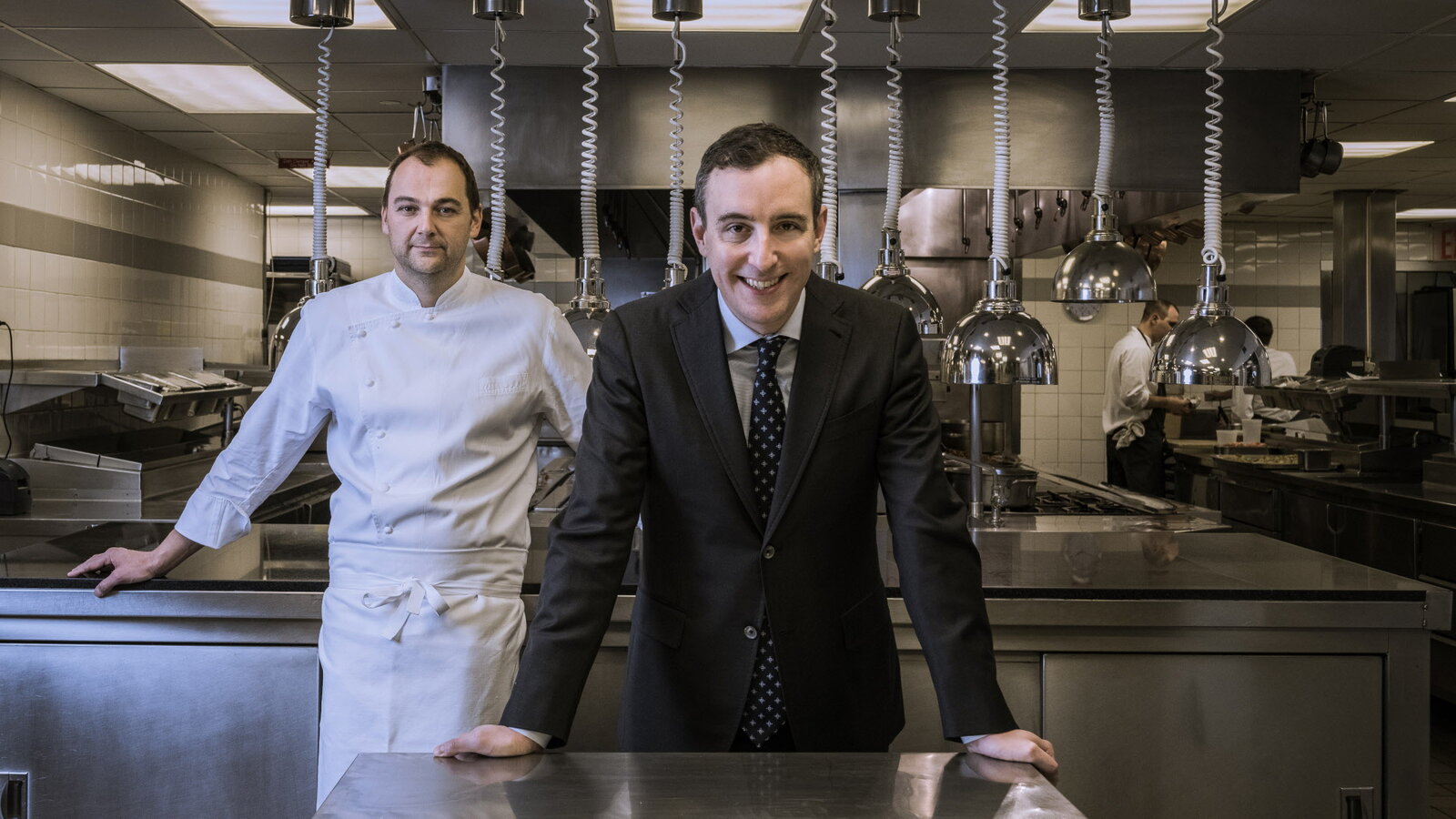
Everyone knows the hot dog story. A family at Eleven Madison Park mentioned they’d leave New York without trying a classic street hot dog. Will Guidara overheard this, ran outside, bought $2 hot dogs, had chef Daniel Humm plate them on fine china, and served them as a surprise final course. The story became legend — taught in business schools, featured in The Bear, repeated at conferences globally.
But the hot dog is not the lesson.
It’s evidence of a lesson most people miss.
This is the practitioner’s paradox: successful founders give terrible advice because they experience success from the inside, where tactics feel like strategy. They can’t read their own label. Guidara transformed Eleven Madison Park from #50 (dead last on World’s 50 Best Restaurants) to #1 in seven years. When asked how, the tactical answer comes naturally: “We created a Dreamweaver role. We implemented the 95/5 budget rule. We hired for character over experience.”
True, but useless. These tactics worked because they proved a position that emerged from Guidara’s authentic identity. A chef-led restaurant copying these tactics without the hospitality-first identity would create inauthentic theatre.
This report applies my positioning intelligence methodology to decode what Guidara actually built, the universal laws operating beneath the tactics, the patterns invisible from inside any business, and the physics that make positioning work reliably across industries. We are observers analyzing Will Guidara’s universe through the lens of positioning as organizational inevitability.
The quantifiable results validate that this wasn’t luck: three Michelin stars (2012-present), a 234% price increase ($88 to $365 per person), seven James Beard Awards, a 50,000-person waiting list for reopening, and over 1 million books sold. But numbers don’t explain how positioning created these outcomes. That requires understanding the architecture beneath the achievement.
Part I: The Identity Foundation — What You Can’t See From Inside
The Dining Room Person in a Chef’s World
Guidara’s competitive advantage began before EMP existed. He was a “dining room guy” in an industry led by chefs. This wasn’t strategic positioning; it was an authentic identity revealed by what he naturally optimized for daily.
His own words: “I always wanted to be the person in the room making other people happy.”
When he partnered with Daniel Humm at EMP in 2006, they made an explicit division: Humm owned cuisine (the what), Guidara owned hospitality (the how people felt). This partnership structure was designed to encode positioning from day one. However, what matters for positioning intelligence is that Guidara could see what chef-led restaurants couldn’t, because his identity positioned him outside their perspective.
Chef-led restaurants optimized for what they could see from inside kitchens:
- Ingredient quality and sourcing
- Technique innovation and precision
- Culinary creativity and presentation
- Michelin star standards
These metrics were visible, measurable, and comparable. Chefs competed on dimensions they directly controlled.
Guidara optimized for what he could see from the dining room:
- How guests felt throughout the experience
- What guests remembered and discussed afterward
- Which moments created emotional impact
- What stories guests told others
These metrics were subjective, interpersonal, and experiential in nature. The dining room perspective revealed opportunities that chefs structurally couldn’t see.
This is positioning principle one: You can’t read your own label.
The gap between inside-out beliefs (what you think you are) and outside-in perceptions (what customers actually experience) is where most positioning fails. Guidara’s identity as a dining room person gave him an outside-in perspective on inside-out dynamics. He naturally viewed the business through the lens of customer perception rather than operational excellence.
Unreasonable Hospitality as Implicit Identity
“Unreasonable Hospitality” wasn’t a marketing tagline. It was Guidara’s implicit identity, shaped by his upbringing, his father’s lessons, and mentorship from Danny Meyer, that informed his decision-making structurally.
Many of Guidara’s actions were intuitive, not strategic calculations. He didn’t analyze competitor positioning and deliberately chose hospitality differentiation through a rational process. His identity drove decisions that became a consistent pattern, ultimately positioning EMP.
Through my positioning lens, we can see what Guidara experienced from inside:
The causal chain operated as: Identity → Positioning → Tactics → Success
Most founders start with tactics (“What should we do differently?”) or success (“How do we grow revenue?”). Guidara started with identity (who he actually was), which determined authentic positioning (what he could own), which dictated tactics (the proof mechanisms), which created success (business outcomes).
The Category Definition Everyone Accepted
In 2010, fine dining had settled on accepted competitive dimensions:
Primary axis: Culinary innovation and technical perfection
- Per Se: Thomas Keller’s precision and technique mastery
- Le Bernardin: Eric Ripert’s seafood excellence
- Jean-Georges: Fusion innovation
- Molecular gastronomy movement: Scientific technique complexity
Secondary axis: Service formality and elegance
- Traditional French service protocols
- Sommelier expertise and wine program depth
- Dining room choreography and precision
EMP couldn’t win on this axis. They’d always chase competitors who’d spent decades owning those territories. Per Se had Thomas Keller. EMP had excellent cuisine but no definitional culinary innovation.
Guidara recognized the strategic trap. He couldn’t beat Per Se at Per Se’s game.
The positioning insight: Category definitions are perceptual, not objective. They can be redefined.
Rather than accepting that fine dining meant culinary innovation + formal service, Guidara asked: What if fine dining meant emotional experience through hospitality?
This wasn’t incremental. It was categorical. He was redefining what “best” meant in the category itself.
Part II: The Positioning Canvas — Owning Hospitality
Before we decode Guidara’s playbook further, you need to understand the analytical lens we’re using:
The Dual Canvas System
| Level | Positioning (What to Own Externally) | Operating Model (How to Make It Inevitable) | Integration Point |
|---|---|---|---|
| L4: System/Architecture Owning It | Mental territory you occupy automatically in customers’ minds | Business model inseparable from positioning; changing requires organizational destruction | Business architecture makes mental ownership inevitable |
| L3: Action/Resources Living It | Decisions and commitments that prove you are this position | Where money and time flow; what you fund is what you are | Resource allocation enables positioning decisions to be systematic |
| L2: Evidence/Systems Proving It | Specific actions that demonstrate the position exists | Working processes that make positioning-aligned behaviour easier | Systems infrastructure enables consistent proof |
| L1: Frame/Structure Saying It | Expression of position in words: messaging, marketing, external articulation | Visible organization: org charts, job titles, roles people can see | What you say and what structure you show signals positioning intent |
Using my 4-Level Positioning and Operating Model Canvas, we can decode how EMP moved from Surface to System:
Level 4: System (Owning It) — HOSPITALITY
What Guidara owned in customer minds: Hospitality as a competitive advantage in fine dining.
This is the strategic endgame. Not “we provide great service” (an adjective that everyone claims). Not “we’re hospitable” (description of behaviour). But HOSPITALITY (noun, concept) as the singular mental territory EMP occupies.
When diners thought “restaurant that will make me feel something beyond great food,” EMP owned that territory automatically. The 50,000-person waiting list for their 2021 reopening proved this ownership. People didn’t just want food; they wanted the feeling EMP created. They’d wait years for it.
The measurement: Mental availability. When a category need arose (“special celebration dinner”), did EMP come to mind first? For their target audience, yes. Pricing power was validated by this; their $365 tasting menus sold out months in advance because customers couldn’t get this experience anywhere else.
Level 3: Action (Living It) — Identity-Driven Decisions
At this level, positioning is integrated into organizational DNA through decisions that make hospitality inevitable, not aspirational.
What made EMP different at Level 3:
Hiring Philosophy: “Hire the person, not the résumé.” Guidara prioritized innate kindness over fine dining credentials. He recognized that technical skill is teachable, but authentic hospitality isn’t. This cultural commitment meant every new hire reinforced the position.
Daily Pre-Meal Meetings: The “most important 30 minutes of the day” when 30-40 individuals became a team. Content included Legend-sharing from previous nights (learning loop), inspiration from outside hospitality, and cultural reinforcement. This wasn’t a tactical briefing, but a systematic position-strengthening exercise.
Legend Documentation System: An internal Instagram account captured every special moment, creating a pattern recognition training tool. Staff learned what “unreasonable hospitality” looked like through hundreds of examples, not abstract values.
Ownership Programs: Junior staff received P&L responsibility for beer, coffee, tea, and cocktails. This developed future leaders while elevating programs that competitors neglected. The craft beer enthusiast became a beer sommelier, establishing vendor relationships and gaining menu authority. The coffee nerd became a Coffee Sommelier with tableside Chemex brewing.
These weren’t isolated tactics. They were systematic position-embedding.
Every decision reinforced the same implicit concept: guests feel cared for in ways they’ve never experienced. Consistency over the years created procedural knowledge in customers’ minds — automatic associations that operate below conscious awareness.
Level 2: Evidence (Proving It) — Actions That Demonstrated the Position
At this level, specific actions provided proof that the hospitality position existed.
The hot dog story sits here. It’s evidence, a tangible demonstration that EMP cares about guest experience beyond cuisine. However, (and this is critical for positioning intelligence), the hot dog could only have happened because Level 3 infrastructure existed.
Other Level 2 proof points:
- Sledding in Central Park for a Spanish family seeing snow for the first time
- Beach vacation replacement (sand-filled private dining room, mai-tais)
- Cognac bottle with every check (transforming payment pain into a generosity peak)
- NYC maps for tourists with insider recommendations
- Airport snack boxes for guests heading to flights
- Tiffany champagne glasses returned to newly engaged couples
These weren’t marketing stunts. They were natural expressions of the position, created systematically through the infrastructure built at Level 3. Customers experienced reality, not claims. They discovered it themselves, then told stories. Far more persuasive than any advertising.
The measurement: Customer storytelling frequency and depth. How often did guests retell these experiences? How emotionally did they describe them? The hot dog story’s propagation (in business schools, The Bear, and global conferences) proved it resonated beyond the individual experience.
Level 1: Surface (Saying It) — What Markets Could See and Hear
Level 1 is the outermost layer, the visible surface where positioning meets the public. This includes both what you say externally (messaging, marketing, articulation) and what organizational structure you show (org charts, job titles, roles).
On the Positioning Canvas side, EMP was strategically minimal with explicit claims. They never marketed “We’re the most hospitable restaurant” or “Best service in New York.” No taglines about caring more. No advertising campaigns claiming superiority.
This restraint was deliberate. Explicit claims trigger defence mechanisms:
- Persuasion Knowledge Model: “I recognize this as marketing.”
- Psychological Reactance: “Don’t tell me what to think.”
- Manipulative Intent Inference: “They’re saying this to get my money.”
These defences force System 2 analytical processing, a skeptical evaluation rather than automatic acceptance.
On the Operating Model Canvas side, EMP made the organizational structure highly visible. The “Dreamweaver” title itself was public-facing. When guests saw this role listed, when the press covered it, when job postings mentioned it, the structure signalled positioning intent without claiming superiority.
The strategic nuance: “Unreasonable Hospitality” functioned at multiple levels simultaneously:
- Internally: A decision filter asking, “Is this decision unreasonable? Is it hospitable?”
- Externally (later): The book title, framework name, and conference brand were articulations that emerged AFTER the position was proven
During EMP’s ascent from #50 to #1, Guidara kept external articulation minimal while making the structure visible. Guests could see that the Dreamweaver role existed. They experienced the results. However, EMP didn’t claim “We invented unreasonable hospitality” until the book codified it in 2022 — after the position had been proven through years of systematic execution.
The positioning principle: At Level 1, what you show (structure) often matters more than what you say (claims). EMP showed a role dedicated to hospitality. Competitors could copy the title easily (many restaurants now have “Experience Directors”), but copying the title without the underlying infrastructure (Levels 2-4) creates positioning theatre.
This is explicitly implicit positioning in action: Let the structure be visible (L1), let the actions speak (L2), let the decisions prove it (L3), until the position is owned (L4). Then you can name what you’ve built so consistently through decisions that they become explicit in customers’ minds.
Part III: The Operating Model Canvas — Making Hospitality Inevitable
While the Positioning Canvas defines what to own, the Operating Model Canvas determines how to make that ownership structurally inevitable. These two canvases overlay where each level of one maps to the corresponding level of the other.
Level 4: Architectural Lock-In — The Business Model
At this level, hospitality became inseparable from EMP’s business model. Changing this would have required rebuilding the restaurant from scratch.
Revenue architecture: Multi-month waiting lists meant they could command $365 per person because demand exceeded supply. However, this demand existed due to the hospitality positioning. The business model only worked if hospitality remained at its core.
Cost architecture: Investments in Dreamweaver infrastructure, ownership programs, and discretionary gestures created advantages competitors couldn’t match without a similar transformation.
Cultural architecture: Promote-from-within policy, hiring for character, Legend systems created organizational inertia. Removing them would have destroyed the culture that attracted talent.
The test: If you removed hospitality positioning, would the business collapse? Yes. Without hospitality differentiation, EMP was just another excellent restaurant competing in a crowded culinary landscape. The waiting lists would disappear. The $365 pricing would be unsustainable. The culture would fracture.
This is inevitability. Positioning so embedded that the alternative is organizational death.
Level 3: Resource Allocation — Where Money Flows Reveals Truth
Here we encounter the three-layer framework structure that’s unique to understanding EMP:
Layer 1: Traditional Restaurant Economics (33/33/33)
- 33% labour costs
- 33% food/beverage costs (COGS)
- 33% rent, utilities, overhead, profit
This is the baseline for any restaurant.
Layer 2: Will Guidara’s 95/5 Rule (Applied Within Layer 1)
“Manage 95 percent of your business down to the penny; spend the last 5 percent ‘foolishly.’”
The 2008 recession forced this discipline. Private parties ground to a halt, corporate expense accounts dried up, and Shake Shack profits subsidized EMP’s losses. Guidara’s response:
On the 95% side:
- Eliminated disposable paper toques (savings: thousands annually)
- No fresh food prep in the final hour (reduced waste significantly)
- Dessert trolley innovation (300% increase in lunch dessert sales)
- Systematic inventory management (caught price spikes early)
On the 5% side:
- Hot dogs, sledding trips, beach vacation replacements
- Cognac bottles, NYC maps, airport snack boxes
- Tiffany glasses, Legend moments
The business logic: The 5% “definitively dominated 95% of the conversation.” Guests retold these stories repeatedly, driving word-of-mouth marketing that no advertising budget could purchase. Profit margins improved after implementing this during the recession recovery.
Layer 3: My 70/20/10 Framework
When we observe EMP through my positioning methodology:
70% Positioning-Critical (Hospitality Differentiation):
- Dreamweaver role + craft studio + operational budget
- Secondary beverage programs (Beer/Coffee/Tea Sommeliers with P&L authority)
- Will’s “5% foolish spending” discretionary budget
- Hiring for character infrastructure and training programs
- Pre-meal meetings and Legend documentation systems
- Daily operational expenses enabling hospitality moments
20% Supporting Capabilities:
- Core kitchen operations (necessary but not differentiating)
- Standard staffing for service execution
- Facilities and basic infrastructure
10% Experimental:
- Here’s the nuance: Will’s 5% discretionary budget ≈ Paul’s 10% experimental allocation
- Both serve similar functions: room for innovation without immediate ROI, experimental/irrational spending, and positioning discovery through trial
- In the restaurant context specifically, this 5% sits at the intersection of positioning-critical (hospitality IS the differentiator) and experimental (no guaranteed ROI)
The overlap: Will’s 5% is BOTH part of the 70% (it’s positioning-critical for hospitality) AND functionally equivalent to the 10% (it’s experimental, discovery-based spending).
P&L as litmus test: What you fund is what you are. EMP’s resource allocation proved that hospitality wasn’t just marketing theatre, as it was a structural reality. The Dreamweaver salaries, craft studio costs, discretionary gesture budget, and secondary beverage program investments represented a genuine commitment, visible in the financial statements.
Competitors seeing EMP’s org chart could copy titles. Seeing the P&L revealed the truth: substantial resources were flowing to dimensions that others had neglected.
Level 2: Systems — Making the Right Thing Easy
Working processes that created moderate gravitational pull, making positioning-aligned behaviour easier than alternatives.
The Dreamweaver Infrastructure (circa 2012-2013):
This role had a singular responsibility: work with servers to fulfill personal requests and create extraordinary moments.
Resources provided:
- Full craft studio with sewing machine, art supplies, and materials
- Budget for external purchases without approval chains
- Complete autonomy to execute in real-time
- Authority to eavesdrop on all conversations
First hire: Christine McGrath (calligraphy skills).
Second: Emily Parkinson (watercolour artist who documented meals).
Tool Kits for Systematic Spontaneity:
- NYC maps (custom printed with insider recommendations)
- Airport snack boxes (elegant to-go containers)
- Plus One cards (detailed answers to frequent questions)
- Tiffany champagne glasses (stored sets, returned in boxes)
The operational paradox solved: How do you systematize spontaneity without making it manufactured? Answer: Create infrastructure that enables improvisational hospitality at scale. Individual servers suggested ideas; Dreamweavers provided the capacity to execute.
Daily Pre-Meal Structure: 30 minutes before service, the entire team gathered. Legend-sharing from the previous night became training material, a learning loop that improved everyone’s skills. Managers deliberately sat apart to gather ideas from all staff levels, thereby flattening the hierarchy and fostering bottom-up innovation.
Ownership Programs: Junior staff were given P&L responsibility for categories, freeing the senior team to focus on developing future leaders. The beer enthusiast and coffee nerd became authorities in their domains, creating best-in-class programs.
Measurement: These systems made positioning-aligned decisions the default. Servers didn’t need to ask permission for every gesture because tool kits existed. Staff didn’t need to remember Legend details because daily meetings reinforced them. The right thing became the easy thing.
Level 1: Structure — Visible Organization
Org charts, job titles, and stated processes are easily copyable but a necessary foundation.
The Partnership Model: Equal authority for chef and GM was unusual in chef-dominated fine dining. This structural choice signalled dual innovation capability. While competitors had kitchen-led hierarchies, EMP could innovate simultaneously on cuisine and experience.
Dreamweaver Title: Creating this role explicitly sent a message, both internally and externally, that hospitality innovation had dedicated resources. Competitors seeing this could create equivalent titles, but without cultural transformation and budget commitment, it would be theatre.
Department Structure: Dining room-led rather than kitchen-led organization meant guest experience drove decisions, not culinary perfection. This structural choice reinforced positioning daily.
The Gravity Test: Does organizational structure puzzle competitors? Yes. Why would a world-class restaurant dedicate full-time staff to craft studio work? Why give junior team members P&L authority? These choices only make sense if hospitality is central, not peripheral.
Part IV: Integration & Inevitability — How the Canvases Lock Together
The Positioning Canvas and Operating Model Canvas aren’t separate. They overlay to create organizational inevitability. Each level of one enables the corresponding level of the other.
The Hot Dog Story: Dual Canvas Analysis
Positioning Canvas Perspective:
- Level 2 Evidence (Proving It): The hot dog action demonstrates the existence of the hospitality concept. It’s a tangible demonstration that EMP cares about guest experience beyond cuisine.
Operating Model Canvas Perspective:
- Level 3 Resource Allocation (Living It): The Dreamweaver infrastructure + discretionary budget enabled the action. Without these systems, Guidara running outside would have been one-off heroics, not a systematic capability.
Integration Point: Operating Model infrastructure (L3) makes Positioning proof (L2) possible and obvious. The hot dog story could have happened because resources were allocated to make it inevitable. It wasn’t a lucky improvisation, but a systematic and spontaneous response.
The causal flow:
- Resources allocated to Dreamweaver role/budget (Operating Model L3)
- Infrastructure built into business (systems make hospitality systematic)
- Hot dog story happens naturally (Positioning L2, external evidence)
- The story proves to the external world what was structurally embedded internally
- Mental territory ownership forms in customer minds (Positioning L4)
Reverse Benchmarking: Strategic Intelligence from Rory Sutherland
Worth noting: “Reverse benchmarking” is a concept created by Rory Sutherland after reading Guidara’s book. But Guidara practiced this principle intuitively.
Traditional benchmarking: Study competitors’ strengths and match them. Guidara proposed the opposite: identify what competitors neglect and dominate those categories.
The beer and coffee execution: Fine dining lavished attention on wine programs, with Per Se’s 2,000+ bottle cellar and sommeliers possessing encyclopedic knowledge. But beer and coffee? Afterthoughts.
EMP appointed a craft beer enthusiast as Beer Sommelier with full P&L authority. A coffee nerd became a Coffee Sommelier with tableside Chemex brewing. Secondary beverage programs became best-in-class while competitors focused only on wine.
Through positioning intelligence: This is a strategic sacrifice made visible. By deprioritizing what everyone prioritized (wine program expansion) and prioritizing what everyone neglected (beer/coffee/tea), EMP created differentiation that competitors couldn’t easily copy. Per Se couldn’t respond without defunding their signature wine program, which would be organizational destruction, not evolution.
Part V: Why Competitors Couldn’t Copy — The Defence Mechanisms
Per Se could see what Guidara built. Thomas Keller understood the positioning strategy. They could afford $150,000 for a Dreamweaver equivalent. But they couldn’t reallocate resources without destroying what they’d built their reputation on. Their organizational identity was encoded in:
- Million-dollar wine cellar investment
- Culinary R&D infrastructure
- Technique perfection systems
- Kitchen-led organizational hierarchy
Creating a Dreamweaver role meant defunding something fundamental to their identity. The transformation required wasn’t tactical, but rather existential.
This is how authentic positions become defensible: through structural commitments competitors can afford to see but not to match.
The defensive moat isn’t secrecy. It’s the cost of transformation required to copy the position. When your position is proven through organizational architecture, budget allocation, role design, and cultural priorities, competitors face a brutal choice:
Copy the position → Destroy their existing identity
Maintain their position → Accept your differentiation
Most choose the second because the first requires organizational transformation, and their teams, investors, and customers aren’t prepared for it.
Seven Defensive Mechanisms EMP Built
1. Role-Based Proof: Dreamweaver role with real authority created a structural moat. Competitors couldn’t create an equivalent without justifying it to boards, reallocating resources from existing priorities, and accepting the cultural implications.
2. Budget-Based Proof: The 95/5 rule (or 70/20/10 in our framework) required discipline. Competitors couldn’t match the 5% discretionary spending without achieving 95% maniacal cost control — a culture shock for most firms.
3. Cultural Proof: Hiring for character over experience, Legend-sharing rituals, and ownership programs created moats through culture. Competitors couldn’t copy without rehiring teams, rebuilding values, and years of reinforcement.
4. Process Proof: Daily pre-meal meetings, Legend documentation, tool kit systems integrated position into operations. Competitors couldn’t copy without redesigning workflows, retraining all staff, and accepting efficiency trade-offs.
5. Authority Distribution Proof: Front-line staff with discretionary spending authority and P&L ownership meant redistributing power from management. Most organizations couldn’t accept the loss of central control.
6. Sacrifice Proof: Deprioritizing wine program expansion to fund secondary beverage programs required strategic sacrifice. Competitors wedded to wine prestige couldn’t make this trade-off.
7. Time Proof: Strong positions require consistent proof over years before mental ownership forms. Competitors seeing the position after it was established couldn’t fast-forward the seven years of systematic improvement that EMP had invested.
Post-Guidara Reality: The Leader-Dependence Vulnerability
After Guidara’s departure in July 2019, working conditions reportedly deteriorated, including 80-hour weeks, starting wages of $15/hour, no bathroom breaks during 10-hour shifts, and high turnover (Business Insider, 2022). Pete Wells harshly criticized Humm’s plant-based pivot.
This reveals positioning vulnerability: The culture required Guidara’s personal investment to maintain. When leadership changed, the systems remained, but the animating spirit was gone. This is the risk of charisma-dependent positioning, as it doesn’t survive the founder’s departure.
Through positioning intelligence, true Level 4 inevitability should survive leadership transitions. That EMP’s culture fractured suggests Guidara reached Level 3 (Living It) thoroughly but Level 4 (Owning It) incompletely. The business model required his ongoing presence to function optimally.
Finally
Guidara’s transformation of Eleven Madison Park from #50 to #1 validates positioning intelligence principles that apply across industries:
Principle 1: Identity Drives Everything
You cannot fake identity alignment. Guidara was authentically a “dining room person” obsessed with how people felt. This identity made hospitality positioning natural, not manufactured. His decisions flowed from who he was, not strategic calculation alone.
The implication: Before choosing positioning, discover actual identity through what you optimize for under pressure, what energizes versus drains you, what you refuse to compromise on. Position from authentic identity, not aspiration.
Principle 2: Explicitly Implicit Beats Explicitly Explicit
EMP never claimed “We’re the most hospitable restaurant” externally. They proved it systematically through decisions that customers experienced. Self-generated inferences (“Wow, this place really cares”) are infinitely more persuasive than stated benefits.
The mechanism: Implicit proof bypasses defence mechanisms (Persuasion Knowledge, Psychological Reactance, Manipulative Intent Inference), forcing System 1 automatic processing. Explicit claims trigger System 2 skeptical evaluation. Strong positions are proven, not claimed.
Principle 3: Resource Allocation Reveals Truth
What you fund is what you are. EMP’s P&L demonstrated a genuine commitment, including Dreamweaver salaries, craft studio costs, a discretionary gesture budget, and secondary beverage program investments. These weren’t marketing expenses. They were positioning infrastructure.
The diagnostic: Pull up last year’s P&L. What percentage flows to positioning-critical capabilities? If you claim “client-centric” but have $0 for relationship development between projects, the position is theatre. Budget allocation proves reality.
Principle 4: Operating Model Makes Positioning Inevitable
The Positioning Canvas defines what to own. The Operating Model Canvas determines how to make ownership structurally inevitable. Both must integrate. Each level of one enables the corresponding level of the other.
The architecture: L1 Structure enables L1 Framing. L2 Systems enable L2 Evidence. L3 Resource Allocation enables L3 Action. L4 Architectural Lock-In enables L4 System. Companies that nail one canvas but neglect the other fail at execution despite strategic clarity.
Principle 5: Defensibility Through Sacrifice
EMP’s position was defensible not because it was secret, but because copying required organizational transformation that competitors weren’t willing to pursue. Per Se couldn’t defund its wine program. Le Bernardin couldn’t abandon seafood specialization. Jean-Georges couldn’t stop empire-building.
The strategy: True differentiation requires sacrificing dimensions competitors prioritize to dominate dimensions they neglect. This creates an asymmetric advantage. You win where they won’t play; they can’t respond without destroying their identity.
Principle 6: Seven Years of Consistency Compounds
The ranking progression (#50 → #24 → #10 → #5 → #4 → #5 → #3 → #1) reveals systematic improvement through consistent execution. Quick wins don’t build lasting positions. Procedural knowledge forms through repeated proof over the years.
The timeline: Position formation requires patient investment. Guidara wrote “To be the best restaurant in the world” on a cocktail napkin in 2010. He achieved it in 2017. Seven years of decisions that proved the same implicit concept created automatic associations in customers’ minds, operating below conscious awareness.
The Practitioner’s Paradox Resolved
Guidara gives advice about tactics: “Create Dreamweaver roles. Implement 95/5 budgets. Hire for character.” This is what he experienced from the inside, where tactics felt like strategy.
Through positioning intelligence, we see what he couldn’t: His identity (dining room person obsessed with feelings) drove authentic positioning (hospitality as competitive advantage), which dictated tactics (Dreamweaver, 95/5, hiring), which created success (three Michelin stars, #1 ranking, $365 pricing power, 50,000-person waiting list).
The takeaway for any business: Don’t copy tactics without understanding identity and positioning. Ask instead:
- What’s our authentic identity (revealed by behaviour under pressure)?
- What positioning emerges naturally from that identity?
- What tactics would prove that position systematically?
- What resource allocation makes those tactics inevitable?
Guidara’s playbook isn’t “do hot dogs and hire nice people.” It’s “discover authentic identity, choose ownable positioning aligned with that identity, build organizational infrastructure that makes the position structurally inevitable, prove it systematically until customers own the association automatically.”
The hot dog is just evidence that the system works.
Leave a Reply
You must be logged in to post a comment.