


A note before you read this
I’m a positioning strategist, not a financial analyst, and I have no inside access to PC Financial’s data, internal strategy, or Barry Columb’s thinking. What I have is what’s publicly visible: the decisions the company has made over time, the content it puts into the world, and the patterns those things reveal.
I’ve been watching PC Financial’s work with genuine respect. The consistency of what they’ve built inside the Loblaw ecosystem, and the clarity of what Barry has led over two decades, is worth studying. This analysis comes from that place, not from skepticism.
That said, I’m reading from the outside. There’s a useful idea in coaching: no one can read their own label from inside the jar. I’ve tried to read theirs as carefully and honestly as I can. If something here is factually wrong, I want to know, and I take full responsibility for the error. Nothing here is intended to misrepresent what the company does or what it stands for.
The entire premise of this report is to answer a single question: what business are you in? Not what you say you’re in, not what your marketing says, but what your decisions, over time, actually prove. That question is the only lens I’ve used.
PS: Monopoly uncovered all the insights you’ll read in this perspective.
How to read this analysis
This article uses the 4-Level Positioning Canvas to evaluate PC Financial. Here is a quick summary of the four levels so the references make sense as you read.
Level 4 — POSITION (Own the Noun). The concept that becomes synonymous with you in customers’ minds. Volvo owns “safety.” Tesla owns “the future.” This is the strongest level, and the hardest to reach; it takes five to ten years to establish, cannot be claimed explicitly, and must be proven implicitly through consistent decisions over time.
Level 1 — FRAME (Articulate). How you express your positioning in words: taglines, messaging, the language your marketing and sales teams use. The easiest level to develop, and the weakest barrier, because anyone can copy words.
Level 2 — EXECUTE (Prove with Verbs). The actions, metrics, and outcomes that validate what you claim. Strong execution without a clear concept proves you are useful; it does not prove you are differentiated.
Level 3 — LIVE (Structural Embedding). When positioning is embedded in how the organization actually operates, in resource allocation, hiring, partnerships, and structure. A rough test: if a competitor had your P&L and headcount plan, what would shock them?
The sequence matters. Level 4 is the concept; Level 1 is how you talk about it; Level 2 is how you prove it; Level 3 is how you build for it. You cannot skip levels. Most companies operate at Level 1 while claiming Level 4. The gap between where a company operates and where it claims to be is where the analysis lives.
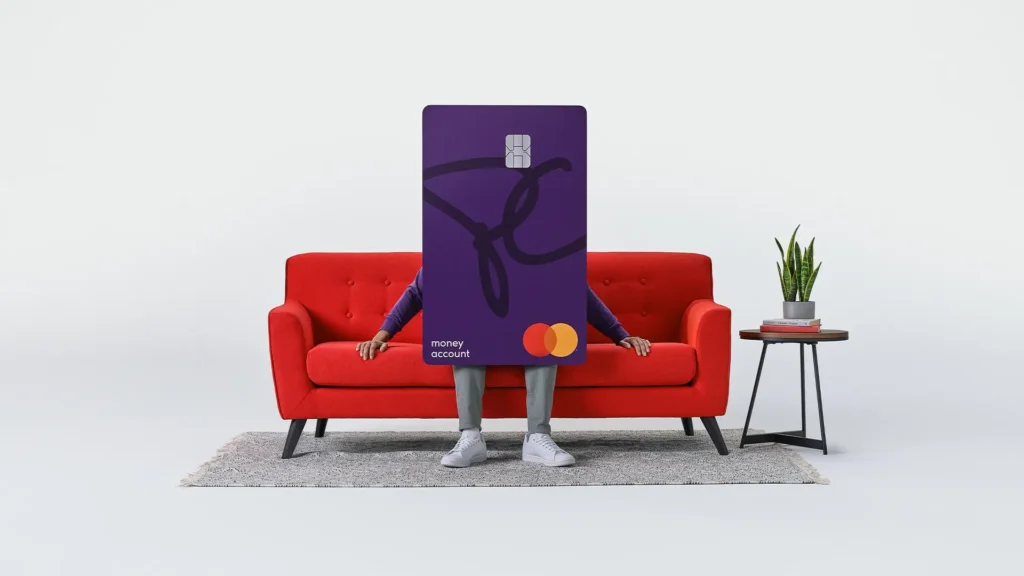
In 2020, a Globe and Mail reporter asked Barry Columb what PC Financial customers really want. His answer was: “It’s rewards.”
Not banking.
Not financial empowerment.
Not innovation.
Rewards.
That answer is the most strategically honest statement ever made about this company. It is also the one the brand has spent twenty-seven years refusing to say out loud.
PC Financial is a case study in a business that built something genuinely powerful, genuinely differentiated, and genuinely ownable, then spent decades calling it something else. The structural decisions tell one story. The marketing tells another. The gap between those two stories is where all the unrealized value lives.
Barry Columb has run this company since January 2006. Twenty years. In that time, he oversaw the CIBC divorce, the launch of the PC Money Account, the consolidation of PC Optimum, and the $800 million sale to EQB. Every one of those decisions proved the same thing. And every press release said the opposite.
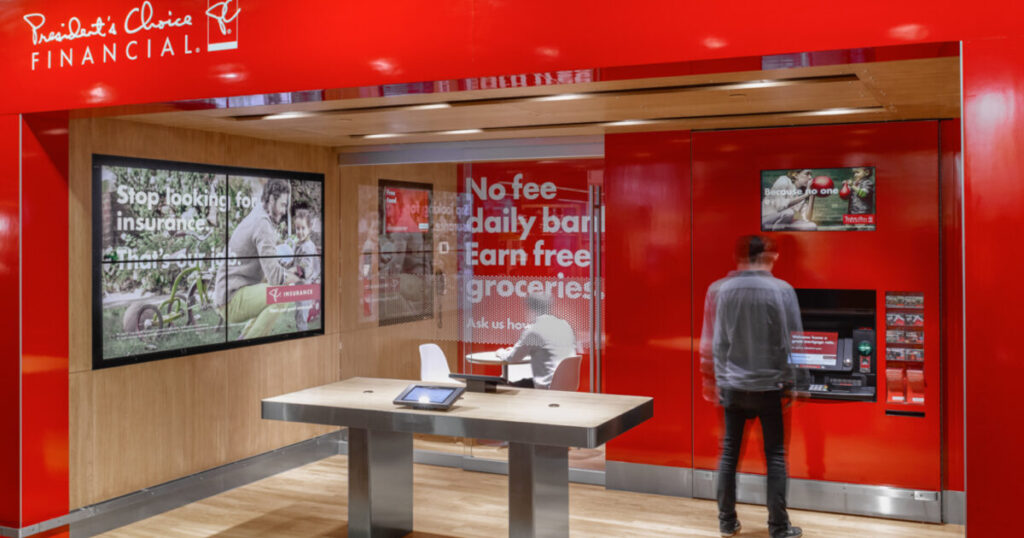
PC Financial has 2.5 million customers, $5.8 billion in assets, $4.4 billion in credit card receivables, and 180+ in-store pavilions embedded inside Canada’s largest grocery chain. Customers earn over $1 billion in redeemable points annually. The loyalty flywheel is real, measurable, and structurally embedded.
This is a story about a company that knows what it is but refuses to say it. About a CEO who understands the engine but wraps it in the wrong language. About what happens when you prove a position implicitly through twenty-seven years of consistent decisions, then undermine it by claiming a different one explicitly.
Part 1: The Story They Tell
PC Financial’s public narrative orbits around a few recurring claims: “unprecedented value,” “award-winning bank,” “loved and trusted by many,” and the tagline borrowed from parent Loblaw Companies, “Live Life Well.”
Strip these down linguistically, and a pattern emerges. The language is overwhelmingly adjective-dependent. “Unprecedented.” “Extraordinary.” “Unparalleled.” “Unmatched.” “Unrivalled.” These are interchangeable superlatives. You could swap any of them into any press release, and the meaning would not change, because the meaning was never specific enough to begin with. Adjectives describe intensity. They do not establish territory.
Barry Columb’s own language follows this pattern. His LinkedIn bio references “a passion for making a difference in the future of Canadian banking and loyalty, with a focus on helping PC Financial customers Live Life Well.” This is borrowed language from Loblaw’s corporate marketing, not a position Columb or PC Financial independently defined. “Future of Canadian banking” is aspirational but empty. “Live Life Well” is a corporate slogan attached to everything from Joe Fresh clothing to President’s Choice butter chicken.
The metrics the company obsesses over are revealing, too. Points earned per card tier. Annual value calculations ($700 to $1,100 depending on card). Points earn rates vary by Loblaw store versus competitor stores. These are all declarative metrics, numbers that require conscious evaluation and comparison. They are System 2 metrics, the kind that make you think rather than feel.
There is one exception in the entire corpus. One claim that is structurally grounded, factually exclusive, and non-copyable: “The only bank that earns you PC Optimum points.” This is the one statement that no competitor can replicate, because it rests on an exclusive structural relationship with the 17-million-member PC Optimum loyalty program. It is the strongest thing PC Financial says. And even it positions PC Financial as a modifier of PC Optimum, not an independent entity.
The framing problem runs deeper than individual claims. PC Financial operates with multiple competing frames and no single unifying concept. “The only bank that earns you PC Optimum points,” says one thing. “Banking that rewards your everyday” says something generic. “Unprecedented value,” says something unverifiable. “Live Life Well” says something that belongs to someone else. When you layer all these together, the customer receives not a clear position but a collage of overlapping half-claims.
Here is the tell. In every quarter’s press release and every product launch, the verbs stay the same: earn, redeem, save, shop, spend, pay. All transactional. All tied to the rewards loop. Not one of these verbs proves “banking” in any differentiated sense. The verbs prove the noun “rewards” consistently and contradict the noun “bank” at every turn.
The company is telling a story about being a bank. Everything underneath that story proves it is something else entirely.
Part 2: The Hidden Position
Remove all words. Every press release, every tagline, every LinkedIn bio, every ad campaign. What pattern of decisions remains?
1998: Launch as a no-fee bank inside Loblaw grocery stores. Not on street corners. Not in business districts. Inside the place where Canadians buy food.
2006: Barry Columb takes over. Citibank veteran. His background is not in banking. It is in retail payment programs, building credit card products for Home Depot, Staples, and Sears. He is a payments operator, not a banker.
2017: The CIBC divorce. PC Financial surrenders 2 million banking customers, mortgage portfolios, GICs, and mutual funds. It keeps the credit cards and the loyalty data. This is not the decision a bank makes. A bank would fight to keep the deposits and the lending relationships. PC Financial gave up banking to keep the payment instrument.
2017 (same year): Columb explains it in plain language: “They appreciate the ability to make payments simply and put free groceries on the kitchen table. That remains our focus.” Free groceries on the kitchen table. Not financial wellbeing. Not banking innovation. Free groceries.
2018: PC Plus and Shoppers Optimum merge into PC Optimum, consolidating 17 million members into a single loyalty ecosystem. The financial products exist to earn points in this program. Not the reverse.
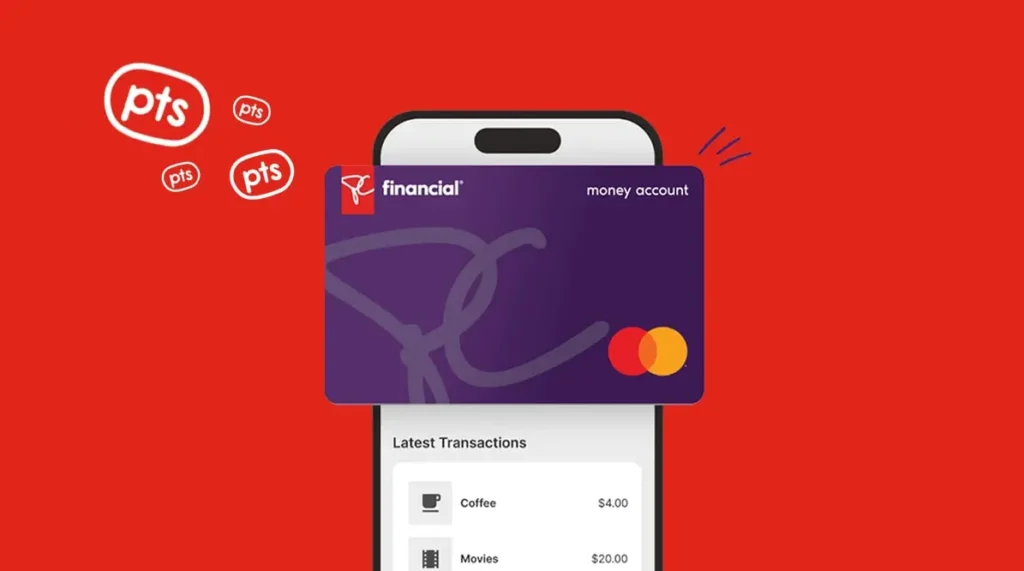
2020: PC Money Account launches. Not a full chequing account. A points-earning surface. Deposits earn PC Optimum points. Bill payments earn PC Optimum points. Payroll deposits earn PC Optimum points. The account exists to create additional earning opportunities within the loyalty ecosystem.
2023: PC Insiders World Elite Mastercard launches at $120 per year. First paid card. The value proposition is points plus PC Express delivery. Not premium banking services. Not financial planning. Faster grocery delivery.
2025: Loblaw sells PC Financial to EQB for approximately $800 million, roughly 1.15 times book value. The terms are revealing. Loblaw retains the PC Optimum program. Loblaw retains a 17% equity stake in EQB. A 12-year exclusive commercial partnership locks EQB into the loyalty ecosystem. Loblaw sold the banking operations and kept everything that actually matters.
Now ask the question: What concept do twenty-seven years of decisions prove?
The answer is not banking. It is not financial services. It is not value.
The answer is: grocery rewards acceleration through a banking license.
Every decision from 1998 to 2025 proves the same thing. The banking license, the credit cards, the pavilions, the ATMs, the deposits, all of it exists to make the PC Optimum points flywheel spin faster. Banking is the infrastructure. Rewards is the purpose.
This is what customers actually say, too. They do not say “my PC Financial bank account.” They say “my PC Optimum card,” “my Loblaws card,” or “my points card.” The brand name is used instrumentally. Nobody identifies as “a PC Financial person.” They identify as someone who figured out the points math.
The noun customers use is not “bank.” It is “free groceries.” It is “points.” It is “the Loblaws card.”
And here is the critical distinction: “free groceries” is a vivid, concrete, emotionally ownable noun. It creates mental territory. When someone says, “I get free groceries just from using my credit card,” that is a position. “Unprecedented value” is not.
The hidden position is real, proven, and structurally unbreakable. It would survive if all marketing disappeared tomorrow. The earn-redeem loop at Loblaw stores would persist without a single ad, because the structural mechanics, points earned per transaction, redeemable at 4,500+ stores, operate independently of communication.
The tragedy is linguistic. Barry Columb himself said “free groceries on the kitchen table” once, in 2017, and never repeated it in marketing. The most powerful framing (positioning language) this company ever produced was said once and abandoned in favour of “unprecedented value.”
Part 3: The Level Diagnostic
Level 4 (Position: Own the Noun)
PC Financial does not own a noun in the broader banking landscape. “Value” is contested by every financial institution in Canada. “Banking” is a category, not a position. “Everyday” is an adjective. The one exclusive claim, “the only bank that earns you PC Optimum points,” anchors to a noun (“PC Optimum points”) that belongs to Loblaw, not to PC Financial.
Within the Loblaw ecosystem, the company has moderate Level 4 strength. When a PC Optimum member thinks about maximizing points, PC Financial’s credit card is the automatic answer. But this is category-specific procedural behaviour, not broad brand ownership. Step outside the Loblaw ecosystem, and PC Financial competes with Rogers World Elite, Amex Cobalt, Tangerine, and every other no-fee challenger on generic terms.
The position that PC Financial’s decisions actually prove, “grocery rewards acceleration,” has never been named or claimed. The company invented the loyalty-linked banking category in 1998, two decades before “embedded finance” became a venture capital buzzword. But instead of naming and owning the category they created, they positioned themselves within “banking,” a territory dominated by the Big Six, where they will always be peripheral.
This is the core Level 4 failure. Not that they lack a position. The position exists. It is proven by twenty-seven years of decisions. But it has never been named, and what has never been named cannot be consciously owned.
Level 1 (Frame: Articulate)
The framing is functional but conceptually confused. Multiple competing frames (“the only bank,” “banking that rewards your everyday,” “unprecedented value,” “Live Life Well”) create noise rather than clarity. The strongest frame, “the only bank that earns you PC Optimum points,” works because it is structural and exclusive. The others are generic, adjective-dependent, and borrowable by competitors.
The deeper framing problem is that positioning (framing, Level 1) appears to be subordinated to Loblaw’s retail strategy rather than developed as an independent brand. “Live Life Well” and “Possible Lives Here” come from Loblaw corporate. The financial products are marketed within the PC Optimum app, within Loblaw stores, and within the grocery context. This is not bad; it is actually consistent with the hidden position, but it means PC Financial has never articulated its own conceptual frame independent of the parent.
Level 2 (Execute: Prove with Verbs)
This is where PC Financial is strongest. The five execution questions reveal genuine proof:
What specific action?
Earn PC Optimum points on every banking transaction, redeemable at 4,500+ Loblaw-affiliated stores.
What baseline comparison?
Implicit; other no-fee cards earn nothing at the point of grocery purchase.
What measured improvement?
Up to $1,100 in annual value; $1 billion+ in groceries earned by customers.
How can customers verify?
Check the PC Optimum app balance; redeem at checkout instantly.
Timeline to value?
Immediate points earned per transaction, redeemable on the same shopping trip.
The execution is tight, measurable, and verifiable. The earn-redeem loop works. The in-store pavilions, the ATMs next to checkouts, the personalized offers loaded every Thursday, all of this is costly signal proof. Real infrastructure. Real points. Real groceries.
Where execution breaks is beyond the rewards loop. Customer service is the critical vulnerability. Locked accounts, offshore call centers, long hold times, missing points, these experiences actively unwire the positive brand associations that the rewards loop builds. You cannot earn your way to “loved and trusted” when customers are posting on Trustpilot that “this is the worst banking experience I’ve ever had.”
Level 3 (Live: Embed Structurally)
Structural embedding within the Loblaw ecosystem is genuinely strong. The pavilions inside stores, the ATMs at checkouts, the integration with PC Optimum, the Thursday offer-loading ritual, and the no-fee model sustained by interchange economics; all of this is embedded so deeply that a competitor would need to build an entire grocery chain to replicate it.
The resource allocation tells the story. Credit card receivables constitute approximately 98% of assets. $4.4 billion in credit card receivables versus $800 million in deposits. If a competitor had PC Financial’s P&L, what would shock them is that this is not a bank at all. It is a credit card operation with a banking license, and the entire economic engine runs on interchange revenue from card transactions at Loblaw stores.
The Gap
PC Financial operates at Level 2-3. Strong execution on the rewards loop. Deep structural embedding within the Loblaw ecosystem. But Level 4, the concept that anchors everything, has never been named.
The company thinks it operates at Level 4 because customers use the product consistently. But consistent usage driven by rational points calculation is not the same as owning a concept. Customers use PC Financial the way they use a calculator: deliberately, rationally, and with no emotional attachment. The moment a competitor offers better math, the relationship ends.
Level 4 is the blocker. Without owning a noun, the strong Level 2-3 execution has no cognitive anchor. The work is excellent. The meaning of the work is undefined.
Part 4: The Identity and Cognitive Layer
What identity does choosing PC Financial enable?
Every model of customer behaviour converges on the same archetype: the smart optimizer. “I figured out the points math.” “I get free groceries just by spending where I already shop.” “I know how to work the system.”
This is a pragmatist identity, not an aspirational one. The card is a tool, not a badge. Nobody posts their PC Mastercard on Instagram the way they post an Amex Gold. Nobody defines themselves by their relationship with PC Financial the way Wealthsimple users define themselves as modern investors or Tangerine users define themselves as fee-rejectors.
The identity hierarchy makes this clear. Amex Gold says, “I’m a foodie and a traveller.” Tangerine says, “I reject Big Five fees.” Wealthsimple says, “I’m a modern investor.” PC Financial says, “I figured out the points math.” One of these is not like the others. The first three are expressive identities, statements about who you are. The last is an instrumental identity, a statement about what you calculated.
This is not inherently bad. Instrumental identities can be powerful when the instrument is irreplaceable. The problem is that PC Financial’s instrument is only irreplaceable within the Loblaw ecosystem. For non-Loblaw spending, the card is replaceable by dozens of competitors. Customers know this, which is why so many run dual-card strategies: PC card for Loblaw purchases, a different card for everything else.
Procedural or declarative knowledge?
The banking choice is declarative. Customers explicitly reason through store affinity, point value, and alternative cards. Reddit discussions are filled with mathematical comparisons: “If I spend $X at Loblaw, I earn Y points, which equals Z dollars in groceries, versus Rogers World Elite, which gives 3% flat everywhere.” This is System 2 processing. Conscious. Analytical. Rational.
There is one exception. At the Loblaw checkout, pulling out the PC Mastercard is automatic for established users. The physical act of tapping the card at a Loblaws terminal, seeing the receipt show points earned, and checking the PC Optimum balance, this narrow behavioural loop has become procedural for engaged members. The Thursday morning ritual of opening the app to load personalized offers also approaches procedural territory.
But procedural behaviour at the checkout is not the same as procedural brand association. “When I need a bank, I think PC Financial” does not fire automatically the way “When I need a tissue, I think Kleenex” does. The card tap is a habit. The brand choice was a calculation.
This distinction matters enormously. PC Financial has achieved procedural behaviour in the narrowest possible context, at the moment of transaction in a Loblaw store, and declarative processing everywhere else. The Hebbian wiring is real but thin. Neurons fire together at the checkout. They do not fire together in any broader financial context.
Are explicit claims triggering defence mechanisms?
Yes. And the evidence is overwhelming.
“Unprecedented value” triggers rational evaluation. Customers immediately check: unprecedented compared to what? They compare PC card earn rates to Rogers World Elite, Amex Cobalt, MBNA, and others. The moment you force comparison, you have moved the customer from System 1 (automatic, favourable) to System 2 (analytical, skeptical).
“Award-winning bank” triggers fact-checking. J.D. Power ranked PC Financial third, not first. “Award-winning” when you ranked third is the kind of claim that activates persuasion knowledge, the cognitive defence mechanism that recognizes marketing spin.
“Loved and trusted by many” triggers the most damaging defence response of all: direct contradiction from experience. Customers who have had accounts locked, waited on hold with offshore call centers, or disputed missing points for months do not feel loved or trusted. The gap between the claim and the experience does not create cognitive dissonance; it creates resentment. Manipulative intent inference kicks in: “They know the service is bad, so they must be lying when they say they’re loved.”
Every explicit claim PC Financial makes weakens rather than strengthens the position. The moment you claim, you weaken. This is not abstract theory. It is evident in customer reviews after customer reviews, where the explicit marketing language is cited and mocked.
Meanwhile, the implicit proof, the structural mechanics that say “we exist to earn you free groceries,” goes unchallenged. Nobody argues with the points math. Nobody disputes that the card earns real points redeemable for real groceries. The costly signals, 180+ pavilions, 600+ ATMs, $1 billion in points redeemed, speak louder and more credibly than any superlative.
Is Hebbian learning occurring?
Within the loyalty loop, yes. Shop at Loblaw, earn points, see balance grow, redeem at checkout, feel the satisfaction of “free” groceries, repeat. This loop wires a positive association between PC Financial’s card and tangible grocery savings. Every repetition strengthens the neural connection. The physical context, standing in a Loblaw store, surrounded by PC branding, tapping the card at the terminal, creates a multi-sensory reinforcement pattern.
But Hebbian learning cuts both ways. “Neurons that fire together wire together” also means neurons that fire alongside negative experiences wire to those experiences. When a customer calls PC Financial’s service line, waits forty-five minutes, speaks with an offshore agent who cannot resolve the issue, and hangs up frustrated, that experience wires directly to the brand. The next time they see “PC Financial,” both associations fire: free groceries AND terrible service. Over time, the negative wiring can overpower the positive.
The customer service gap is not a secondary issue. It is an active force that unwires the very association PC Financial’s structural position has spent decades building.
Part 5: Success Mechanics
What is actually working?
The loyalty flywheel is working. Not because of marketing. Because of structure.
PC Financial sits at the intersection of an unfair advantage (exclusive access to 17 million PC Optimum members inside 2,500+ Loblaw locations) and an unmet emotional need (relief from grocery inflation and the desire for tangible, visible savings on essentials). This intersection is genuine. It is not manufactured by positioning consultants. It is real, delivered daily, and measurable.
The IQ, Inside-Out capability, is formidable. No competitor can replicate exclusive access to PC Optimum. No competitor can place pavilions inside Loblaw stores. No competitor has twenty-four years of granular, SKU-level consumer purchase data from grocery behavior. The no-fee model sustained by interchange revenue is structurally sound. The 68% “superprime” customer base means credit quality is excellent.
The EQ, Outside-In emotional need, is equally real and increasingly urgent. Canadians are feeling grocery inflation viscerally. The desire for tangible savings on essentials is not theoretical; it is a daily frustration for millions of households. A financial product that provably reduces grocery costs, not in abstract percentage points but in real items carried through the front door, addresses this need at the most visceral level.
Where IQ meets EQ, PC Financial has genuine position-market resonance. It is not something they fabricated through branding exercises. It is something that emerged from twenty-seven years of consistent structural decisions. The position chose the distribution, not vice versa. Pavilions ended up inside grocery stores not because a marketing team thought it would be clever, but because the entire purpose of the financial operation was to accelerate grocery loyalty. The distribution followed the position, even if nobody named the position.
The accidental category creation
PC Financial invented embedded grocery finance in 1998. A no-fee bank inside a supermarket, where every financial transaction earned points toward groceries. There was no Canadian precedent. It was genuinely category-creating.
But PC Financial never named the category. Instead of defining “grocery-rewards banking” or “loyalty-linked finance” as a distinct territory, they positioned within “banking,” a category where the Big Six banks own all the mental real estate and where PC Financial will always be a marginal player.
The irony is that EQB, the acquirer, is now explicitly using “loyalty-linked banking ecosystem” language to describe the asset it purchased. EQB recognized the category that PC Financial created and is naming it. The twenty-seven-year head start was wasted because the category inventor never claimed the category.
The Thursday ritual
Buried inside PC Financial’s product mechanics is something more valuable than any tagline: the Thursday morning offer-loading ritual. Every week, engaged PC Optimum members open the app to load personalized points multiplier offers before shopping. This is approaching genuine procedural behavior. It is a recurring, habitual, almost automatic action tied to a specific day and a specific emotional state (anticipation of savings).
PC Financial accidentally created System 1 engagement in a brand that otherwise operates entirely in System 2. “The bank that pays you every Thursday” would be more distinctive than any tagline the company has ever produced. But this ritual has never been named, never been amplified, and never been positioned as proof of anything.
What is missing?
Three gaps undermine the success mechanics.
First, the Level 4 gap. No owned noun. The rewards flywheel works, but it has no conceptual anchor in the broader market. Within the Loblaw ecosystem, PC Financial is the obvious choice. Outside it, PC Financial is just another no-fee card. Without a named concept that organizes everything the company does, the strong Level 2-3 execution floats without gravity.
Second, the service gap. Customer service quality is so poor that it actively destroys the brand association the loyalty loop builds. You cannot prove “we care about helping you save on groceries” while simultaneously proving “we do not care enough to answer your call.” The costly signals of the loyalty infrastructure are undermined by the cheap signals of service neglect.
Third, the framing contradiction. The CEO knows the business is about rewards. The structural decisions prove the business is about rewards. But the brand claims to be a bank. “Rewards that happen through banking” is fundamentally different from “banking that happens to have rewards.” For twenty-seven years, PC Financial built the first thing while marketing the second. This creates a persistent dissonance that confuses customers, triggers defence mechanisms, and wastes the implicit proof that the structural decisions provide.
The most precise formulation of the error comes from examining Columb’s own words across two decades. He says, “It’s rewards.” He says, “Free groceries on the kitchen table.” He says, “We’ve really homed in on payments.” And then the next press release says “unprecedented value” and “the future of Canadian banking.” The CEO’s private understanding and the brand’s public claim are two different companies.
Part 6: The Coaching Moment
The first question is not “How should PC Financial sell?”
The first question is “What should PC Financial own?”
The instinct is to say “free groceries.” The structural decisions prove it. The CEO said it himself in 2017. The $1 billion in annual redemptions confirms it. But “free groceries” is not the position. It is the functional benefit layer, the verb-level proof, the thing that happens at the checkout. Positioning does not live at the level of what happens. It lives at the level of what happens next, inside the customer, after the fact.
So ask a different question. When a customer figures out the points math, loads the Thursday offers, watches the balance accumulate week after week, and then stands at the Loblaw checkout while $87 worth of groceries rings through at zero, what changes in them?
Not what they received. What they became.
The transformation beneath the transaction
The answer is in the language customers already use, if you listen past the surface. “I figured out the system.” “I get free groceries just from spending where I already shop.” “I know how to work this.”
These are not descriptions of a benefit. They are descriptions of a self. The customer who has internalized the points math does not think of themselves as someone who uses a credit card with good rewards. They think of themselves as smarter than the system. Someone who sees an angle others miss. Someone who feeds their family, not through sacrifice or budgeting, but through intelligence.
That is the transformation. The functional layer is free groceries. The positioning layer, the one that wires into identity, is something closer to “mastery.” The feeling that you have figured out how the game works and you are winning it quietly, every week, at the checkout.
This is not an aspiration. It is not status. It is not belonging. It is competence made tangible. Groceries on the table that did not require payment are not just savings; they are proof that you are paying attention, that you are smarter than the sticker price, that you see something most people walk past.
The noun is not “free groceries.” The noun is closer to “provision,” the quiet, private knowledge that you are taking care of your household through a system you mastered. Not through coupons. Not through sacrifice. Through understanding.
Why this distinction matters
“Free groceries” can be competed away. A competitor who offers better math, higher earn rates, or broader redemption can replicate the functional layer. If your position is the transaction itself, you are only as strong as this week’s points calculation.
But the identity, the feeling of having figured it out, the private satisfaction of watching groceries scan at zero, that is not a math problem. That is an emotional state. And emotional states are not dislodged by spreadsheet comparisons. They are dislodged only when a competitor creates a deeper transformation, which requires structural mechanics as sophisticated as the ones PC Financial spent twenty-seven years building.
This is why customers run dual-card strategies and still keep the PC card for Loblaw. It is not because the math always wins. It is because the ritual, the Thursday offer load, the accumulation, and the redemption moment have become part of how they see themselves as a provider. Switching away does not just lose them points. It loses them the feeling.
PC Financial’s structural decisions have, accidentally, been building this identity for over two decades. Every pavilion inside a grocery store, every point of notification, every zero-dollar checkout, reinforces the same transformation: you are someone who figured this out.
The naming problem
The company never named this. The marketing says “unprecedented value,” which is an adjective describing nothing. The CEO said, “free groceries on the kitchen table,” which captures the functional layer beautifully but stops one level short of the identity it creates.
The coaching question is: What if you stopped competing with banks and stopped describing the benefit, and instead named the transformation?
PC Financial does not compete with RBC. It does not compete with TD. It does not compete with Tangerine or Wealthsimple. These companies help people manage money. PC Financial helps people feel like they have outsmarted the cost of eating. The comparison set is wrong. The category is wrong. The competitive frame is wrong.
“We don’t compete with banks. We compete with the feeling that groceries are something you just have to endure paying for.”
That reframe shifts from functional to emotional. The Level 2-3 execution already proves it. The structural embedding already supports it. The only thing missing is the name for the transformation, not the transaction.
The explicit claim problem
Every superlative in PC Financial’s vocabulary needs to be retired.
“Unprecedented.”
“Extraordinary.”
“Unparalleled.”
“Unmatched.”
“Unrivalled.”
These words trigger defence mechanisms in every customer who encounters them. They activate System 2 evaluation, invite comparison, and expose the gap between claim and experience.
The replacement is not a better adjective. It is no adjectives. Nouns establish territory. Verbs prove it. Adjectives fail.
Instead of “unprecedented value,” let the $1 billion in redeemed groceries speak. Instead of “award-winning bank,” let the Thursday ritual demonstrate engagement. Instead of “loved and trusted by many,” fix the customer service so the trust becomes real rather than declared. Costly signals, not cheap talk.
The most powerful thing PC Financial could do with its marketing language is subtract. Remove the superlatives. Remove the explicit claims. Let the structural mechanics, which are genuinely impressive, prove the position without narration. Every explicit claim the company makes today weakens the implicit proof that the structural decisions provide.
But subtraction alone is not enough. What replaces the noise has to reflect the transformation, not the transaction. The language should make the customer feel seen in their competence, not sold on a benefit.
The service imperative
No level transition is possible while customer service actively unwires brand associations. This is not a secondary concern to be addressed after strategic repositioning. It is the prerequisite.
Consider the damage through the lens of identity, not satisfaction. A customer who has internalized “I figured out the system” and then gets their account locked for six weeks, or waits forty-five minutes on hold with an offshore agent who cannot help, does not merely have a bad experience. They have their identity contradicted. The system they thought they mastered just failed them. The competence they felt is replaced by helplessness. That is not a service complaint. That is an identity wound. And identity wounds do not heal with apology emails.
Fix the service. Not as a brand initiative. Not with a tagline about caring. Fix it structurally and silently. Let the improvement be noticed rather than announced. The moment you announce “We’re improving our service,” you have made an explicit claim, and every subsequent service failure will be measured against it. Just improve it. Let customers discover the change. Let the absence of complaints become the proof. Let the identity of mastery remain unbroken.
The post-acquisition reality
The December 2025 sale to EQB fundamentally changes the strategic context. The transition opportunity now belongs to EQB, which has purchased the loyalty relationship and secured a 12-year exclusive partnership with Loblaw. The critical question is whether EQB will subsume PC Financial’s loyalty DNA into its “Challenger Bank” identity, diluting the grocery-rewards position, or elevate it as a distinct, ownable category within the EQ Bank umbrella.
The risk is real, and it operates at the identity level. EQB bought a loyalty asset but may treat it as a customer acquisition channel. If PC Financial’s brand becomes merely “EQ Bank’s grocery rewards credit card,” the twenty-seven years of implicit positioning evidence dissolve into a product feature. Worse, the identity transformation, the customer’s feeling of mastery over their grocery costs, gets subsumed into EQB’s “challenger” narrative, which is about rejecting bank fees, not about outsmarting the grocery bill.
The $800 million purchase bought a position, not a product. It bought an identity that customers have been forming for decades. If EQB recognizes this, the combination of EQ Bank’s “challenger” identity with PC Financial’s mastery-of-provision identity could create something genuinely new in Canadian financial services. If it does not, one of the most structurally sound positions in the country becomes a line item on an acquisition balance sheet.
The reframe
For Barry Columb, or whoever carries the brand forward inside EQB, the coaching moment comes down to a single reframe.
Stop asking: “How do we compete with other banks?”
Start asking: “What concept do we own that no bank can take from us?”
Stop asking: “How do we communicate our value?”
Start asking: “What would customers say about us if we never spoke again?”
Stop asking: “How do we describe the benefit?”
Start asking: “What do our customers become after they experience it?”
The answers are already embedded in the structure. The pavilions inside grocery stores, not on street corners. The credit cards that earn grocery points, not travel miles. The $1 billion in free groceries is not merely an abstract financial return. The Thursday morning ritual, not a monthly bank statement.
But deeper than all of that: the quiet transformation that happens when someone stands at a checkout with a full cart and watches the total drop to zero. That moment is not about savings. It is about mastery. It is about provision. It is about the private knowledge that you figured out how to feed your family without paying the price everyone else pays.
PC Financial has been building this identity for twenty-seven years without knowing it. The functional layer, free groceries, is the proof. The position, the thing that actually wires into who the customer is, lives one layer beneath: the feeling of having outsmarted the single largest recurring expense in a Canadian household.
The position was never missing. It was never weak. It was built with twenty-seven years of costly signals, $5.8 billion in assets, $1 billion in annual redemptions, 180+ pavilions, and the exclusive loyalty relationship with Canada’s largest grocer.
It just needs a name. Not for the benefit. For the transformation.
Barry Columb said the functional half in 2017: “free groceries on the kitchen table.” The structural half has been proven by every decision since 1998. But the emotional half, the identity that forms in the customer’s mind when the groceries are free and the system has been mastered, has never been spoken.
That is the position. Not what lands on the table. What changes in the person carrying the bags through the door. Now the only question is whether anyone will name it on purpose.
Uncover your position
Before you hire a messaging consultant to wordsmith your homepage, or an agency to “refresh your brand,” or someone to fix what they’ll call positioning (but is really just tactical framing), try this first.
The CEO Clarity Starter Kit
It does exactly what we just read. It helps you find and own your noun.
What you do:
- Run the Position Audit (reveals what noun you might already own without knowing it)
- Complete the 8-Question Advisor (the same questions that would surface “ownership” for EQ Bank)
- Feed the output into ClarityGPT (included)
What you get:
- Your noun. The concept you can actually own, not just claim
- A 4-Level Positioning Canvas showing how to move from saying it to OWNING it
- ClarityGPT translates your position into landing pages, offers, and LinkedIn profiles (written in your buyer’s voice, not consultant-speak)
- A 30-day positioning course so you can apply this method without me
Time required: About an hour (less time than reading three more case studies about tactics that won’t work without position)
Who’s used it: 325+ CEOs and founders who were tired of pushing uphill
Investment: $249 USD
Most realize they don’t need the consultant or agency after this. Or they need far less than they thought. Because once you know your noun (your position), the tactics become obvious. The distribution chooses itself. The customers explain you better than you explain yourself.
And yes, if you buy the kit, it nudges me closer to that Porsche in the photo. Thanks in advance for supporting excellent positioning and questionable life choices.
Stop competing on features. Start owning concepts.
Leave a Reply
You must be logged in to post a comment.